

Can You Dry Clean Graphic T-Shirts Safely?
Table of Contents
- Can You Dry Clean Graphic T-Shirts Safely?
- Understanding Print Types and Dry Cleaning Risk
- How to Wash Graphic Tees Without Damage
- Hand-Washing Graphic Tees for Maximum Protection
- How to Dry Graphic Tees Without Damaging the Print
- How to Remove Stains From Graphic Tees Safely
- What to Tell a Professional Cleaner
- Conclusion
- Frequently Asked Questions
Last Updated: October 10, 2026
Can You Dry Clean Graphic T-Shirts Safely?
The short answer: you should not dry clean graphic t-shirts, as it's risky. Most dry-cleaning chemicals can damage screen prints, heat transfers, vinyl designs, and direct-to-garment prints. Your best bet is to wash at home using gentle methods that protect the graphic while keeping the shirt fresh.
At Hot Takes Designs, we've built our reputation on creating vibrant, long-lasting prints that stand up to wear. But even our highest-quality graphics need proper care to stay sharp. Here's what you need to know before you drop that graphic tee at the dry cleaner.
Understanding Print Types and Dry Cleaning Risk
Different print methods react differently to dry-cleaning chemicals and home-care methods. Knowing your print type is the first step to keeping your graphic intact, and to deciding whether dry cleaning is even an option.
Screen Prints and Dry-Cleaning Chemicals
Screen prints are durable, but dry-cleaning solvents can break down the ink binder that holds the design to the fabric. Commercial dry cleaning typically uses perchloroethylene (perc) or hydrocarbon solvents. These chemicals are designed to strip away oils and stains from fabric fibers. That same stripping action can soften, fade, or crack screen-printed graphics over time.
Screen prints are generally safe for home washing on a gentle cycle. The mild detergent and cool water used in home care do not break down the ink binder the way industrial solvents do. Many dry cleaners will warn you about this risk. Some won't.
Heat Transfers and Vinyl Designs
Heat transfers and vinyl designs are significantly more vulnerable to both dry cleaning and high heat. These prints rely on adhesive bonds between the design and the fabric. Dry-cleaning solvents can dissolve that adhesive, causing the design to peel, crack, or separate entirely. Heat transfers are applied using a heat press that fuses the design to the fabric using a thermoplastic adhesive.
Heat transfers should almost never be dry cleaned. If a heat-transfer shirt has a stain, spot-clean it by hand or accept the stain rather than risk professional cleaning. Vinyl designs face the same risk. Home washing on a gentle cycle with cold water is the only safe option for these print types.
Direct-to-Garment (DTG) Prints
Direct-to-garment prints, like the ones on premium graphic tees, are more durable than heat transfers but still sensitive to harsh chemicals. DTG ink is injected directly into the fabric fibers using an inkjet process, which means the ink penetrates the fabric rather than sitting on top.
DTG prints are safe for gentle home washing and can tolerate cold-water machine washing on a delicate cycle. However, they should not be dry cleaned. The combination of solvents and heat used in commercial dry cleaning can cause noticeable fading, especially in darker or more saturated colors.
How to Identify Your Print Type
Check the care label on your shirt. Many manufacturers specify the print type or recommend care methods that hint at it. Look for language like "screen printed," "heat transfer," "vinyl," or "direct-to-garment." If the label says "dry clean only" or "dry clean recommended," the shirt likely has a print type that requires special care, and the manufacturer is warning against standard dry cleaning.
If the care label is unclear, examine the print itself. Screen prints feel slightly raised and have crisp edges. Heat transfers feel plastic-like and may show a slight sheen. Vinyl designs are thick and rubbery. DTG prints feel like part of the fabric and have a softer hand feel.
How to Wash Graphic Tees Without Damage
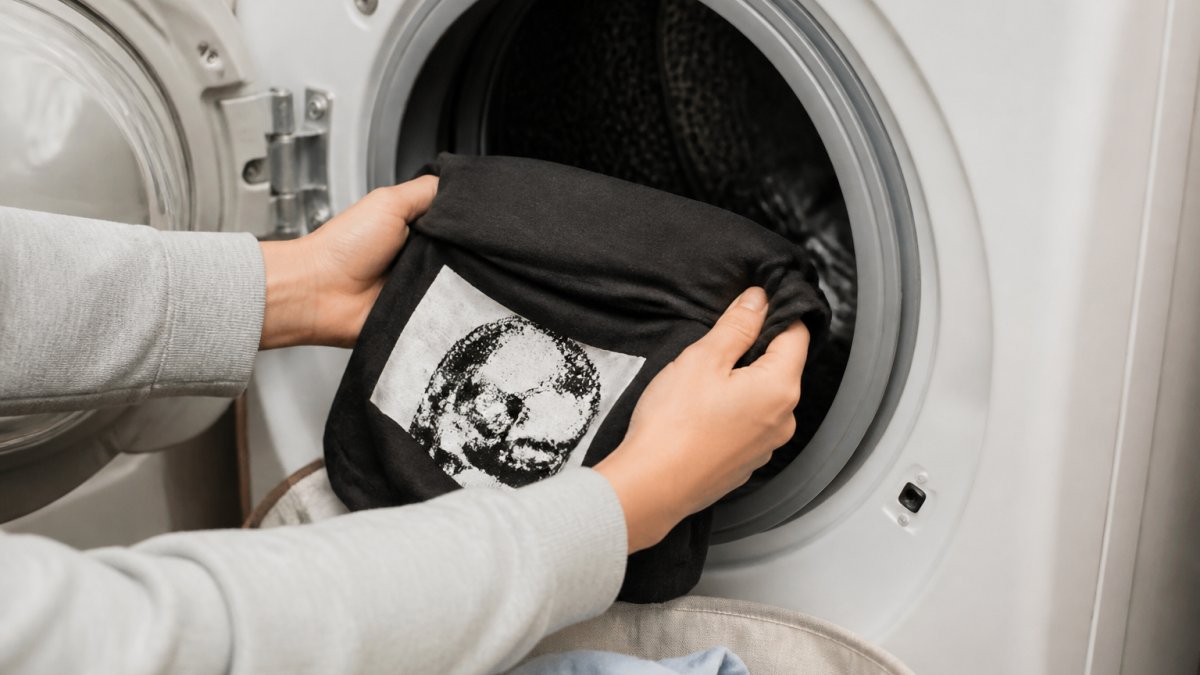
Machine washing is safe when you follow a few simple rules. The key is reducing friction, heat, and chemical exposure.
Best practices for washing graphic tees:
- Turn the shirt inside out before washing
- Use cold water (under 60°F)
- Choose a gentle or delicate wash cycle
- Use mild detergent only
- Wash with similar colors to prevent dye transfer
- Avoid bleach and fabric softener
- Wash graphic tees separately from heavy fabrics like jeans
Inside-out washing is your secret weapon. It shields the print from agitation and friction during the wash cycle. Cold water prevents colors from bleeding and keeps the ink stable. A gentle cycle mimics hand washing without the time investment.
Hand-Washing Graphic Tees for Maximum Protection
Hand washing is the gold standard for graphic tee care. It gives you complete control over temperature, agitation, and chemical exposure.
Step-by-step hand-washing process:
- Fill a basin with cool water (under 60°F)
- Add a small amount of mild detergent
- Submerge the shirt inside-out
- Gently swish for 2-3 minutes
- Rinse with cool water until soap is gone
- Press out excess water (don't wring)
- Lay flat or hang to dry
Hand washing takes about 10 minutes and protects your graphic from harsh chemicals and aggressive machine cycles. For premium graphic tees like our DWAEKKI Vintage Oversized Heavyweight Tee, hand washing is worth the extra effort.

The mild detergent is critical. Regular laundry detergent can be too harsh. Look for gentle formulas designed for delicate fabrics or baby clothes.
How to Dry Graphic Tees Without Damaging the Print
Heat is the enemy of graphic prints. High dryer temperatures can cause inks to fade, crack, or peel.
Safe drying methods:
- Air dry flat on a clean surface
- Hang dry on a clothesline or rack
- Avoid direct sunlight (can fade colors)
- Never use a tumble dryer on graphic tees
- If you must use a dryer, use the lowest heat setting for 10 minutes maximum
Air drying takes longer but preserves your graphic completely. Lay the shirt flat on a clean towel or hang it from the shoulders on a hanger. Avoid clotheslines in direct sun, which can fade vibrant designs over time.
Tumble drying creates friction and heat that accelerates fading and cracking. Even low-heat settings can damage prints if used repeatedly. One occasional low-heat cycle probably won't destroy your shirt, but consistent air drying keeps graphics sharper longer.
How to Remove Stains From Graphic Tees Safely
Stains happen. The key is treating them without using harsh chemicals, dry cleaning, or heat, all of which can damage both the fabric and the graphic. Spot cleaning at home is almost always safer than professional dry cleaning for graphic tees.
"Guilty As Charged" Graphic T-Shirt | Sarcastic Humor Unisex Classic Tee →
Why Spot Cleaning Beats Dry Cleaning
When you spot-clean a stain at home, you control the chemicals, temperature, and agitation. You can treat only the stained area, leaving the rest of the shirt untouched. Dry cleaning exposes the entire garment to solvents and heat, putting the graphic at risk even if the stain is nowhere near the print. For graphic tees, spot cleaning is the first and often the only step you need.
Safe Stain Removal by Type
For fresh stains (treated within 24 hours):
- Blot the stain immediately with a clean, dry cloth. Do not rub. Press gently to absorb excess liquid or debris.
- Rinse with cool water from the back of the fabric (the side away from the stain). This pushes the stain out rather than deeper into the fibers.
- Apply a small amount of mild soap or a gentle stain remover directly to the stain.
- Gently rub with a soft brush, cloth, or your fingertip using circular motions. Work from the outside of the stain toward the center to avoid spreading it.
- Rinse thoroughly with cool water until all soap is gone.
- Air dry completely before washing normally. Do not put the shirt in the dryer until you confirm the stain is fully removed.
For set-in stains (older than 24 hours):
Set-in stains are harder to remove but still worth attempting before accepting defeat. Let a mild soap or stain remover sit on the stain for 15-20 minutes to loosen the stain particles. Then gently rub and rinse as described above. Repeat if necessary, but stop after three attempts.
For protein-based stains (blood, egg, dairy):
Use cool water only, never hot water, which sets protein stains permanently. Follow the fresh-stain process above, rinsing thoroughly.
For oil-based stains (grease, makeup, sunscreen):
Apply a tiny drop of dish soap (which breaks down oils) directly to the stain before rinsing. Dish soap is stronger than laundry detergent but safe for spot treatment. Use sparingly and rinse well.
For tannin stains (coffee, tea, wine, fruit juice):
These stains can set quickly. Treat immediately with cool water and mild soap.
What to Avoid
Never use bleach, hydrogen peroxide, or oxygen-based stain removers on graphic tees. These can damage both the fabric and the graphic. Avoid hot water, which can set stains and accelerate fading. Do not use a washing machine to treat a stain, the agitation can spread it. Do not apply heat (iron, dryer, or direct sunlight) to a stained area until the stain is completely gone; heat can permanently set the stain.
When to Accept the Stain
Some stains won't come out completely, and that's okay. A faded stain is better than a damaged graphic or a shirt ruined by dry cleaning. After gentle treatment, if a stain persists, accept it as part of the shirt's story. Many beloved graphic tees develop character over time. Alternatively, if the stain is severe and the shirt is valuable, consult a professional cleaner who specializes in printed garments and ask them to attempt spot cleaning only, not full dry cleaning.
What to Tell a Professional Cleaner
If you absolutely must use a professional cleaner, communication is everything.
Before dropping off your graphic tee:
- Tell the cleaner about the graphic print
- Specify the print type if you know it (screen print, heat transfer, DTF)
- Ask if they have experience with printed garments
- Request hand washing or gentle machine washing instead of dry cleaning
- Ask them to avoid high heat during pressing
- Get confirmation in writing that they'll use gentle methods
Many dry cleaners will refuse to clean graphic tees. That's actually a good sign. It means they understand the risks. A cleaner who promises to dry clean your graphic shirt safely is either inexperienced or overconfident.
If a cleaner agrees to wash your shirt gently, provide clear instructions. Write down the care label recommendations and attach a note to the garment. The more specific you are, the better the outcome.
Conclusion
Dry cleaning graphic t-shirts is a gamble you don't need to take. The chemicals used in commercial dry cleaning can fade, crack, or peel your favorite designs. Hand washing or gentle machine washing keeps your graphics vibrant and intact for years.
At Hot Takes Designs, we craft every graphic tee with vibrant, long-lasting prints designed to handle proper home care. Our ultra-soft fabrics and fade-resistant inks are built to last when you wash inside-out, use cold water, and air dry. View all our graphic tees and start protecting your investment today.
Frequently Asked Questions
Can you dry clean a graphic t-shirt without damaging the print?
Dry cleaning graphic t-shirts carries significant risk. The harsh chemicals and heat used in professional dry cleaning can cause screen prints to crack, peel, or fade. Heat transfers and vinyl prints are especially vulnerable. Most care labels on graphic tees specifically warn against dry cleaning. Hand-washing in cold water with mild detergent is far safer and more effective at preserving both the fabric and the design.
What's the safest way to hand-wash graphic tees?
Turn the shirt inside out, then soak it in cold water with mild detergent for 15-20 minutes. Gently agitate the water by hand, avoid scrubbing the print area. Rinse thoroughly in cool water until all soap is gone. Never wring or twist the garment. Instead, gently squeeze out excess water, then roll it in a clean towel to absorb moisture. This method protects the print while cleaning the fabric effectively.
How do you remove stains from graphic tees without dry cleaning?
Treat stains immediately by blotting (not rubbing) with a clean cloth. For fresh stains, rinse with cold water from the back of the fabric to push the stain out rather than deeper in. For stubborn stains, mix a small amount of mild detergent with cold water into a paste, apply it gently to the stained area, and let it sit for 10-15 minutes before rinsing. Always test on an inconspicuous area first. Avoid heat until the stain is completely gone, as heat can set it permanently.
Should you turn graphic t-shirts inside out before washing?
Yes, always turn graphic t-shirts inside out before washing. This protects the printed design from direct contact with water, detergent, and friction in the wash. The inside-out method also reduces fading and prevents the print from rubbing against other garments. This simple step significantly extends the life of your graphic tee's vibrant colors and prevents cracking or peeling.