

How to Wash Graphic Tees Correctly: Complete Care Guide
Table of Contents
- Why Washing Graphic Tees Requires a Different Approach
- Prepare Your Graphic Tees Before Washing
- Choose the Right Water Temperature and Detergent for Graphic Tees
- Select the Gentle Cycle and Avoid Common Mistakes
- How to Dry Graphic Tees Without Shrinking
- Can You Iron Graphic Tees and Remove Wrinkles Safely
- Understanding Your Print Type: DTG, Screen Print, and Vinyl
- Repairing Cracking and Peeling Prints
Last Updated: August 25, 2026
Why Washing Graphic Tees Requires a Different Approach
Graphic tees are different from regular cotton shirts. The prints, whether screen-printed, direct-to-garment, or vinyl, are applied to fabric after manufacturing, not woven in. This means the print layer sits on top of the fibers and is vulnerable to damage from heat, friction, harsh chemicals, and aggressive agitation. When you wash graphic tees incorrectly, you're not just fading the design; you're risking cracking, peeling, and permanent loss of the image you paid for.
At Hot Takes Designs, we create custom-printed apparel with ultra-soft fabrics and vibrant, long-lasting prints designed to last. But even the highest-quality graphic tees require intentional care to maintain their appearance and integrity over time. The difference between a print that looks sharp after 50 washes and one that cracks after five comes down to technique, not luck.
How to wash graphic tees correctly starts with understanding what you're protecting. The print is the most fragile component of your shirt. Every wash cycle, every temperature adjustment, and every chemical you introduce either preserves the design or accelerates its deterioration. Most people treat graphic tees like regular shirts and wonder why the prints fail. The reality is simpler: graphic tees need a gentler, more intentional approach from the moment they arrive.
Prepare Your Graphic Tees Before Washing
Before your graphic tees even enter the washing machine, preparation is critical. This is where most damage prevention actually happens. Taking two minutes upfront saves you from watching your favorite design deteriorate prematurely.
Turn Shirts Inside Out
Turning your graphic tee inside out is non-negotiable. When the print faces inward during the wash cycle, it's protected from direct friction with other garments, the drum of the machine, and agitation. The inside of the shirt, the plain fabric, bears the mechanical stress instead of your design.
This simple step dramatically reduces the risk of cracking and peeling. The print never directly contacts the agitator or other clothing. When you wash graphic tees inside out, you're creating a barrier between the design and the forces that damage it most.
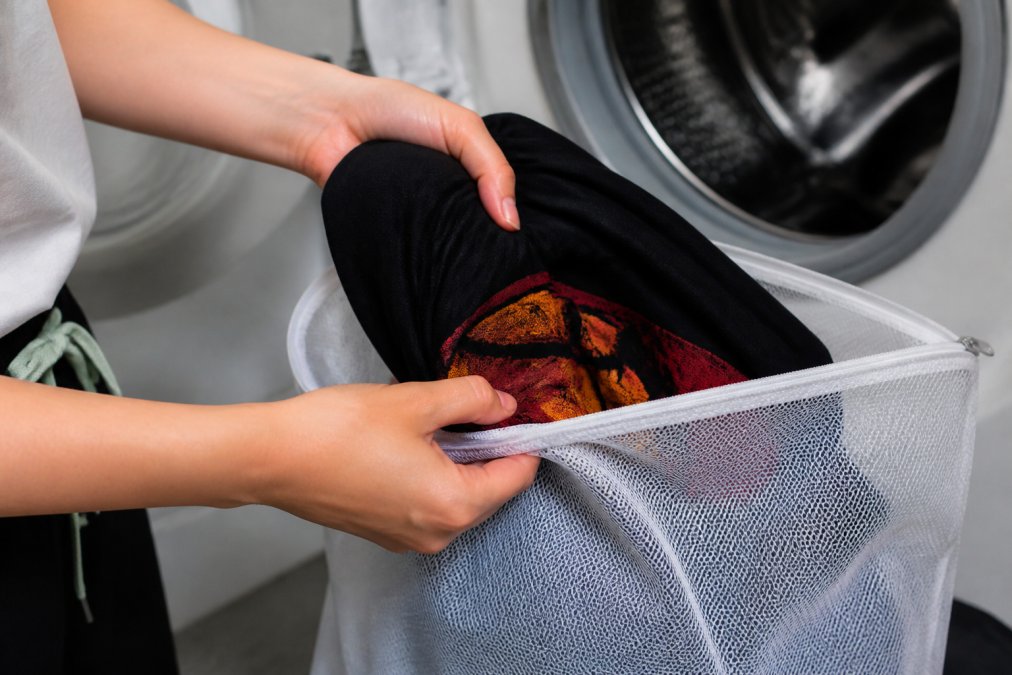
Always check that the entire shirt is properly reversed, sleeves included. A partially turned shirt leaves portions of the print exposed to friction. Make this a habit before every wash.
Pre-Treat Stains
Stains happen. When they do, address them before washing, but do so gently. Most people reach for harsh stain removers, which can bleach or damage the print area.
For stains on graphic tees, use a mild stain remover or diluted detergent solution applied directly to the affected area (aatcc.org). Let it sit for 10-15 minutes, then gently rub the fabric together, never scrub aggressively. The goal is to loosen the stain without damaging the print.
For oil-based stains, a small amount of dish soap works. For protein-based stains (blood, grass), cold water and a gentle enzyme cleaner are effective. The key is restraint: you're removing the stain without introducing harsh chemicals that could affect the print or the fabric.
Choose the Right Water Temperature and Detergent for Graphic Tees
Water temperature and detergent chemistry are the two most underrated factors in graphic tee care. Get these wrong, and even perfect washing technique won't save your prints.
Cold Water Is Non-Negotiable
Heat accelerates print deterioration. Hot water opens up fabric fibers, increases dye bleeding, and can soften adhesives used in certain print types. Cold water does the opposite: it keeps fibers tight, reduces color bleeding, and preserves print integrity.
When you wash graphic tees in cold water, you're also reducing the risk of shrinkage. Many prints crack because the fabric shrinks while the print doesn't, the mismatch in dimensions creates stress that causes peeling and cracking. Cold water minimizes this risk.
Cold water is effective for most household stains and soils (the CDC). It's also energy-efficient. There's no downside to making it your default for graphic tees.
Mild Detergent Without Harsh Chemicals
The detergent you choose matters more than most people realize. Standard laundry detergents often contain optical brighteners, fabric softeners, and enzymes designed to break down stains aggressively. These work well for regular clothing but can damage graphic prints.
For graphic tees, use a mild detergent without optical brighteners or softening agents. Look for products labeled as gentle or delicate. The detergent's job is to remove dirt and oils, not to bleach or condition. A smaller amount of mild detergent is more effective than a larger amount of harsh detergent, you're not trying to strip the fabric; you're cleaning it.
Avoid fabric softeners entirely. They leave a coating on fibers that can interact poorly with print adhesives and cause peeling over time. They also reduce the absorbency of the fabric, which matters if you're wearing these tees.
Select the Gentle Cycle and Avoid Common Mistakes
Machine settings determine how much mechanical stress your graphic tees endure. The wrong cycle can undo all your preparation work.
Gentle Cycle vs. Hand Washing
The gentle cycle on your washing machine is designed for delicate fabrics. It uses slower agitation, shorter wash times, and reduced spin speeds. For most graphic tees, the gentle cycle strikes the right balance between cleaning effectiveness and protection.
Hand washing is more protective but requires more effort and time. If your graphic tees are particularly valuable, hand washing is worth considering. Fill a basin with cold water, add a small amount of mild detergent, submerge the shirts, and gently agitate for a few minutes. Rinse thoroughly in cold water until all detergent is gone, then gently squeeze out excess water without wringing.
For everyday graphic tees, the gentle cycle is sufficient when combined with the other protective measures, turning inside out, cold water, mild detergent. The gentle cycle reduces friction and agitation while still removing dirt and oils effectively.
What Not to Use: Bleach and Fabric Softener
Bleach is the fastest way to damage a graphic tee. Even oxygen-based bleach can discolor prints or the fabric itself. Chlorine bleach is particularly destructive. Avoid it entirely.
Fabric softeners coat fibers and can interact with print adhesives, causing peeling and cracking. They also reduce moisture absorption, which affects how the shirt feels and wears over time. Skip them completely.
Optical brighteners in standard detergents can also lighten or discolor prints, especially darker designs. This is why mild detergent without these additives is essential.
How to Dry Graphic Tees Without Shrinking
How you dry graphic tees is as important as how you wash them. The drying method determines whether the print survives intact or begins to crack and peel.
Air Drying as the Gold Standard
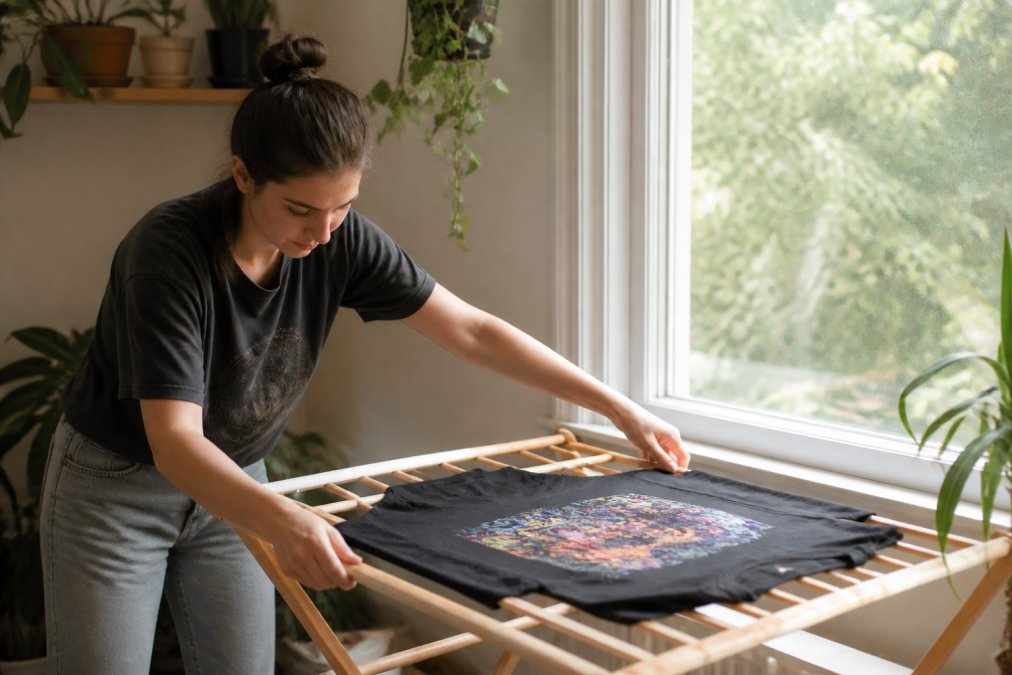
Air drying is the safest method for graphic tees. It eliminates heat exposure, which is the primary culprit in print damage and fabric shrinkage. Lay the shirt flat on a clean, dry surface, a drying rack, clean towel, or mesh screen works well. Ensure air can circulate on both sides.
Flat drying is better than hanging because it distributes the shirt's weight evenly, reducing stress on seams and fabric. If you must hang-dry, use padded hangers to prevent stretching at the shoulders.
Air drying takes longer than tumble drying, typically 4-8 hours depending on humidity and air circulation. But the trade-off is worth it: your prints stay vibrant, the fabric doesn't shrink, and the shirt retains its shape.
Why Tumble Drying Damages Prints
Heat is destructive to graphic prints. Tumble dryers expose shirts to sustained high temperatures, typically 120-160°F depending on the setting (the FTC). This heat can:
- Soften print adhesives, causing them to lose grip on the fabric
- Accelerate color fading
- Cause the fabric to shrink while the print doesn't, creating stress that leads to cracking
- Warp vinyl prints, which are particularly heat-sensitive
Even the low heat setting on a dryer is risky for graphic tees. The cumulative effect of repeated heat exposure degrades prints faster than any other drying method. If you must use a dryer, use the lowest heat setting available and remove the shirt while still slightly damp. But air drying is always the safer choice.
Can You Iron Graphic Tees and Remove Wrinkles Safely
Wrinkles happen, but ironing graphic tees requires care to avoid damaging the print. Direct heat from an iron can melt print adhesives or discolor the design.
If your graphic tee is wrinkled, air drying flat prevents most wrinkles from forming in the first place. If wrinkles do appear, low-temperature steaming is safer than ironing. Use a garment steamer on the lowest setting, holding it a few inches away from the fabric. The steam relaxes fibers without direct heat contact.
If you must iron, place a thin cloth between the iron and the shirt to protect the print. Use the lowest heat setting and iron the back side only, never directly over the design. Keep the iron moving, don't let it sit in one spot. Ideally, avoid ironing graphic tees altogether. The risk isn't worth the minor wrinkle reduction.
Understanding Your Print Type: DTG, Screen Print, and Vinyl
Different print methods require slightly different care approaches. Understanding what type of print is on your graphic tee helps you protect it more effectively.
Screen Print Care
Screen printing is the most common method for graphic tees. Ink is pushed through a mesh screen onto the fabric, then heat-cured. Screen prints are durable but can crack if the fabric shrinks or if the print experiences repeated friction.
Screen printed graphic tees benefit most from the standard care protocol: inside out, cold water, gentle detergent, gentle cycle, air drying. Screen prints are fairly strong, so they tolerate standard gentle care well. Avoid heat and harsh chemicals, and screen printed designs last for years.
Direct-to-Garment (DTG) Print Care
DTG printing uses inkjet technology to apply color directly to the fabric. The ink penetrates the fibers rather than sitting on top like screen print. DTG prints are soft to the touch and feel more like the fabric itself.
DTG prints require the same cold water, gentle cycle, and air drying approach. They're actually quite durable because the ink is integrated into the fabric. However, they can still fade if exposed to excessive heat or harsh chemicals. The same care protocol applies.
Vinyl Print Care
Vinyl prints are heat-applied designs that sit on top of the fabric. They're common on athletic wear and performance tees. Vinyl is more heat-sensitive than screen print or DTG.
For vinyl graphic tees, cold water is essential, warm or hot water can soften the vinyl adhesive. Air drying is non-negotiable; tumble drying will warp or peel vinyl prints. When ironing is necessary, never iron directly over vinyl. The same precautions apply: low heat, protective cloth barrier, or avoid entirely.
Repairing Cracking and Peeling Prints
Sometimes prints crack or peel despite careful care. If your graphic tee develops damage, you have limited repair options.
For small cracks at the edges of a design, fabric glue designed for textiles can sometimes help. Apply a tiny amount under the lifted edge, press it down, and let it dry flat. This is a temporary fix and won't restore the print to its original appearance, but it can prevent further peeling.
For significant cracking or large peeling areas, professional repair is rarely cost-effective. The print is compromised, and attempting to fix it often makes it worse.
Prevention is always better than repair. By following the care guidelines above, you'll avoid these situations entirely. Your graphic tees will maintain their appearance wash after wash, season after season.
Taking care of graphic tees doesn't require special equipment or complicated steps. It requires intentionality: cold water, mild detergent, gentle agitation, and air drying. These aren't suggestions, they're the foundation of print preservation. When you invest in a graphic tee from Hot Takes Designs, you're getting a custom-printed piece designed to last. Protect that investment with proper care, and your favorite designs will stay vibrant and intact for years. View all our latest graphic tee designs and start building your collection today.
=== FAQ ANSWERS (audit these too, same rules) ===
[1] Q: Should graphic tees be washed inside out? A: Yes, always wash graphic tees inside out. This protects the print from direct friction with the washing machine drum and other clothes, which is the primary cause of cracking, peeling, and color fading. Turning the shirt inside out creates a barrier between the graphic and abrasive surfaces, extending the life of your print significantly.
[2] Q: What's the best laundry detergent for graphic tees? A: Use a mild, gentle detergent without optical brighteners, bleach, or enzymes. Look for products labeled 'delicate' or 'gentle.' Avoid fabric softeners and dryer sheets, as these leave residue that can degrade both the fabric and print. Cold-water formulas work well for graphic tees and help preserve color vibrancy.
[3] Q: Is it okay to put graphic tees in the dryer? A: No. Tumble drying generates heat and friction that cause prints to crack, peel, and fade prematurely. Air drying is the only method that protects your investment. Lay the shirt flat on a clean surface or hang it on a drying rack indoors, away from direct sunlight. This takes longer but preserves both the fabric and the graphic.
[4] Q: How do you remove wrinkles from graphic tees without damaging the print? A: Avoid ironing directly on the print. If ironing is necessary, iron on the reverse side at a low temperature, or use a steamer on a low setting from a distance. Better yet, hang the shirt immediately after air drying to minimize wrinkles. If wrinkles form, hang it in a steamy bathroom or use a garment steamer rather than direct heat.
Frequently Asked Questions
Should graphic tees be washed inside out?
Yes, always wash graphic tees inside out. This protects the print from direct friction with the washing machine drum and other clothes, which is the primary cause of cracking, peeling, and color fading. Turning the shirt inside out creates a barrier between the graphic and abrasive surfaces, extending the life of your print significantly.
What's the best laundry detergent for graphic tees?
Use a mild, gentle detergent without optical brighteners, bleach, or enzymes. Look for products labeled 'delicate' or 'gentle.' Avoid fabric softeners and dryer sheets, as these leave residue that can degrade both the fabric and print. Cold-water formulas work well for graphic tees and help preserve color vibrancy.
Is it okay to put graphic tees in the dryer?
No. Tumble drying generates heat and friction that cause prints to crack, peel, and fade prematurely. Air drying is the only method that protects your investment. Lay the shirt flat on a clean surface or hang it on a drying rack indoors, away from direct sunlight. This takes longer but preserves both the fabric and the graphic.
How do you remove wrinkles from graphic tees without damaging the print?
Avoid ironing directly on the print. If ironing is necessary, iron on the reverse side at a low temperature, or use a steamer on a low setting from a distance. Better yet, hang the shirt immediately after air drying to minimize wrinkles. If wrinkles form, hang it in a steamy bathroom or use a garment steamer rather than direct heat.
This article was written using GrandRanker