

Why Custom Shirt Prints Crack: Prevention & Repair
Table of Contents
- Why Custom Shirt Prints Crack: The Root Causes
- How to Wash Screen Printed Shirts Without Damaging Prints
- Preventing DTF Transfer Cracking During Care
- How to Fix Cracked Vinyl on Shirts
- Preventative Maintenance: What You Can Control
- Conclusion
Last Updated: August 15, 2026
Why Custom Shirt Prints Crack: The Root Causes
Custom shirt prints crack from a disconnect between production and care. Sometimes the problem starts at production, sometimes when you pull it from the box, most often, both work against you simultaneously.
Understanding where the crack originates tells you exactly how to prevent it. At Hot Takes Designs, we've watched customers get frustrated with cracked prints from competitors because they didn't understand the difference between a production failure and a care failure. They're not the same problem and don't have the same fix.
Under-Curing vs. Over-Curing Ink
Under-curing occurs when ink hasn't fully polymerized. Plastisol ink (the most common screen printing type) that doesn't reach the right temperature for long enough stays partially flexible and tacky. Washing breaks those incomplete bonds, and the ink flakes off.
Over-curing makes ink brittle. Excessive heat bakes out the flexibility ink needs to move with fabric. The result is cracking under normal wear and washing stress.
The sweet spot for most plastisol inks is 320-350°F with 2-4 seconds dwell time on a heat press. The problem: not every printer uses calibrated equipment. Some use inconsistent conveyor dryers or guess at temperatures. This is a production-side problem you can't fix after purchase, only prevent by buying from printers who test and document curing temperature.
Ink Quality and Deposit Thickness
Cheaper inks require thicker application layers to achieve vibrant color. Thicker deposits crack more easily because there's more material flexing and more stress on the fabric bond. High-quality inks achieve rich color with thinner deposits, reducing stress and ensuring even curing.
Deposit thickness also depends on mesh count. Lower mesh (110) deposits more ink per pass; higher mesh (305) deposits less. A printer using 110 mesh for a design that works on 195 mesh adds unnecessary thickness and risk.
The quality signal: whether your printer can tell you what ink they use and what mesh count they chose for your design. If they can't, they probably aren't thinking about these variables.
Print Type Differentiation
Screen printing uses heat to cure plastisol ink into fabric fibers. It's durable when done right but vulnerable to under-curing and mechanical stress from washing.
DTG printing sprays ink directly onto the garment using inkjet technology. The thinner ink sits more on the surface and cracks when fabric is stretched aggressively or heat exposure is too high. DTG ink also degrades faster under UV exposure.
Vinyl transfers don't crack themselves, the adhesive bond between vinyl and shirt fails from heat exposure, mechanical stress, or improper surface prep (dust, lint, or oils prevent adhesion).
Each print type requires different care. Screen printed shirts handle aggressive washing; DTG prints need gentler treatment; vinyl transfers must avoid high heat and excessive stretching. If you don't know your print type, you're probably treating it wrong.
How to Wash Screen Printed Shirts Without Damaging Prints
Most cracking happens during washing because people treat custom prints like regular shirts. They're not the same.
Temperature, Detergent, and Agitation
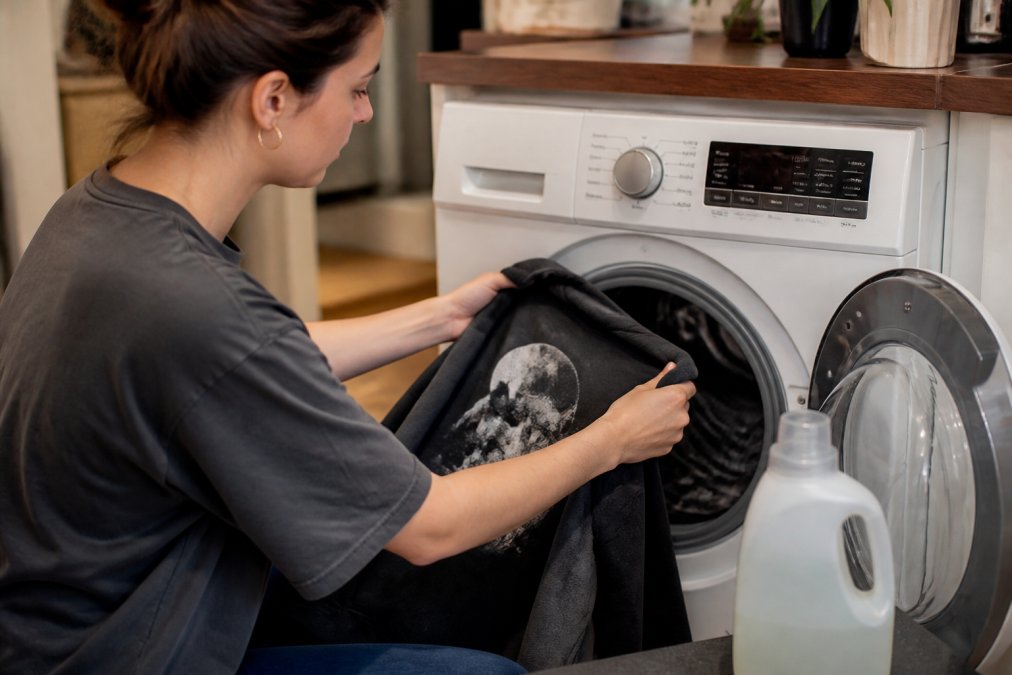
Wash in cold water (below 60°F). Hot water opens fabric fibers and increases ink migration and mechanical stress. Cold water keeps fibers tight and reduces bond breakage.
Use a gentle or delicate cycle. Regular cycles use high agitation that breaks apart incomplete ink bonds. Gentle cycles reduce agitation by 30-50%, minimizing mechanical stress on the print.
Use mild detergent without optical brighteners. Woolite Delicates, The Laundress Delicate Wash, or plain Dreft work well. The goal is cleaning without aggression.
Turn the shirt inside out before washing. This single easiest step keeps the print facing inward, away from friction. The back of the shirt takes mechanical stress instead. This alone extends print life by several wash cycles.
Don't overload the washer. Full loads mean more friction between clothes and more stress on the print. Wash custom prints in smaller loads with similar colors and weights.
Drying Methods and Heat Exposure
Air drying is safest. Hang or lay flat for 4-6 hours with no heat or mechanical stress.
If using a dryer, use low heat (around 120°F) for 20-30 minutes maximum. High heat accelerates thermal degradation. Remove the shirt while slightly damp to prevent over-drying and excessive shrinkage stress on the print.
Don't use dryer sheets directly on the print, they leave residue that degrades ink. Never iron a custom print directly; use low heat on the back side only or a garment steamer on low setting at least 6 inches away.
Preventing DTF Transfer Cracking During Care
Direct-to-film (DTF) transfers apply ink to film first, then transfer to the shirt using heat and pressure. The bond is surface-level rather than cured into fibers, making DTF transfers more vulnerable to heat and aggressive washing than screen prints.
Wash DTF transfers in cold water on a gentle cycle like screen prints, but be more cautious with heat. Use the lowest dryer setting (often "air dry") for 10-15 minutes only, or air dry entirely. DTF prints fade faster under UV exposure, so avoid direct sunlight and store in dark closets or drawers.
The bond weakens if the shirt is stretched aggressively during wear. Avoid tight fits that put constant stress on the print.
How to Fix Cracked Vinyl on Shirts
Vinyl transfers are the only print type you might repair. Cracked screen prints and DTG prints can't be fixed, once ink cracks, the bond is broken. Vinyl cracks because adhesive failed, not because the material is damaged.
Assessment and Repair Options
Determine whether vinyl cracked (visible lines or breaks in material) or is peeling (edges lifting away). These are different problems.
If peeling, clean the lifted edge and use a heat press or iron on low heat (around 280°F) for 10-15 seconds with firm, even pressure. Let cool completely. If vinyl re-adheres, you've extended its life.
If actually cracked, the repair is cosmetic only. Carefully peel away cracked vinyl and replace it with a new transfer from your printer. Applying fabric paint over a crack is a patch job that looks like one.
The real lesson: vinyl transfers fail because the adhesive bond wasn't strong enough or the shirt wasn't cared for properly. Prevention is far easier than repair.
Preventative Maintenance: What You Can Control
You can't control how a shirt was printed. You control everything after it arrives. Most cracking happens because people don't know what they're controlling.
Immediate Care After Purchase
When your custom shirt arrives, wash it first before wearing. Even though it's new, it's been in packaging and possibly exposed to dust and oils. A gentle wash removes residue and lets you see whether the print is properly cured.
Wash inside out on a gentle cycle in cold water with mild detergent. Dry on low heat or air dry. This first wash is a test. If the print survives without cracking or fading, it's probably properly cured. If you see cracking after the first wash, the print was under-cured at production, contact the printer.
Don't wear the shirt to the gym or for heavy sweating immediately after purchase. Sweat is acidic and can interact with ink, especially if not fully cured. Wait 3-5 washes before subjecting it to that stress.
Store new custom shirts flat or on hangers, not crumpled. The first few weeks are when ink is settling and bonding. Minimize unnecessary stress during this period.
Long-Term Storage and Handling
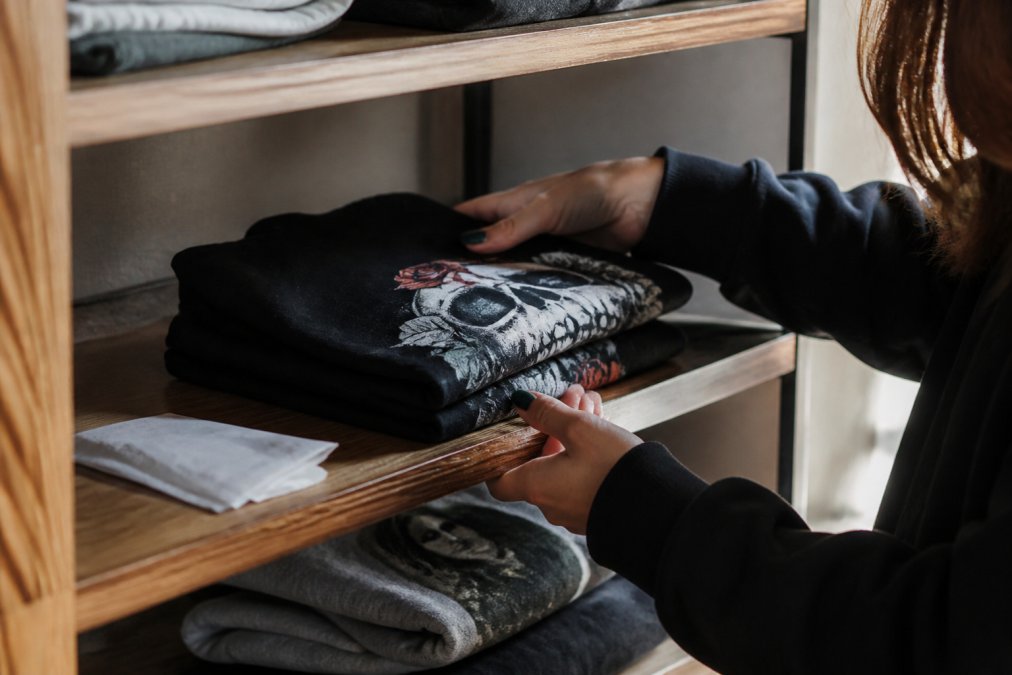
Fold custom printed shirts carefully without creasing the print itself. Fold along the sides so the print stays flat. Repeated creases in the same spot can cause ink to crack along that line.
Store in a cool, dry place. Heat and humidity accelerate ink degradation. A closet is better than above a radiator; a drawer is better than a shelf near a window.
Avoid wire hangers for extended periods, they create pressure points that stress the print. Use padded hangers or fold instead.
If storing a custom shirt for months, wash it first. Oils and dust accumulate over time. A clean shirt in a cool closet lasts longer than a worn shirt anywhere.
Rotate your custom shirts. Don't wear the same one every day. Wearing it every third or fourth day instead of daily doubles its lifespan.
When you buy a custom printed shirt from Hot Takes Designs, you're investing in a made-to-order piece with vibrant, long-lasting prints designed to survive repeated wear and washing. Even the best production can't overcome poor care. Treat your custom prints with cold-water washes, gentle cycles, and low heat drying, the same care you'd give delicate clothing. The difference between a print lasting 30 washes and 100 is entirely in your hands after arrival. Get started with Hot Takes Designs and treat your custom apparel right for bold, wearable pieces that actually last.
Frequently Asked Questions
What causes t-shirt prints to crack?
Cracking happens when ink doesn't bond properly to fabric or when the garment experiences mechanical stress. Under-curing (insufficient heat during production) is the most common production issue. On the care side, high heat in dryers, hot water washing, and excessive agitation break down the ink's elasticity. Ink quality and deposit thickness matter too, thinner, lower-quality ink cracks faster than properly formulated, thicker applications.
How do I keep custom shirt prints from cracking?
Start with proper washing: turn the shirt inside out, use cold water, gentle detergent, and a delicate cycle. Skip the dryer when possible, air dry flat or hang dry. If you must tumble dry, use low heat and remove promptly. Avoid bleach and fabric softener. After purchase, wear the shirt a few times before heavy washing to let the ink fully set. Store folded flat, not bunched, to avoid stress creases that can cause peeling.
Can you repair a cracked graphic on a shirt?
Minor cracks can be slowed with careful washing, but you cannot truly repair cracked ink without re-printing. Acetone or similar solvents can remove damaged print, but this leaves a stain. Your best option for a severely cracked print is to contact the original seller about a replacement. Prevention is far more effective than repair, which is why proper garment care from day one matters so much.
Does heat pressing prevent print cracking?
Heat pressing is part of the curing process during production, not something you do at home. During manufacturing, heat press temperature and dwell time must be precise, too low causes under-curing and cracking, too high causes thermal degradation. As a customer, you cannot re-press a shirt at home without damaging it. The cure happens at the factory; your job is to preserve it through proper washing and drying.
This article was written using GrandRanker