

How to Wash Graphic Tees Properly: The Complete Guide
Table of Contents
- What You'll Need Before You Wash Graphic Tees Properly
- Step-by-Step: How to Wash Graphic Tees Properly in a Machine
- Best Detergent for Graphic Tees (and What to Avoid)
- How to Wash Graphic Tees by Hand Without Damaging the Print
- How to Dry Graphic Tees Without Ruining the Print
- How to Prevent Graphic Tees from Cracking Based on Print Type
- Ironing, Storage, and Rescuing a Faded or Damaged Print
- Common Laundry Mistakes That Destroy Graphic Tees
Last Updated: July 31, 2026
Knowing how to wash graphic tees properly is the difference between a print that stays sharp for years and one that cracks, fades, or peels after a handful of washes. This guide from Hot Takes Designs covers everything: machine washing, hand washing, drying, print-specific care, and how to rescue a tee that's already showing damage. Most guides stop at "wash cold, turn inside out", we go further, because your tee deserves better than generic advice.
The core problem: people treat all graphic tees the same. A screen-printed tee, a direct-to-garment print, and a heat transfer design each respond differently to heat, agitation, and detergent. Below, we'll show you exactly how to wash graphic tees by type, what detergents protect fabric and ink, and the storage habits that extend a print's life.

What You'll Need Before You Wash Graphic Tees Properly
Supplies checklist:
- Mild detergent formulated for delicates or dark colors
- A mesh laundry bag (optional but helpful for machine washing)
- Cold water access
- A clean drying rack or padded hanger
- A pressing cloth or thin cotton towel for ironing
Skip fabric softener. It leaves a coating on fibers that degrades print adhesion over time. According to the American Cleaning Institute's laundry care guidelines, reading the care label before washing is the single most effective step for textile preservation. Separate graphic tees from heavy items like jeans and towels, friction from rougher fabrics causes print cracking and pilling.

Step-by-Step: How to Wash Graphic Tees Properly in a Machine
Machine washing graphic tees is safe when you reduce agitation, heat, and friction, the three forces that degrade prints fastest.
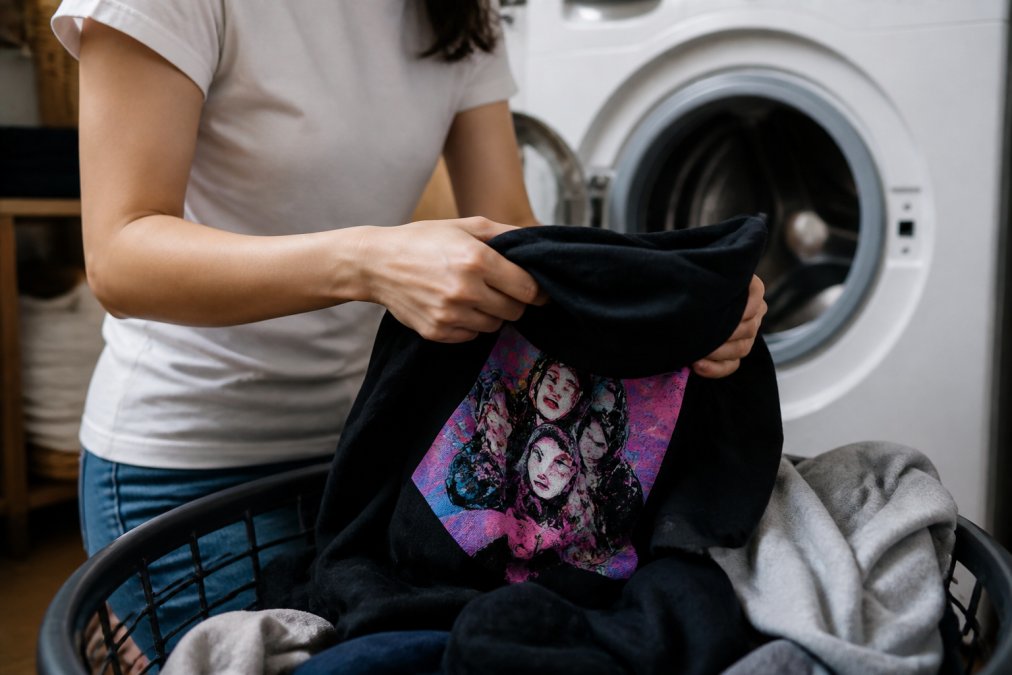
Step 1: Turn Your Shirt Inside Out and Sort by Color
Turn every graphic tee inside out before washing. This protects the printed surface from direct agitation and shields the ink from optical brighteners that dull colors. Sort by color to prevent bleeding, especially in the first few washes.
Step 2: Select Cold Water and the Gentle or Delicate Cycle
Cold water wash is the single biggest protection you can give a graphic tee. Hot water causes fabric to shrink and ink to expand and contract, accelerating cracking and peeling. Select the gentle or delicate cycle to reduce spin speed and agitation.
Step 3: Choose the Right Detergent and Skip the Bleach
Use a mild detergent marketed for dark colors or delicates, these are lower in pH and free of optical brighteners. Add detergent to the drum before loading clothes. Never use bleach on a graphic tee; it destroys ink chemistry and weakens fibers.
Best Detergent for Graphic Tees (and What to Avoid)
Best choices for graphic tees:
- Detergents labeled "for darks" or "color-protecting"
- Free-and-clear formulas with no dyes or perfumes
- Delicate-fabric detergents
What to avoid:
- Bleach and bleach-based stain removers
- Detergents with optical brighteners
- Heavy-duty enzyme detergents
- Excess detergent; residue builds up and stiffens the print
For stain removal, spot-treat with mild detergent applied directly to the stain. Let it sit five minutes, then rinse with cold water before washing. According to the Textile Exchange's fiber and material resource guide, synthetic dye stability is significantly affected by wash chemistry, particularly pH levels and oxidizing agents like bleach.
How to Wash Graphic Tees by Hand Without Damaging the Print
Hand washing is the gold standard for graphic tees, giving you complete control over agitation, water temperature, and soak time.
How to hand wash a graphic tee:
- Fill a clean sink with cold water.
- Add mild detergent and stir gently.
- Submerge the tee inside out and press gently into the water.
- Soak for 5-10 minutes.
- Gently squeeze the fabric. Do not wring, twist, or scrub the printed area.
- Drain and refill with clean cold water.
- Rinse by gently pressing until no suds remain.
- Gently press excess water out without twisting. Lay flat on a clean towel and roll to absorb moisture.
The process takes about 15 minutes. For frequently worn tees, hand washing every two to three wears extends print life considerably compared to repeated machine washing.
How to Dry Graphic Tees Without Ruining the Print
High heat in a dryer is as damaging to a print as hot water in the wash. Air drying is always the better option. Hang the tee on a padded hanger or lay it flat on a drying rack, away from direct sunlight. Most tees dry within two to four hours.
If you use a tumble dryer, select the lowest heat setting or "air fluff" mode. Remove the tee while still slightly damp and hang to finish drying. Never hang a wet tee by the collar alone, the weight stretches the neckline and distorts the print.
| Drying Method | Heat Level | Print Safety | Best For |
|---|---|---|---|
| Air dry / hang dry | None | Excellent | All graphic tees |
| Lay flat to dry | None | Excellent | Lightweight, delicate prints |
| Tumble dry, low heat | Low | Good | When time is limited |
| Tumble dry, high heat | High | Poor | Never use |
How to Prevent Graphic Tees from Cracking Based on Print Type
Different printing methods have different vulnerabilities, and washing them the same way is a mistake.
Screen Print and Heat Transfer Care
Screen printing deposits layers of ink on top of the fabric. Heat transfer applies a printed film using pressure and heat. Both sit on the surface rather than being absorbed into fibers.
For screen-printed and heat transfer tees:
- Cold water wash is critical. Heat causes the ink layer to expand and contract, breaking the bond with fabric.
- Avoid high spin speeds.
- Never iron directly on the print.
- Store folded with the print facing inward.
Friction is the primary enemy. Washing inside out reduces friction between the print and the drum significantly.
Direct to Garment (DTG) Print Care
Direct to garment printing bonds ink into fabric fibers using a specialized inkjet process. DTG prints feel softer because the ink is absorbed rather than sitting on top, making them sensitive to certain wash conditions.
For DTG-printed tees:
- Cold water wash, always. DTG inks are water-based and can bleed in warm water.
- Gentle or delicate cycle only.
- Air dry whenever possible.
- Avoid fabric softener entirely.
According to the Specialty Graphic Imaging Association's print durability resources, DTG prints on pre-treated, high-quality cotton garments can maintain color vibrancy through dozens of wash cycles when cold water and gentle settings are used consistently.
Ironing, Storage, and Rescuing a Faded or Damaged Print
Safe Ironing Practices for Graphic Tees
Iron graphic tees inside out on a low heat setting. Place a thin pressing cloth between the iron and fabric for extra protection. Never use steam directly on a print. If wrinkles are an issue, hanging the tee in a steamy bathroom for 10-15 minutes usually relaxes them without direct heat.
For storage, fold graphic tees with the print facing inward or hang on wide, padded hangers. Avoid stacking too many tees; pressure can cause print-to-fabric transfer over time.
Troubleshooting Faded, Cracked, or Peeling Prints
Cracking (screen print or heat transfer): Switch to air drying immediately. For minor cracking, fabric medium mixed with matching fabric paint can fill small cracks. Apply thin layers and heat-set with a pressing cloth.
Peeling (heat transfer): A household iron on low heat with a pressing cloth can re-adhere lifting edges. Press firmly for 15-20 seconds, then let cool completely.
Fading (DTG or screen print): Prevention is the real answer. For tees that have already faded, washing in cold water with a color-refreshing detergent designed for dark fabrics can slow further fading.
Common Laundry Mistakes That Destroy Graphic Tees
Washing in hot water. Hot water is the fastest way to crack a screen print and shrink a cotton tee.
Drying on high heat. A dryer set to high heat does in 45 minutes what years of cold-water washing would do slowly.
Washing right-side out. The print takes the full force of drum agitation and friction from other garments.
Using too much detergent. Excess detergent leaves residue that stiffens the print area and attracts dirt.
Washing with rough fabrics. Jeans, towels, and heavy cotton create friction that abrades print surfaces.
Leaving wet tees in the machine. Sitting damp promotes mildew and color bleeding.
The throughline is the same: heat and friction are the enemies. Every good graphic tee care decision comes down to reducing both.
For fans who want prints that actually last, the investment starts with the garment itself. Hot Takes Designs tees are made to order on ultra-soft fabrics with vibrant, long-lasting prints designed to hold up through real-world wear and washing. When you start with a quality print on quality fabric, these care steps are what keep it looking sharp for the long haul.
Frequently Asked Questions
How do you wash graphic tees without cracking them?
To wash graphic tees without cracking the print, always turn the shirt inside out before washing. Use cold water on a gentle or delicate cycle with a mild detergent, never bleach or products with optical brighteners. Avoid high spin speeds, which create friction against the print. Air drying or tumble drying on low heat also dramatically reduces the risk of cracking and peeling over time.
Is it better to hand wash graphic tees?
Hand washing is the gentlest option for graphic tees, especially those with screen print or heat transfer designs. Fill a sink with cold water, add a small amount of mild detergent, and gently agitate the shirt without scrubbing the print directly. Rinse thoroughly to remove detergent residue, then lay flat or hang dry. It takes a little more effort but significantly extends the life of your print.
What temperature should I wash graphic tees?
Always wash graphic tees in cold water, ideally 30°F or below on your machine's settings. Hot water accelerates ink breakdown, causes shrinkage in the fabric, and weakens the bond between the print and the textile. Cold water is gentler on both the garment and the design, helping preserve color vibrancy and preventing the print from cracking or peeling prematurely.
Can you put graphic tees in the dryer?
You can tumble dry graphic tees, but only on the lowest heat setting. High heat is one of the fastest ways to damage a screen print or direct to garment design, causing cracking, peeling, and shrinkage. Air drying by hanging the shirt or laying it flat is always the safest choice for textile preservation. If you must use a dryer, remove the shirt while it is still slightly damp.
What kind of detergent should I use for graphic tees?
Use a mild, liquid detergent free of bleach and optical brighteners. Powder detergents can leave detergent residue that builds up on prints over time. Products marketed as gentle or for delicates are ideal. Avoid fabric softener on DTG-printed tees specifically, it can coat the ink and cause the print to fade or lose vibrancy faster. Less detergent than the recommended dose is often sufficient for lightly worn shirts.
How do I prevent graphic tees from fading?
Preventing fading starts with cold water washing, turning the shirt inside out, and using a mild detergent without bleach or optical brighteners. Wash separately or with similar colors to avoid color bleeding onto the print. Limit washing frequency, spot clean minor marks instead of running a full wash. Store graphic tees folded or on a hanger away from direct sunlight, which degrades ink over time even outside the laundry.
Keeping your graphic tees looking as bold as the day they arrived takes the right habits from the first wash. Hot Takes Designs specializes in custom-printed, made-to-order apparel with vibrant, long-lasting prints on ultra-soft fabrics built to last. If you're ready for tees worth protecting, explore the full collection and find your next main character outfit.
This article was written using GrandRanker