

How to Remove Sticky Residue from Graphic T-Shirt
Table of Contents
- Why Sticky Residue Ends Up on Graphic T-Shirts
- What You'll Need Before You Start
- How to Remove Sticky Residue from a Graphic T-Shirt: Step-by-Step
- How to Remove Dried Adhesive from a Shirt
- How to Get Sticker Residue Off Clothes
- Does Dish Soap Remove Adhesive from Clothes?
- Can You Use Goo Gone on Clothes?
- Mistakes That Damage Prints and How to Avoid Them
- Frequently Asked Questions
Last Updated: October 4, 2026
Why Sticky Residue Ends Up on Graphic T-Shirts
That mystery patch on your favorite tee has a short list of usual suspects. Sticky residue on a graphic t-shirt is leftover adhesive from price tags, size stickers, shipping labels, or spray adhesive used during printing.
Here at Hot Takes Designs, we print a lot of tees for K-Pop concerts and BookTok hauls. We've also fielded every "how do I get this gunk off?" message you can imagine.
The Usual Suspects: Tape, Tags, Stickers, and Spray Adhesive
Most residue comes from four places:
- Retail price tags and security stickers
- Shipping labels that melted in transit
- Spray adhesive used to hold shirts flat during screen printing
Why Graphic Prints Need a Different Approach
The printed design is the fragile part. Harsh solvents can dull colors, crack the ink, or lift the print right off the fabric.
So the rule is simple: gentle on the print, patient with the adhesive. Below, we'll walk through a print-safe method step by step, plus what to do when the glue has already dried.
What You'll Need Before You Start
Gather these supplies before you touch the shirt. Having everything ready means less scrubbing and less risk to the print.
- Cotton balls or a soft, clean cloth
- Dish soap (a basic, grease-cutting formula)
- Warm water
Skip paper towels. They shred and leave lint stuck in the adhesive. Cotton balls and cloth give you control, which matters near the edges of a printed design.
How to Remove Sticky Residue from a Graphic T-Shirt: Step-by-Step
Here's the full method. Total time is about 20 minutes of hands-on work, plus a wash cycle.
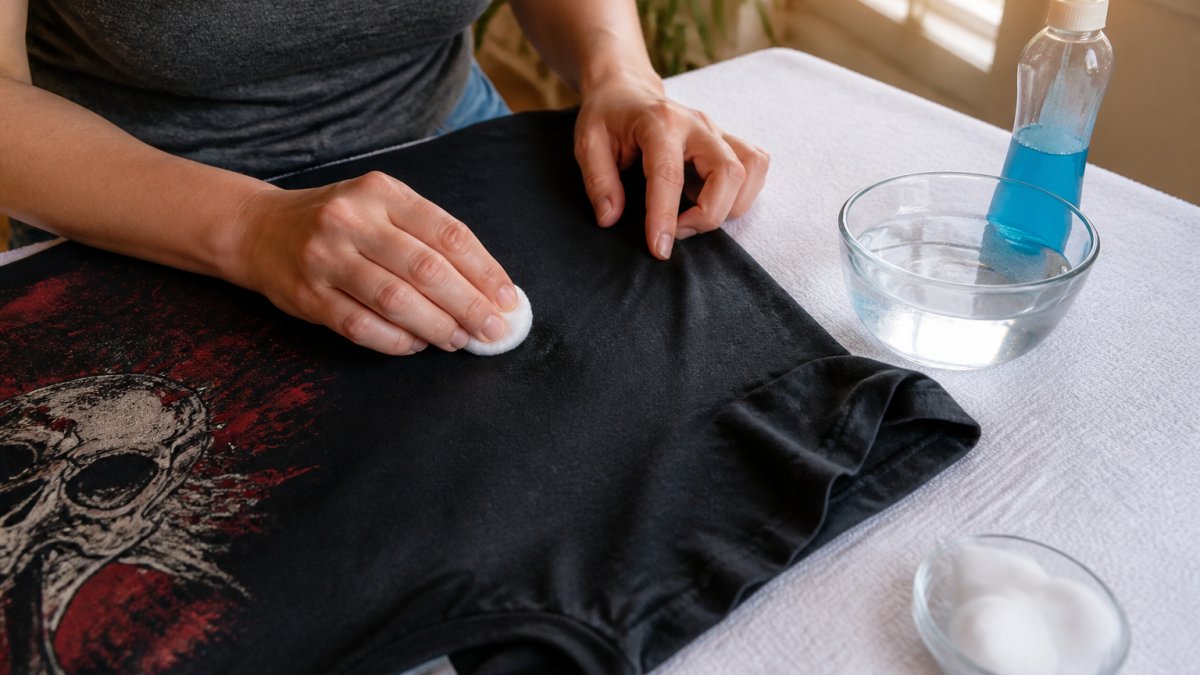
Step 1: Spot Test a Hidden Area First [Time: 2 minutes]
Test your remover on the inside hem or a seam before it touches the print. Some fabrics react badly to alcohol or vinegar.
Dab a little on the hidden spot. Wait a few minutes. If the color holds and the fabric looks normal, you're clear to proceed.
Step 2: Lift What You Can, Then Treat What's Left [Time: 10 minutes]
Start by lifting the edge of the sticker or tape with your fingernail. Peel slowly and keep the adhesive warm with your hand as you go.
For what's left behind, apply your remover to a cotton ball and pat it onto the residue. Let it sit for a minute, then blot and wipe in one direction.
Step 3: Rinse, Wash, and Check Before Drying [Time: 8 minutes plus wash]
Rinse the treated area with warm water to flush out the remover. Then wash the shirt as usual, following the care instructions on the tag.
Here's the part most people rush: check the spot before it goes in the dryer. Heat sets whatever is left. If the fabric still feels tacky, treat it again and rewash.
How to Remove Dried Adhesive from a Shirt
Dried adhesive behaves differently from fresh glue. It has already bonded to the fabric weave, so the goal is to soften it first, then lift it without dragging it across the print. The method you choose depends on what kind of adhesive you are dealing with.
Match the Method to the Adhesive Type
Not all sticky residue is the same. A price tag sticker, a heat-transfer backing, and spray adhesive from a screen-printing shop each respond to different treatments.
| Adhesive Type | Where It Comes From | Print-Safe First Move |
|---|---|---|
| Sticker or price-tag glue | Retail tags, size stickers | Warm vinegar compress, then dish soap |
| Shipping-label adhesive | Melted labels in transit | Dish soap paste, then repeat blotting |
| Spray adhesive | Screen-printing hold-down | Freeze with ice, then peel and treat |
| Heat-transfer residue | Old vinyl or transfer film | Warm iron over parchment paper, peel slow |
| Unknown or mixed | Layered stickers, old glue | Spot test, then start with dish soap |
Vinegar Compress for Sticker and Label Glue
Soak a cotton ball in warm white vinegar and press it against the dried patch for three to five minutes. The acid softens the adhesive so it releases instead of fighting you. Once it feels tacky rather than hard, blot it away with a clean white cloth. Work from the outside edge of the residue toward the center so you are not dragging glue across clean fabric.
Freeze-and-Peel for Spray Adhesive
Spray adhesive used during printing can dry into a rubbery film. Hold an ice cube in a plastic bag against the spot for a minute or two. The cold makes the adhesive brittle, so it lifts in one piece instead of smearing. Peel what you can with your fingernail, then follow with a dish soap blot for the leftover film.
Heat-and-Peel for Transfer Residue
If the residue came from an old heat-transfer design, place a piece of parchment paper over the spot and press with a warm iron for 10 to 15 seconds. The heat reactivates the adhesive so you can peel it away. Keep the iron on low and never let it touch the print directly.
Repeat-Treatment Guidance
Old glue often takes more than one round. A common pattern is: soften, blot, rinse, check, repeat. If the fabric still feels tacky after two rounds, wash the shirt with a small amount of dish soap and cold water, then check again before drying. Two or three rounds is normal for adhesive that has been on the shirt for months.
What Not to Do on a Graphic Tee
- Do not scrape with a metal edge; it snags the knit and can cut the print.
- Do not soak the whole shirt in vinegar; it can dull dark dyes over time.
- Do not use a hot dryer to "loosen" the glue; heat sets residue and damages prints.
How to Get Sticker Residue Off Clothes
Sticker residue is the most common culprit on graphic tees, and it is also the easiest to spread if you rush. The adhesive is designed to stay tacky, so every wipe with a dirty cloth just moves the glue to a new spot. The method below is built around protecting the print while you work.
Work Order Matters
Always start at the outside edge of the residue and move toward the center. If you start in the middle, you push glue outward onto clean fabric and possibly onto the print. Swap to a fresh cotton ball or clean section of cloth as soon as it feels gummy. A saturated cotton ball smears instead of lifts.
Print-Safe Technique Near the Graphic
When residue sits close to or on top of the design, change your approach:
- Use a cotton ball, not a cloth, so you can control exactly where the remover goes.
- Apply the remover to the cotton ball first, never directly to the shirt.
- Pat, do not rub. Rubbing pushes adhesive into the weave and can crack the ink.
Fabric Compatibility Quick Guide
Different fabrics tolerate different removers. Spot test a hidden hem or seam before anything touches the print.
| Fabric | Dish Soap | White Vinegar | Rubbing Alcohol |
|---|---|---|---|
| 100% cotton | Safe | Safe | Safe on plain areas |
| Polyester | Safe | Safe | Test first; can dull sheen |
| Cotton-poly blend | Safe | Safe | Test first |
| Tri-blend | Safe | Test first | Avoid |
| Delicate or heathered | Safe | Test first | Avoid |
Step-by-Step Sticker Residue Removal
- Peel what you can with your fingernail. Warm the sticker with your hand as you go.
- Mix a few drops of dish soap with warm water.
- Apply to a cotton ball and pat onto the residue. Let it sit for one minute.
- Blot and wipe in one direction. Swap cotton balls as they get gummy.
- For stubborn spots, press a warm vinegar-soaked cotton ball on the area for three minutes.
- Rinse with warm water to flush out the remover.
- Check the spot before drying. If it still feels tacky, repeat and rewash.
Why Heat Drying Is the Enemy
A dryer set to medium or high will bake any remaining adhesive into the fabric and can also crack or lift the print. Air-dry graphic tees until the spot is completely gone. If you must use a dryer, use the lowest heat setting and remove the shirt while it is still slightly damp.
When to Stop and Try Something Else
If three rounds of dish soap and vinegar have not cleared the residue, the adhesive may have soaked deep into the fibers. At that point, a citrus-based remover like Goo Gone can work on plain cotton, but keep it off the print entirely. Test first, apply with a cotton ball, and wash the shirt right after to remove the oily residue.
Does Dish Soap Remove Adhesive from Clothes?
Yes, dish soap removes adhesive from clothes in most cases. It's the safest first choice because it cuts grease without attacking the print.
Mix a few drops with warm water. Apply with a cotton ball, let it sit a minute, then blot. For light residue, this alone does the job.
Can You Use Goo Gone on Clothes?
You can use Goo Gone on clothes, but only on plain fabric, never on the print. Citrus-based removers are strong, and that strength is exactly why they're risky on a graphic design.
If you use it, test first, apply with a cotton ball, and wash the shirt right after. The oily residue needs a full cleaning cycle to come out.
Mistakes That Damage Prints and How to Avoid Them
The most common mistake is scrubbing. Rubbing hard pushes adhesive deeper into the weave and cracks the print at the same time.
| Mistake | What It Does | The Fix |
|---|---|---|
| Scrubbing the print | Cracks and lifts the ink | Pat and blot only |
| Hot water on fresh glue | Spreads the adhesive | Use warm water |
| Drying before checking | Sets leftover residue | Air-dry until spot-free |
| Alcohol on the design | Fades colors and ink | Keep it on plain cotton |
| Skipping the spot test | Damages dye or fabric | Test the hem first |
A few more habits keep your prints safe:
- Turn the shirt inside out before washing
- Use cold water and a gentle cycle
- Skip the dryer for graphic tees when you can
Some residue keeps coming back after one treatment. That usually means the adhesive soaked into the fabric, so repeat the pat-and-blot step and rewash. Two or three rounds is normal for old glue.
Frequently Asked Questions
What dissolves sticky adhesive on a graphic t-shirt?
Warm water and a few drops of grease-cutting dish soap handle most water-based adhesives on cotton and cotton-blend tees. For tougher residue, isopropyl alcohol dabbed on a cotton ball works, but test it on an inside hem first because alcohol can dull some screen-printed inks. Oil-based options like cooking oil or Goo Gone lift stubborn adhesive, though they require a follow-up wash with detergent to remove the oily film. Never soak the printed area or scrub it, since friction is what cracks and peels graphics.
How do I remove dried adhesive from a shirt without ruining the print?
Start by freezing the shirt for an hour, which makes dried adhesive brittle enough to crack off with a fingernail or dull edge. For what's left, dab warm soapy water onto the residue with a cotton ball and let it sit for five minutes, then blot, don't rub. Repeat the blot-and-rinse cycle until the residue lifts. Keep heat and direct scrubbing away from the printed design, and always check the care tag before treating. If the adhesive sits directly on the graphic, use the gentlest method first and stop if the ink starts to look dull.
Will dish soap remove tape or sticker residue from clothes?
Dish soap works well on fresh, water-based adhesive like tape or sticker residue, especially when paired with warm water. Apply a small amount directly to the sticky spot, let it sit for five to ten minutes, then blot with a damp cloth and rinse. Grease-cutting formulas tend to work faster than gentle ones. It won't touch every solvent-based adhesive, so if two rounds don't lift the residue, move to isopropyl alcohol or a commercial adhesive remover instead of scrubbing harder.
Can you use Goo Gone on clothes with a graphic print?
Goo Gone can remove adhesive from many fabrics, but it's risky on graphic tees because the citrus solvent can soften or discolor screen-printed inks. If you try it, spot test on an inside seam or hem first, apply it only to the residue and not the print itself, and wash the shirt immediately after with regular detergent to clear the oily residue. For printed designs, warm soapy water or isopropyl alcohol is usually the safer first move. When in doubt, treat the print like it's fragile, because it is.
Sticky residue is annoying, but it's not a death sentence for your favorite tee. The trick is patience: pat, blot, and rinse instead of scrubbing. When you want a shirt that holds up to real life, Hot Takes Designs makes custom-printed tees cut and sewn to order on ultra-soft fabric with vibrant, long-lasting prints. Our niche K-Pop and BookTok designs are built for fans who refuse to be basic. Get started with Hot Takes Designs and keep every graphic tee looking sharp.