

Direct to Garment vs Screen Printing Durability: 2026 Guide
Table of Contents
- Direct to Garment vs Screen Printing Durability: The Quick Answer
- How Ink Bonding and Curing Decide Print Longevity
- DTF vs Screen Printing Longevity: The Third Option Nobody Mentions
- DTG vs Screen Printing Cost: Where Each Method Makes Financial Sense
- How to Wash Graphic Tees Properly to Double Their Lifespan
- Fabric Compatibility: Why Your Blank Tee Matters More Than the Printer
- Conclusion
- Frequently Asked Questions
Last Updated: September 12, 2026
Direct to Garment vs Screen Printing Durability: The Quick Answer
Screen printing wins on raw durability for high-volume runs, but Direct to Garment (DTG) has closed the gap: print longevity now depends more on ink chemistry and washing than the machine.
This guide breaks down the direct to garment vs screen printing durability question at the level of ink chemistry, curing temperature, and fabric weave, where degradation happens.
Direct to Garment (DTG) printing applies water-based ink directly onto a garment via inkjet, bonding into the fibers rather than sitting on top.
Screen printing pushes plastisol or water-based ink through a mesh screen, then heat-cures it into a durable layer.
Durability comes down to three variables: how the ink bonds, ink layer thickness, and mechanical abrasion over the garment's lifespan.
| Factor | DTG | Screen Printing |
|---|---|---|
| Ink type | Water-based | Plastisol or water-based |
| Bonding method | Chemical bonding into fibers | Ink layer sits on fabric surface |
| Ink layer thickness | Thin | Thick |
| Wash durability | Strong with proper care | Excellent |
| Best for | Detailed, full-color designs | Bold, high-volume designs |
| Fading risk | Low with correct curing | Low |
| Cracking risk | Low | Higher if under-cured |
Winner for most fandom and custom apparel: DTG, because it handles detailed artwork, full-color gradients, and small-batch made-to-order runs without the setup costs of screen printing. Choose screen printing only when you need thousands of identical shirts with maximum abrasion resistance.
How Ink Bonding and Curing Decide Print Longevity
Print longevity is decided at curing: if ink isn't cured to the right temperature, no amount of careful washing will save it.
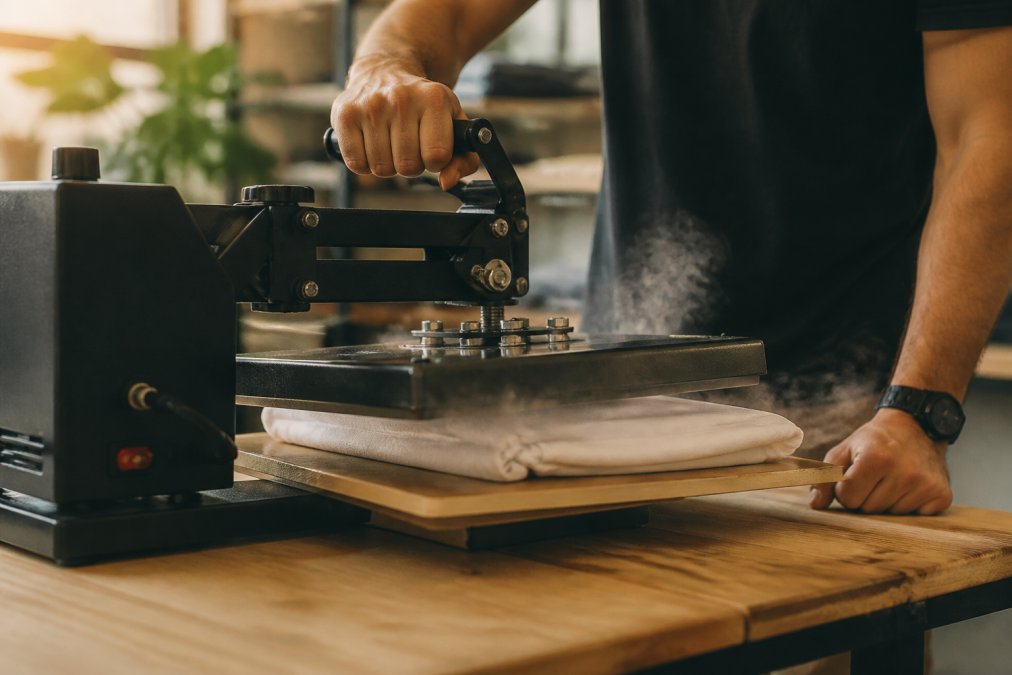
On a DTG shirt, the printer applies a pre-treatment that opens the fibers, a white under-base (on darks), then color layers. The water-based ink penetrates the cotton and forms a chemical bonding with the cellulose; a heat press locks it at a curing temperature of 320°F-360°F.
Screen printing works differently: plastisol sits on top as a flexible plastic layer cured under a conveyor dryer. That thicker layer resists mechanical abrasion short-term, but under-cured plastisol will crack and peel within a handful of wash cycles, the most common failure in cheap screen printing.
What most guides miss: DTG's thin ink layer thickness is an advantage for print longevity, thin ink flexes with the fabric, while thick plastisol cracks when cotton stretches.
Plastisol vs Water-Based Ink: What Survives the Wash
Plastisol ink survives more wash cycles on paper. Water-based ink survives better on real cotton in real conditions.
Plastisol is a PVC-based ink that cures into a rubbery, opaque solid, great for white on black, with excellent color fastness and fading resistance. The trade-off is hand feel and cracking risk.
Water-based ink, used in most DTG and modern screen printing, dyes rather than coats the fabric: softer, more breathable, and crack-free. It can fade faster on low-quality garments, but on a good 100% cotton blank with proper ink saturation, it holds up for years.
If a printer claims their plastisol "never cracks," ask about their curing temperature and dryer dwell time. That's where the truth lives.
DTF vs Screen Printing Longevity: The Third Option Nobody Mentions
DTF (Direct to Film) printing prints a design onto film, coats it with adhesive powder, then heat-presses it onto the garment. It's the method behind the double-sided graphics on the Sarcastic Workout Shirt in our shop, and it confuses more customers than any other method, because DTF looks like screen printing in photos but behaves very differently in the wash.
How DTF actually bonds (and why it matters for durability)
DTF is a three-layer system: printed ink, white adhesive powder, and garment. The heat press melts the powder into a flexible film that mechanically locks onto the fabric surface. Unlike DTG, there's no chemical bond into the cotton; unlike plastisol, the film is thin and stretchy. That middle ground puts DTF durability between the two.
DTF vs screen printing: head-to-head on wash durability
| Factor | DTF | Screen printing (plastisol) |
|---|---|---|
| Bond type | Adhesive film on surface | Cured ink layer on surface |
| Ink layer thickness | Thin, flexible | Thick, rubbery |
| Crack resistance | High (film stretches) | Moderate (plastisol cracks when flexed) |
| Peel resistance | Good if powder is fully cured | Good if ink is fully cured |
| Fade resistance | High | High |
| High-abrasion zones (elbows, seat) | Weaker | Stronger |
| Fine detail and gradients | Excellent | Limited by mesh count |
| Small-batch economics | Excellent | Poor (screen setup per color) |
The failure modes, ranked
- Under-cured adhesive powder. If the powder doesn't fully melt, the film lifts at the edges within a handful of washes. A properly calibrated heat press (typically 320°F-340°F for 10-15 seconds, with pressure and dwell dialed in) is the difference between a print that lasts years and one that fails in a month.
- High-abrasion contact. DTF film is thin. On a hoodie elbow or the seat of pants, repeated friction can wear through the film faster than a thick plastisol deposit.
- Heat exposure in the dryer. High dryer heat softens the adhesive and shortens the film's life.
Where DTF wins outright
DTF handles fine detail, gradients, and photographic artwork that screen printing can't reproduce without expensive separations, and it eliminates screen setup costs. For a 12-shirt order with a six-color design, DTF is cheaper and more durable than a six-screen plastisol run, no screen to mis-register, no thick ink deposit to crack.
Where screen printing still wins
If you're printing 250+ identical shirts with a bold, low-color design that will take a beating (team uniforms, workwear, merch worn hard), plastisol screen printing's thicker deposit still outlasts DTF in high-abrasion zones.
DTG vs Screen Printing Cost: Where Each Method Makes Financial Sense
DTG vs screen printing cost flips with volume. Screen printing has high setup costs (one screen per color, per design) but very low per-unit costs at scale. DTG has almost no setup cost but a higher per-unit cost that stays flat at any quantity.
| Order Size | Cheaper Method | Why |
|---|---|---|
| 1-10 shirts | DTG | No screen setup fees |
| 10-50 shirts | DTG or DTF | Setup costs still dominate |
| 50-250 shirts | Toss-up | Depends on color count |
| 250+ shirts | Screen printing | Per-unit cost drops sharply |
For fandom apparel, concert fits, and BookTok merch, orders are small and designs detailed, exactly where DTG and DTF win on cost and screen printing's setup fees make it impractical.
At Hot Takes Designs, every piece is made to order using DTG and DTF printing, keeping detailed, full-color designs affordable without a 250-shirt minimum. Our BT21 Hooligan Inspired Women's Cotton T-Shirt is a good example: a detailed K-pop graphic on 190gsm cotton, printed one at a time.

How to Wash Graphic Tees Properly to Double Their Lifespan
Learning how to wash graphic tees properly is the highest-use thing you can do for print longevity. A well-cured print washed badly fails faster than a mediocre print washed well. "Turn it inside out and use cold water" is correct but incomplete: DTG, plastisol screen printing, and DTF each fail differently, and the routine that protects one can shorten another's life.
Why each rule exists (the mechanism, not the mantra)
- Turn the shirt inside out. In a top-loading agitator, the print faces the drum and other garments directly. Flipping the shirt puts the cotton shell between the ink and the abrasion source. It matters most for plastisol, which sits on the surface and can be scuffed off mechanically.
- Wash cold, ideally 86°F or below. Heat accelerates print degradation: hot water swells cotton fibers, letting DTG ink migrate and fade, and softens plastisol so it cracks when the drum flexes the shirt.
- Use mild detergent, never bleach. Chlorine bleach attacks the cellulose fibers DTG ink bonds to; when the fiber breaks down, the ink bond goes with it. Oxygen-based color-safe bleach is generally safe on cured prints but still adds stress.
- Skip fabric softener. Softener leaves a waxy film: on DTG or DTF it sits between ink and fabric and dulls color; on plastisol it leaves a hazy residue that looks like fading but isn't.
- Wash on a gentle cycle with like colors. Zippers, buttons, rivets, and heavy denim act like sandpaper against a print. A mesh laundry bag is the cheapest insurance for a favorite graphic tee.
- Avoid soaking for extended periods. Long soaks leach water-soluble dye components out of DTG ink. A 20-minute pre-soak is fine; overnight is not.
- Tumble dry low or hang dry. High dryer heat is the second-biggest killer after hot water, and it shrinks cotton, stretching the print and cracking plastisol.
- Never iron directly on the print. If you must, turn the shirt inside out on low, or place a cotton pillowcase between iron and print. Direct contact melts plastisol and scorches DTG ink.
Care differences by print type
| Print type | Biggest failure mode | Care priority |
|---|---|---|
| DTG (water-based) | Fading from heat and long soaks | Cold wash, low dryer heat |
| Screen print (plastisol) | Cracking and peeling from heat and flex | Low dryer heat, avoid stretching |
| Screen print (water-based) | Fading, similar to DTG | Cold wash, mild detergent |
| DTF (film transfer) | Edge lifting from heat and abrasion | Inside out, low heat, no direct iron |
The two rules that matter most
If you remember two things, remember heat and abrasion. Hot water and high dryer heat break down the ink bond faster than anything else, and washing prints against zippers, buttons, or rough fabrics causes the mechanical abrasion that wears a print down.
Fabric Compatibility: Why Your Blank Tee Matters More Than the Printer
The fabric weave and fiber content of the blank affect printing durability as much as the printing method does.
DTG bonds best to 100% cotton. The water-based ink needs cellulose fibers to chemically bond with. On polyester blends, DTG ink struggles to adhere and can wash out faster (textileschool.com). That's why our BT21 Hooligan Inspired Kids Cotton T-Shirt uses 100% cotton: it's the right canvas for DTG.

Sublimation printing, used on the Skeleton Siren Short Sleeve T-Shirt, turns ink to gas that locks into polyester fibers, hence that shirt's polyester-spandex blend. Sublimation prints don't crack or peel because there's no surface layer to fail. Screen printing is the most fabric-flexible, since plastisol adheres to cotton, blends, and synthetics.

Fabric compatibility cheat sheet:
- 100% cotton: Best for DTG, screen printing, and DTF
- Cotton-poly blends: Best for screen printing and DTF
- 100% polyester: Best for sublimation and DTF
- Spandex blends: Best for sublimation (stretches without cracking)
Conclusion
The direct to garment vs screen printing durability debate has a real answer, and it isn't "screen printing always wins." Screen printing wins on thick, high-abrasion deposits at high volume; DTG and DTF win on detailed, full-color, small-batch prints that flex with the fabric instead of cracking on top. For most fandom, concert, and custom apparel, the method matters less than curing, fabric, and how you wash the shirt.
At Hot Takes Designs, we print every piece to order using DTG and DTF technology on ultra-soft cotton and performance blends, so your K-pop concert fit or BookTok graphic tee holds its color and detail through wash after wash. Every item is printed for the fan who refuses to be basic, with inclusive sizing from 2XS to 6XL and designs you won't find on a big-box shelf.
Get started with Hot Takes Designs and wear a print that survives the tour, the con, and the group chat.
Frequently Asked Questions
Which lasts longer, DTG or screen printing?
Screen printing typically outlasts DTG because plastisol ink sits as a thick, cured layer bonded to the fabric surface. DTG uses water-based ink absorbed into cotton fibers, which fades gradually. That said, DTG on 100% cotton with proper pre-treatment and curing holds up well for low-volume custom apparel, especially when you follow correct washing instructions.
What is more durable, DTF or screen printing?
Screen printing wins on raw durability for high-volume runs. Plastisol ink cures into a flexible film that resists cracking, peeling, and fading through heavy use. DTF transfers bond a printed film to the garment with a heat press, and while modern DTF holds up well, the adhesive layer can degrade faster than plastisol on stretchy fabrics. DTF vs screen printing longevity depends on fabric type and how you wash the garment.
Does DTG printing fade after washing?
DTG prints fade gradually rather than suddenly. Water-based ink penetrates cotton fibers instead of sitting on top, so fading happens through repeated wash cycles, hot water, harsh detergent, and tumble drying. Washing cold, inside out, on a gentle cycle and hang drying extends the print's life significantly.
Is direct-to-garment printing better quality than screen printing?
Neither is universally better; they serve different needs. DTG excels at detailed, full-color designs and small batches, printing one shirt at a time with no setup cost. Screen printing delivers thicker ink coverage, bolder colors, and superior durability for bulk orders. For a single custom tee with a complex graphic, DTG wins on flexibility. For 50 identical shirts worn hard, screen printing wins on longevity.
How much does DTG vs screen printing cost per shirt?
DTG has no setup fee. Screen printing charges per screen setup, which spreads across the order. For fandom apparel, concert fits, and BookTok merch, orders are small and designs detailed, exactly where DTG and DTF win on cost and screen printing's setup fees make it impractical.