

Supporting Bookish Artists: A Reader's Guide to Real Impact
Last Updated: November 2, 2026
Quick Summary
Support bookish artists by sharing their work with credit and buying directly from their own shops, since a like is free and free doesn't pay rent. You can also join a supporter scheme, back an art book launch, or commission original art using a written agreement.
- Share a post to your story with the artist's handle visible.
- Buy prints, stickers, or zines directly from the artist's shop.
- Send a short commission inquiry stating subject, deadline, and budget range.
- Confirm usage rights before work starts, since copyright usually stays with the artist.
- Pick two support actions per month and stick to them.
Table of Contents
- Why Bookish Artists Need More Than a Like
- How to Support Independent Bookish Artists Online
- How to Support Independent Artists Beyond Liking Their Work
- Buying Books, Art, and Merchandise Directly
- Commissioning Bookish Art: Etiquette, Contracts, and Usage Rights
- Art Book Printing and How to Get an Art Book Published
- Where to Discover and Safely Commission Bookish Artists
- Building Your Bookish Support Checklist
- Frequently Asked Questions
Why Bookish Artists Need More Than a Like
Bookish artists are the illustrators, cover designers, and character creators who make the fictional worlds you love visible.
Here's the hard truth: a like is free, and free doesn't pay rent. Many artists find that engagement without purchases or shares leaves them with an audience but no income.
Keep reading because the checklist at the end gives you a plan you can start today.
How to Support Independent Bookish Artists Online
The fastest way to support independent bookish artists online is to share their work with credit and buy directly from their shops. Both actions take minutes.
Start here:
- Follow their artist portfolio and turn on notifications
- Share a post to your story with their handle visible
- Tag them when you post your own bookish art or merch
The Federal Trade Commission's guidance on endorsements matters here too. If you ever receive free art or merch in exchange for a post, disclose it (the FTC).
One mistake we see constantly: reposting art without credit. That's not support. That's taking the artist's work and giving them nothing back.
How to Support Independent Artists Beyond Liking Their Work
Real support means money, time, or reach moving in the artist's direction. A like moves none of them.
Try these moves:
- Buy a print, sticker, or zine directly from their shop
- Join a supporter scheme or reader's club if they offer one
- Back their art book on a publishing platform during a launch
- Recommend them by name in your reader community
Word of mouth is powerful. When a friend asks where you got that bookish print, name the artist. That single recommendation can turn into a sale.
Buying Books, Art, and Merchandise Directly
Buying direct is the clearest answer to how to support independent bookish artists.
Here's what to buy:
- Original artwork or limited prints
- Book illustration commissions
- Art books from an independent press
- Merchandise like tees, totes, and stickers
Our bookish apparel is custom-printed, cut, and sewn to order, like our Wish I Lacked The Ability To Read Spice frog hoodie and our Morally Grey Era bodysuit.
Before you order from any shop, check the size chart. Our literary graphic tees women's sizing guide walks you through fit so you order right the first time.
Commissioning Bookish Art: Etiquette, Contracts, and Usage Rights
Commissioning art means paying an artist to create original work for you, usually a character, scene, or cover. Do it right and both sides win.
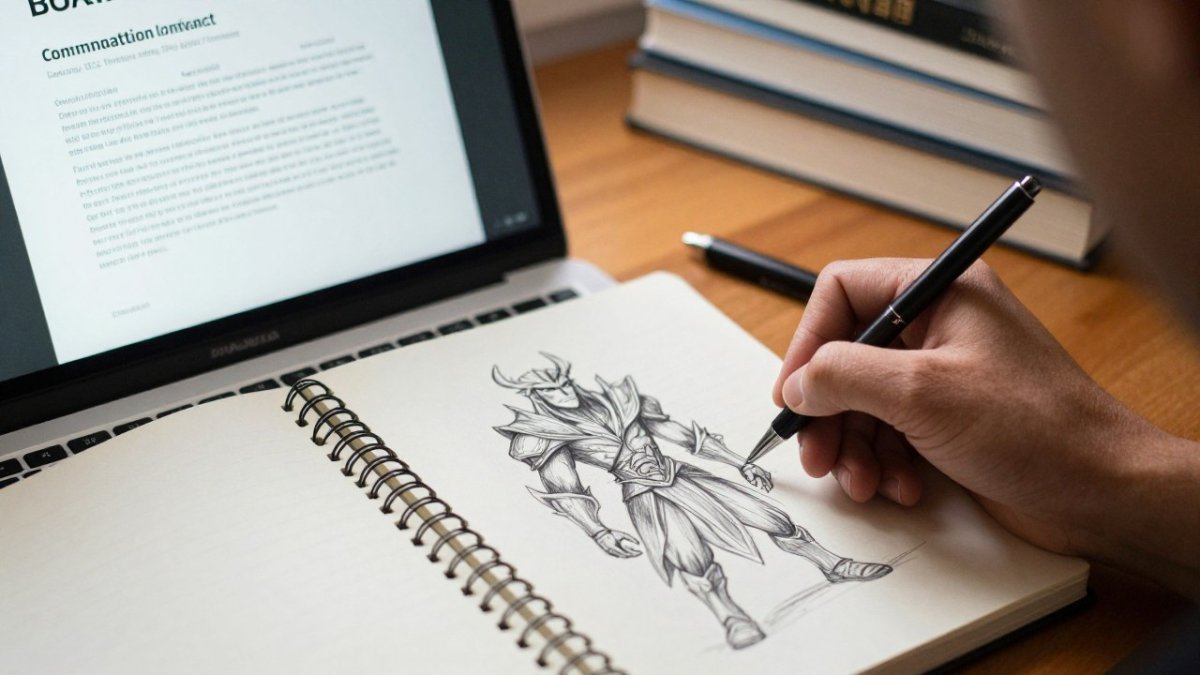
Before you message an artist
Start with their posted terms, not your idea. Most independent bookish artists publish a commission page or a pinned post that states whether they are open, what they draw, and what they charge.
A common pattern among working artists is a three-part inquiry: what you want, your deadline, and your budget range. Keep the first message short. Artists field many requests, and a clear ask is easier to answer than a paragraph of backstory.
- Check open-call status and queue length
- Confirm the artist draws your subject (some avoid certain fandoms or genres)
- State whether the piece is personal or commercial
- Name a realistic budget range, not just "what do you charge?"
Budget, deposits, and payment
Most commissions run on a deposit-plus-balance model. A typical structure is a non-refundable deposit up front to reserve a slot, with the remainder due at approval or delivery.
Payment methods matter for safety. Use the artist's stated platform and avoid pressure to move off it.
Watch out: paying the full amount up front with no written scope leaves you little recourse if the piece stalls or arrives different from what you agreed.
Scope, revisions, and timelines
A written agreement should state what is included: sketch stage, color stage, file format, and how many revision rounds. Many artists include one or two rounds of minor revisions and charge for additional changes. Ask what counts as a revision versus a new request.
Timelines are usually estimates, not guarantees. Ask for a target delivery window and how the artist communicates delays.
Funny Booktok Frog Hoodie | "Wish I Lacked The Ability To Read Spice" Vintage →
Usage rights: personal versus commercial
This is where most disputes start. Paying for a commission usually buys you the artwork for personal use, not the copyright. The artist typically retains copyright unless a separate agreement transfers it.
- Personal use: printing for yourself, sharing on your own social accounts with credit, using as a profile image
- Commercial use: putting the art on products you sell, using it in branding, or licensing it for a publication
- Exclusive versus non-exclusive: whether the artist can sell prints or reuse the design
If you plan to sell anything featuring the art, say so before the commission starts. Asking after delivery can mean renegotiating the terms.
Credit and reposting
Ask the artist how they want to be credited and whether you may repost the finished piece. Many artists allow sharing with a tag and a link to their shop; some ask that you not repost at all.
Never trace, recolor, or resell an artist's work as your own. That's infringement, and it hurts the creative community you're trying to help.
A simple commission checklist
- Read the artist's terms and confirm they are open
- Send a short inquiry with subject, deadline, and budget
- Agree on scope, revision rounds, and delivery window in writing
- Pay the deposit through the artist's stated method
- Confirm usage rights: personal, commercial, or exclusive
- Approve stages as agreed and pay the balance on delivery
- Credit the artist and respect their repost preferences
Art Book Printing and How to Get an Art Book Published
Art book printing is the process of turning an artist's collected work into a physical book. If you want to help an artist get there, your support at the launch stage matters most.
Ways readers help an art book happen:
- Pledge during a crowdfunding or pre-order campaign
- Share the launch with your reader community
- Leave honest reviews once it ships
- Request it at your local library or bookstore
For artists, the path usually runs through self-publishing or an independent press. A publishing platform handles printing and distribution, while an independent press offers editorial help and reach.
Where to Discover and Safely Commission Bookish Artists
Safe discovery starts with the artist's own portfolio and a paper trail. Look for a real website, clear terms, and reviews from past buyers. The goal is to find artists whose work fits your taste and whose process you can verify before money changes hands.
Places to find bookish artists
- Artist portfolio sites and open-call boards where illustrators list availability
- Bookish conventions and reader events, where you can see prints and talk to artists in person
- Reader community recommendations, especially from people who have actually commissioned work
- Social media, with a link back to the artist's shop or portfolio rather than a dead-end post
A useful habit is to save artists whose work you like before you need a commission. When you are ready to buy, you already have a shortlist and can watch for open calls.
How to vet an artist before you pay
Run the same checks you would on any small business. A legitimate bookish artist usually has a portfolio showing a consistent body of work, a terms or FAQ page, and some evidence of past buyers, reviews, tagged posts, or a public queue.
- Portfolio: does the style match what you want, and is there enough work to judge consistency?
- Terms page: does it state pricing, deposit, revisions, and usage rights?
- Contact: is there a real way to reach them beyond a single social account?
- Track record: are there reviews, testimonials, or tagged finished pieces from other buyers?
Use the same checks on any artist you commission.
Red flags to walk away from
Watch out: no terms page, pressure to pay off-platform, no prior work samples, and requests for full payment up front with no written scope are all reasons to pause. A common pattern in scams is a too-good price and a rush to pay before you can ask questions.
Other signals to treat carefully:
- The artist cannot show a portfolio or explains away missing work
- Communication is vague about timeline, revisions, or rights
- They ask you to send payment to an unlisted account or a friend's handle
- They discourage you from asking for a written agreement
From discovery to a safe commission
Once you have a shortlist, move in order: read terms, send a short inquiry, agree on scope and rights in writing, pay the deposit through the stated method, and confirm delivery and credit expectations.
If you want examples of shops worth backing, our list of ethical brands like bookish aesthetic shops is a solid starting point. And if BookTok brought you here, our styling tips for BookTok-inspired outfits keep you connected to the community beyond a single like.
Building Your Bookish Support Checklist
A support checklist turns good intentions into repeat habits. Pick two actions per month and stick to them.
| Action | Cost | Time | Best For |
|---|---|---|---|
| Share art with credit | Free | 2 min | Everyone |
| Buy a print or zine | Low | 10 min | Readers with a budget |
| Join a supporter scheme | Monthly | 5 min | Steady support |
| Commission original art | Higher | Weeks | Big fans |
| Recommend by name | Free | 1 min | Word of mouth |
Low-cost and no-cost ways to help count too. A thoughtful comment, a library request, or a name-drop in your readers club all move the needle.
If you want examples of shops worth backing, our list of ethical brands like bookish aesthetic shops is a solid starting point.
Frequently Asked Questions
How can I support bookish artists online if I have a tight budget?
Low-cost and no-cost support still matters. Follow artists, leave genuine comments, and share their posts to your own reader community. Save their work to public wishlists or Pinterest boards with credit. If you can spend a little, buy a single print or sticker rather than nothing. Word of mouth is free and often brings an artist more sales than a paid ad. The key is consistency: a reader who shares three times a month does more than one who likes once and disappears.
What should I check before buying art from an independent creator?
Read the product listing for size, materials, and shipping times. Look for a clear return policy and a real contact method. For commissions, ask about the deposit, revision rounds, and whether you receive personal or commercial usage rights. If the listing is vague on any of these, message the artist before paying. A legitimate bookish artist will answer directly.
How do I commission book-inspired art without overstepping?
Start by checking whether the artist has open commissions and a posted price range. Describe your idea in plain terms, including the book or fandom, character details, and intended use. Expect to pay a deposit, often half upfront. Ask how many revision rounds are included and who owns the final image. Personal use and commercial use are different licenses, so state which you need. Never ask an artist to copy another creator's style or to draw copyrighted characters for resale without permission.
What is art book printing, and how does it support artists?
Art book printing is the process of producing a physical book of illustrations, often through short-run digital printing or print-on-demand services. Buying one directly from an independent artist puts more money in their pocket than a mass-market art book does. If you are an artist yourself, services like print-on-demand let you sell without holding inventory. Before you print, confirm file resolution, bleed margins, and paper stock. A well-made art book becomes a portfolio piece and a steady income source.
Supporting bookish artists takes more than scrolling. It takes a purchase, a share, or a name dropped in the right place. Hot Takes Designs makes custom-printed, cut-and-sewn bookish apparel to order, with ultra-soft fabrics and vibrant prints built to last. Browse our BookTok-inspired styles and find your next main character fit. Get started with Hot Takes Designs and wear your fandom loud.
