

TeePublic Alternative for Custom Apparel: 7 Better Options
Table of Contents
- Why You Need a TeePublic Alternative for Custom Apparel in 2026
- Quick Comparison: Top Print-on-Demand Platforms at a Glance
- The Best Print on Demand Sites for Artists Who Want Control
- POD Marketplace vs Standalone Store: Which Model Wins?
- Profit Margins and Print Quality: Where Your Money Actually Goes
- Technical File Requirements and Design Limitations to Know Before You Print
- How to Start a Streetwear Brand Without Inventory Headaches
- The Verdict: Choosing Your TeePublic Alternative for Custom Apparel
- Frequently Asked Questions
Last Updated: September 8, 2026
Why You Need a TeePublic Alternative for Custom Apparel in 2026
Most artists hit the same wall on big marketplaces: designs get buried and margins shrink with every sitewide sale. A TeePublic alternative for custom apparel puts control back in your hands, letting you own your storefront, set prices, and build a real brand.
The marketplace model works for casual sellers, but serious creators consistently outgrow it.
The biggest reason to switch? Brand identity. On a marketplace, customers buy a product; from a dedicated store, they buy into your aesthetic. That changes how you price, market, and build loyalty.
Below, we'll show you the criteria to weigh when choosing your next platform, what separates a POD marketplace from a standalone store, and where your money goes.
Quick Comparison: Top Print-on-Demand Platforms at a Glance
A TeePublic alternative can mean another marketplace or a standalone store with print-on-demand fulfillment. The right choice depends on whether you want built-in organic traffic or full brand control. Here is how the major models stack up.
| Platform Type | Example Model | Base Tee Cost (Typical Range) | Your Retail Price Control | Fulfillment Speed (Business Days) | Organic Discovery | Brand Ownership |
|---|---|---|---|---|---|---|
| POD Marketplace | TeePublic, Redbubble | $10-$15 | Limited; platform runs sitewide sales that cut your royalty | 5-10 | High; built-in shopper traffic | Low; customers browse by tag, not by your brand |
| Standalone POD Store | Printful, Printify (integrated with Shopify) | $8-$12 | Full; you set the final price | 2-7 | None; you drive all traffic | High; your storefront, your customer list |
| Hybrid (Store + Marketplace) | Amazon Merch on Demand + your own site | $12-$18 | Medium; Amazon sets base price, you can adjust royalty | 3-5 | Medium; Amazon search but massive competition | Medium; you own the customer only if they visit your site |
The tradeoff is straightforward. Marketplaces hand you traffic but take a cut and control your presentation. Standalone stores require you to drive your own visitors, but every sale builds your brand equity instead of someone else's. Print-on-demand industry analysis from Statista shows the custom apparel market continues growing as more creators move toward direct-to-consumer models.
Fulfillment speed surprises most creators. TeePublic typically prints and ships within 5-10 business days, stretching to 15 during Q4. Printful and Printify advertise 2-7 day production, but that clock starts after the order is placed. For time-sensitive designs, concert merch or holiday drops, a 3-day difference can mean the difference between a happy customer and a chargeback.
Pricing structure also differs in easy-to-miss ways. Marketplaces advertise "no upfront costs" but take a 20-30% cut. Standalone providers charge a flat base cost, and you keep the difference. A $25 tee on a marketplace might net $4-$6, while the same tee on your own store with a $10 base cost nets $15, but you must spend on ads to get that customer to your site.
A common pattern among successful creators is running both models simultaneously. Use a marketplace to validate designs, then move your top 10% of performers to your standalone store to upsell higher-margin products. This hybrid approach collects organic traffic data while building an owned audience.
Returns and print error handling also vary by model. Marketplaces handle customer service centrally, protecting you from chargebacks but removing control over complaint resolution. Standalone stores put that responsibility on you, so order a sample of your own design and wash it five times before committing. Most platforms look great in mockups and fall apart in real life.
The Best Print on Demand Sites for Artists Who Want Control
For artists who want to treat their work as a real brand, the best print on demand sites for artists prioritize quality, design freedom, and fair compensation over raw marketplace volume.
Hot Takes Designs: Niche Fandom Streetwear Built to Last
Our top pick for creators who refuse to be basic is Hot Takes Designs. We specialize in custom-printed apparel for specific communities: K-Pop concert fits, BookTok-inspired styles, and snarky graphic tees. Every piece is cut, printed, and sewn to order using ultra-soft fabrics and vibrant, long-lasting prints.
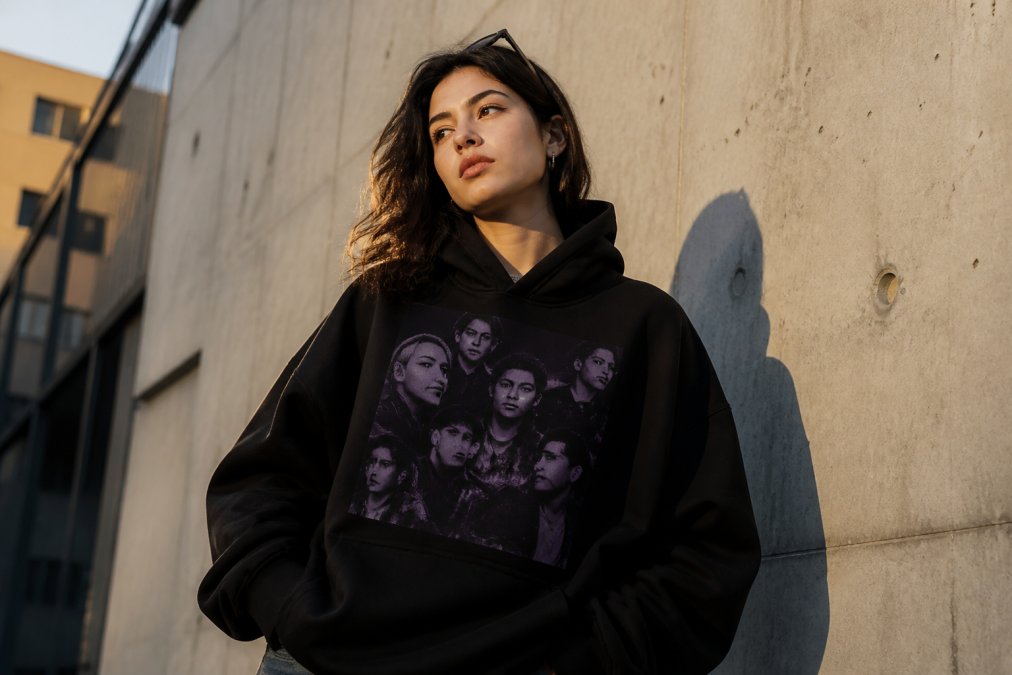
What makes us different is attention to niche details. You're not getting a generic "music lover" tee with a stock guitar graphic; you're getting designs built around inside jokes and cultural references only true fans recognize. That specificity turns a casual browser into a repeat customer.
What Sets Hot Takes Designs Apart from Generic POD Shops
Most POD sites run the same catalog: standard tees, hoodies, and placement. Hot Takes Designs breaks that mold with inclusive sizing from 2XS to 6XL and a wider range of silhouettes, from vintage oversized tees to boxy football jerseys and lightweight button hoodies.
The quality bar matters too. We print on premium blanks like Bella + Canvas and Independent Trading Co., not the cheapest wholesale options. That means heavier fabrics, better construction, and prints that don't crack or peel. For creators who care about their reputation, that quality is non-negotiable.
POD Marketplace vs Standalone Store: Which Model Wins?
The POD marketplace vs standalone store debate comes down to one question: are you building a business or testing an idea?
Marketplaces offer immediate access to shoppers already browsing. You upload artwork, set a base price, and the platform handles fulfillment. The catch is competing with thousands of other artists on the same landing pages, while platform promotions slash your effective royalty rate.
Standalone stores require more upfront work, driving traffic, building an email list, and creating content. But the payoff is substantial: you control pricing, storefront design, and customer relationships. Every follower you convert is someone you own, not someone the platform rented to you.
For creators serious about building a sustainable income from their art, the standalone model wins. It's slower to start but compounds over time. Shopify's guide to starting a print-on-demand business provides a solid framework for creators making this transition.
Profit Margins and Print Quality: Where Your Money Actually Goes
Your profit margin depends on three factors: base cost, retail price, and platform fees. Marketplace fees and mandatory promotions can eat 20-30% of retail price. But the real margin killer is not the platform fee, it is unoptimized cost of goods sold (COGS).
Here is a typical margin calculation for a standalone store. Sell a standard unisex tee for $30. Base cost from a POD provider might be $10-$12 plus $2-$4 for DTG printing, leaving $14-$18 gross profit before marketing and transaction fees. Payment processors take roughly 2.9% + $0.30 (about $1.17 on a $30 sale). If you spend $5 per sale on ads, net profit drops to $8-$12 per tee, healthy, but only if your ad spend converts.
On a marketplace, the math looks different. TeePublic and similar platforms take a royalty percentage, typically 10-20% for new sellers. A $25 tee might earn $2.50-$5.00. The platform handles acquisition, payment processing, and fulfillment. Your effective hourly rate depends on how many designs you upload and how well they rank. Marketplace income is passive but capped; standalone income is active but scalable.
When you run your own store, you set retail price based on actual costs plus desired margin. A premium graphic tee from Hot Takes Designs runs $35.12, reflecting high-quality blanks, DTG printing, and made-to-order production. An oversized heavyweight hoodie sits at $50.74, while all-over print jerseys come in at $51.45. The markup over base cost is typically 200-300%.

Print quality is where many creators lose money without realizing it. DTG printing on premium cotton produces vibrant, lasting results; sublimation works best for all-over designs on polyester. Knowing which method suits your design prevents costly mistakes. But there is a third factor most guides ignore: blank quality variation between suppliers.
The same design on a Gildan 5000 versus a Bella + Canvas 3001 will look and feel dramatically different. The Gildan is heavier, boxier, and $2-$3 less; the Bella + Canvas is softer, more modern, and holds color better. Premium customers can tell the difference within seconds. If you are building a brand people wear in public, the blank is part of your product, skimping to save $2 is a false economy.
A common pattern among successful creators is offering two quality tiers. A budget option at $25-$28 using standard blanks for price-sensitive customers, and a premium option at $35-$40 using ringspun cotton or tri-blend for those who want the best feel. This captures both segments without diluting your brand. Hot Takes Designs uses premium blanks like Bella + Canvas and Independent Trading Co., justifying the higher price point and building trust.
Sustainability is an angle most profit-margin guides ignore. Eco-conscious creators are a growing demographic. Some POD providers offer organic cotton tees, water-based inks, and carbon-neutral shipping. These add $3-$6 to base cost but allow a premium. A $38 organic cotton tee with a transparent supply chain can outsell a $30 standard tee if your audience cares. Be honest about production methods, greenwashing destroys trust faster than any print defect.
Finally, do not ignore the cost of design iteration. Every design that does not sell costs time, not money, but that time has opportunity cost. Test designs in small batches, 5 to 10 units, before scaling. This limits exposure to unsold inventory and gives real-world feedback. If a design flops, you lose only the time spent creating it; if it takes off, you scale immediately without cash flow constraints.
Technical File Requirements and Design Limitations to Know Before You Print
Every print-on-demand platform has technical requirements that determine whether your design prints clean or pixelated. Understanding these before you upload saves you from wasted orders and frustrated customers.
Most platforms require high-resolution files, typically 300 DPI at final print size. For a 12x12 inch print area, your design should be at least 3600x3600 pixels. Vector files (SVG, AI, EPS) are ideal, but most platforms accept high-res PNGs with transparent backgrounds.
Design placement matters more than most creators realize. Standard DTG printing works best within a defined print area. All-over prints require different file setups with seam allowances, and some fabrics limit ink spread. A design that looks perfect on screen can come out distorted if it crosses a seam or pocket.
Color management is another hidden trap. Screens display RGB, but printing often uses CMYK or spot colors. Bright neon designs may print muted. Request physical proofs before large orders, and always test-print on the actual garment style you plan to sell.
Printful's design file requirements guide offers detailed specifications that apply across most POD platforms, regardless of which one you choose.
How to Start a Streetwear Brand Without Inventory Headaches
The print-on-demand model makes starting a streetwear brand accessible because you never hold inventory. Every order is produced after a customer buys, no upfront costs, no dead stock, no warehouse space.
The first step is defining your niche. Streetwear brands that succeed have a clear point of view. Are you serving K-Pop fans who want concert fits, BookTok readers who want to wear their literary personality, or snarky graphic tees for people who refuse to be basic? Hot Takes Designs built its catalog around these communities, creating loyal customers who return for each new drop.
Next, build your design catalog around your niche. Start with 5-10 strong designs rather than 50 mediocre ones. Quality over quantity builds trust and gives you time to test what resonates before scaling.
Then focus on product variety. A successful streetwear brand offers more than just tees, expand into hoodies, jerseys, cropped tees, and lifestyle products. Hot Takes Designs offers everything from $30.60 distressed crop tops to $55.00 oversized fleece hoodies, giving customers options across price points.
The Verdict: Choosing Your TeePublic Alternative for Custom Apparel
The right TeePublic alternative for custom apparel depends entirely on your goals. If you're testing the waters and want instant access to shoppers, a POD marketplace offers a low-risk start. If you're building a brand that generates sustainable income, a standalone store gives you the control and profit potential you need.
For creators in fandom spaces, Hot Takes Designs stands out because we understand the culture. K-Pop fans want more than a logo tee, they want pieces that reference specific moments, inside jokes, and biases. BookTok readers want apparel that signals their literary personality. That cultural understanding shapes everything from design to fit to fabric choice.
The custom apparel landscape in 2026 rewards creators who own their audience and deliver exceptional quality. Whether you're printing your first design or launching your tenth collection, focus on building something that outlasts any single platform trend.
Frequently Asked Questions
What is the best TeePublic alternative for custom apparel?
For niche fandom designs, Hot Takes Designs is a strong TeePublic alternative because it focuses on made-to-order streetwear with premium fabrics and vibrant, long-lasting prints. Unlike generic marketplaces where quality varies by seller, Hot Takes Designs controls the entire process, from design to printing, so you get consistent results. If you prioritize print durability and a true oversized fit over the lowest possible price, it delivers better value for custom apparel.
Is a POD marketplace or standalone store better for selling custom apparel?
A POD marketplace like TeePublic gives you built-in organic traffic, but you compete with thousands of other artists and give up control over your brand. A standalone store, like the one Hot Takes Designs runs, lets you own your customer relationships, control your brand identity, and earn higher profit margins per sale. If you are serious about building a streetwear label, a standalone store is the better long-term move despite the extra marketing work.
How do print-on-demand platforms compare on apparel quality?
Quality varies significantly between print-on-demand platforms. Many use standard blanks that shrink or lose shape after a few washes. Hot Takes Designs uses premium blanks like Independent Trading Co. and Bella + Canvas, with heavyweight 10 oz fleece hoodies and 100% Airlume combed cotton tees. The prints use high-contrast DTG technology that holds up wash after wash without cracking or peeling, and the patterns are graded properly for extended sizes up to 6XL.
How long does made-to-order custom apparel actually take to arrive?
Made-to-order apparel typically takes 3 to 7 business days for production before shipping, which means most orders arrive within 2 weeks total. Hot Takes Designs prints each piece only after you order, which reduces waste and ensures your item is fresh. If you need apparel for a concert or event, order at least 3 weeks ahead to leave a comfortable buffer for production time and shipping delays.
What should I look for when choosing a print-on-demand partner?
Look for four things: print durability, fabric quality, size inclusivity, and ethical production. Check whether the platform uses DTG printing that resists cracking and peeling, and whether they use premium blanks or cheap alternatives. Verify that extended sizes are graded properly, not just scaled up. Finally, ask about their production process, like whether they print on demand to reduce overproduction waste, and confirm their blank apparel is ethically sourced.
Choosing where to sell your custom apparel is a business decision, but it's also a creative one. The platform you pick shapes how your work is presented, priced, and perceived. Hot Takes Designs offers the combination of premium made-to-order apparel, niche fandom expertise, and inclusive sizing that generic POD platforms can't match. View our full collection and find the pieces that represent your brand.