

7 Styling Tips for Gender Fluid Streetwear Outfits
Last Updated: October 24, 2026
Quick Summary
Gender fluid streetwear outfits combine masculine and feminine pieces by balancing proportion, mixing structured with relaxed silhouettes, and using neutral colors as bridges. The key is nailing proportion, balance, and confidence so you can combine almost anything without overthinking it.
- Pair structured pieces with relaxed pieces, like tailored trousers with an oversized hoodie or a fitted dress with a baggy jacket.
- Match proportions by wearing oversized on one half only: oversized top with fitted bottom, or fitted top with oversized bottom.
- Use neutral colors like black, white, gray, navy, and cream to connect different pieces without clashing.
- Accessories anchor the look: chains and baseball caps read masculine, while delicate jewelry and platform sneakers read feminine.
- Build a starter wardrobe of 12-15 pieces including 3-4 tops, 2-3 bottoms, 2 mid layers, 1-2 outer layers, 2 pairs of shoes, and 2-3 accessories.
Table of Contents
- Why Gender-Fluid Fashion Matters for Personal Style
- Gender-Fluid Outfit Ideas: Start With Your Foundation
- How to Mix Masculine and Feminine Clothing Without Clashing
- Layering Tips for Streetwear That Balances Proportion
- Oversized Streetwear Outfit Ideas for Maximum Self-Expression
- Using Color and Silhouette to Define Your Gender-Fluid Streetwear Look
- Build Your Gender-Fluid Streetwear Wardrobe With Confidence
- Frequently Asked Questions
Why Gender-Fluid Fashion Matters for Personal Style
Gender-fluid fashion is about dressing in ways that feel true to you, not following rules about what "should" go together, a structured blazer with a skirt, oversized streetwear with tailored trousers. Explore related gender-neutral streetwear concepts to deepen your understanding of how to express yourself through clothing.
The real power of gender-fluid streetwear outfits is that they let you control your own narrative. Mixing masculine and feminine pieces isn't complicated, nail proportion, balance, and confidence, and you can combine almost anything.
Define your signature fashion style to understand your personal aesthetic foundation before diving into gender-fluid mixing techniques.
Gender-Fluid Outfit Ideas: Start With Your Foundation
Your foundation is the base layer, usually a simple top or bottom in a neutral color that anchors your look before you add personality.
Start with basics that fit well:
- A white or black t-shirt (oversized or fitted, your choice)
- Neutral trousers in black, gray, or navy
- A plain hoodie in a neutral shade
A neutral base lets you layer bolder pieces on top without the outfit feeling chaotic.
Gender-neutral outfit ideas start here: not "masculine" or "feminine," but "what feels good on my body and what can I build from here?"
Hot Takes Designs specializes in custom-printed streetwear that works as a strong foundation or as a statement layer. Pieces like the Punch The Monkey Graphic Hoodie give you that bold, unapologetic base that says something about who you are before you add anything else.

How to Mix Masculine and Feminine Clothing Without Clashing
The biggest mistake is overthinking it. Learn how to mix two different aesthetic styles to master the core technique of blending masculine and feminine elements without clashing.
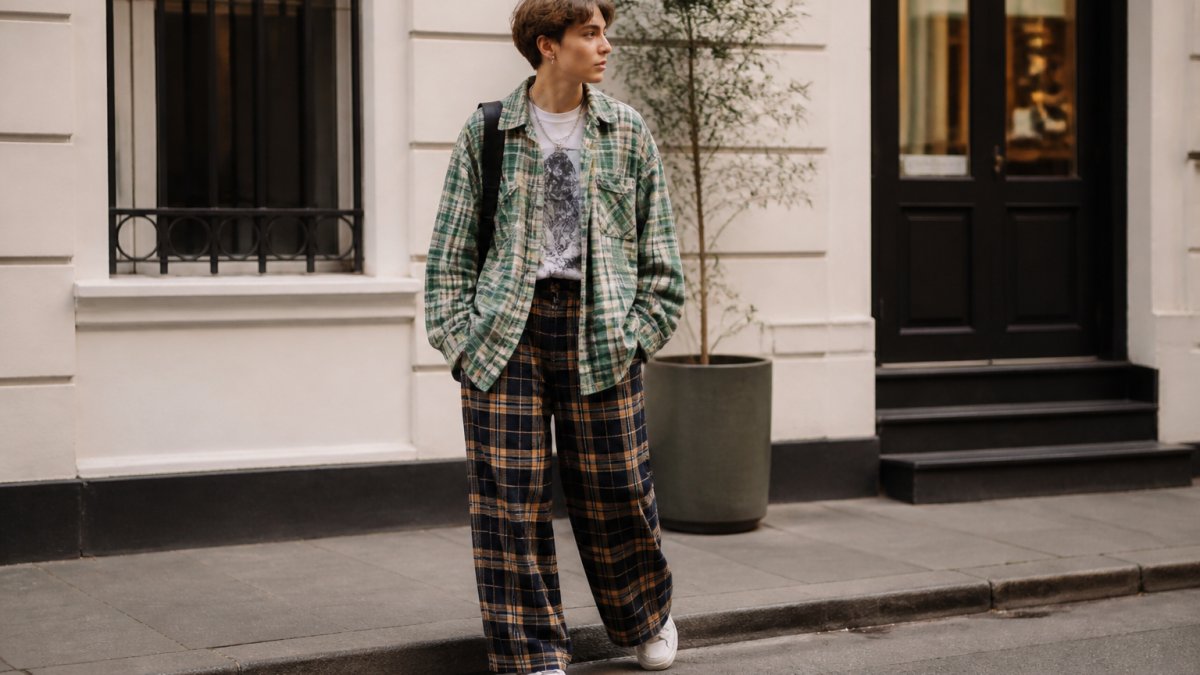
Here's the formula that actually works:
Pair structured with relaxed. Tailored trousers work with an oversized top or graphic hoodie; a fitted dress or skirt works with an oversized jacket or baggy hoodie.
Match your proportions. Oversized top + fitted bottom, or fitted top + oversized bottom. Never oversized on both unless you want a full silhouette moment.
Accessories anchor the look. A chain necklace, rings, or a baseball cap push toward masculine; delicate jewelry, a crossbody bag, or platform sneakers push toward feminine.
The Sage Green Tartan Short-Sleeve Button-Down Shacket is a perfect example of a piece that works in any direction.

These four techniques help you combine pieces without clashing.
| Technique | How it works | Example |
|---|---|---|
| Pair structured with relaxed | Tailored piece + oversized piece | Tailored trousers with oversized hoodie |
| Match your proportions | Oversized on one half only | Oversized top with fitted bottom |
| Use neutral colors as bridges | Black, white, gray, navy, cream connect anything | Colorful skirt with neutral hoodie |
| Accessories anchor the look | Chain or cap reads masculine; delicate jewelry reads feminine | Platform sneakers or crossbody bag |
Layering Tips for Streetwear That Balances Proportion
Layering creates depth without bulk and controls how your body reads in an outfit.
Let pieces peek through: unbutton the shacket so the graphic tee shows, or let long sleeves show at the wrists.
Consider this approach:
- Graphic tee (mid-weight, statement piece)
- Lightweight shacket over it (structure, color blocking)
- Sneakers and minimal accessories (let the layers do the talking)
Or this one:
- Plain white long-sleeve shirt (neutral, structured)
- Oversized graphic hoodie over it (personality, comfort)
- Wide-leg trousers (balance the volume on top)
The Sage Green Plaid Full-Zip Hoodie is built for layering. The 280gsm fleece is substantial enough to be an outer layer but not so heavy that it overwhelms your silhouette.

Oversized Streetwear Outfit Ideas for Maximum Self-Expression
Oversized pieces are the foundation of gender fluid streetwear outfits.
Here's how to make oversized work for your body:
Men's Sage Green Plaid Full-Zip Hoodie | Streetwear Fleece →
If you're petite: Balance oversized pieces with fitted bottoms and cropped layers, a long oversized hoodie with fitted ankle trousers, or an oversized graphic tee with high-waisted shorts.
If you're tall: Long hoodies, oversized blazers, and baggy trousers all work without overwhelming your frame. Go bigger than you think.
If you're plus-size: You deserve oversized pieces actually graded for your size, not just scaled up.
The Punch The Monkey Graphic Hoodie is 100% washed cotton with a relaxed, boxy silhouette.
Using Color and Silhouette to Define Your Gender-Fluid Streetwear Look
Color and silhouette are the two levers you can pull on any outfit to change how it reads, without buying anything new.
The 60-30-10 color formula
Split your outfit into three shares:
- 60% dominant color, usually your largest piece (trousers, a long coat, or a hoodie).
- 30% secondary color, your top or mid layer.
- 10% accent, shoes, a cap, jewelry, or a bag.
Example: black wide-leg trousers (60%), a white graphic tee (30%), and a sage green shacket or cap (10%). It prevents the two most common failures: no focal point, or every piece competing. When in doubt, make the loudest piece your 10%.
Four color formulas you can reuse
- Tonal monochrome. One color family head to toe, all black, all navy, or all sage green, with texture doing the work. A washed-cotton hoodie over smooth twill trousers reads richer than a flat single-fabric outfit.
- Neutral base + one saturated accent. Black or gray base, then one piece in a saturated color (cobalt, rust, Kelly green). Keep the accent to a single garment or accessory.
- High-contrast two-tone. Two bold colors in large blocks, a sage green top with black trousers, or a cream hoodie with navy cargos. Place the boundary where you want attention (often the waist).
- Pastel + grounded neutral. A soft pastel (pale pink, butter yellow, lavender) against charcoal, olive, or black reads softer than the same pastel against white.
Silhouette: the three proportion formulas
Silhouette is the relationship between your top half and bottom half. Three reliable formulas, each with a different read:
- Fitted top + relaxed bottom. A fitted tee or cropped top with wide-leg trousers or baggy cargos. Casual and grounded, the easiest formula for volume without feeling swallowed.
- Relaxed top + fitted bottom. An oversized hoodie or boxy tee with slim or straight trousers. The classic streetwear proportion and the most forgiving, because the volume sits away from the legs.
- Relaxed top + relaxed bottom. Oversized on both halves, a deliberate full silhouette moment. Anchor it with a defined shoe (chunky sneaker or boot) and keep the color story tight (tonal or two-tone).
A fourth, less common formula is cropped top + high-waisted bottom, which creates a short torso and long leg line, useful for shifting visual proportions without shapewear or tailoring.
Where to place the waistline
The single most useful silhouette decision is where your waistline sits. A high waist lengthens the legs and shortens the torso; a low or dropped waist does the opposite. Short-waisted? Try a lower rise or untucked oversized top. Long-waisted? A high rise plus a tucked or cropped top evens you out. You can also move the visual waistline with layering: an open shacket or unbuttoned hoodie creates two vertical lines down your torso, narrowing the silhouette.
Pattern and texture as silhouette tools
Pattern isn't just decoration, it changes how a garment reads in space. Large-scale plaids and bold graphics add visual weight, so place them where you want volume; small-scale patterns recede. A busy tartan on the bottom with a plain top keeps the eye low; the reverse keeps it high. Texture works the same way: fleece, corduroy, and chunky knits add bulk; smooth cotton, nylon, and fine knits read leaner.
Build Your Gender-Fluid Streetwear Wardrobe With Confidence
Most wardrobe advice says "start with basics" and stops. Here's a concrete starter count, a budget path, seasonal planning, and sensory considerations that make a gender-fluid streetwear wardrobe work day to day.
A starter count, not a shopping spree
You don't need a full closet. Build a capsule wardrobe for your aesthetic to create a cohesive collection of pieces that work together effortlessly. A workable starter wardrobe is roughly 12-15 pieces that all play well together:
- 3-4 tops, a plain white tee, a black tee, a graphic tee, and a long-sleeve layer.
- 2-3 bottoms, black straight or wide-leg trousers, a pair of cargos or relaxed shorts, and one statement bottom (a plaid or patterned pair).
- 2 mid layers, a button-up or shacket and a light overshirt.
Build in phases, not by month
Build in phases tied to what you actually need, not a fixed calendar:
- Phase 1, Base. One neutral top, one neutral bottom, one pair of shoes. The minimum viable outfit.
- Phase 2, Range. Add a second bottom in a different silhouette and a mid layer.
- Phase 3, Personality. Add one graphic or patterned piece and one accessory. This is where your style becomes recognizable.
- Phase 4, Weather and occasion. Add an outer layer for cold or rain, and one piece that works for a dressier setting.
Trigger each phase by a gap you actually feel. Reaching for the same two outfits is the signal to add a piece, not the date.
Budget-conscious building and reuse
You can build this wardrobe without buying everything new:
- Secondhand first for statement pieces. Plaid shackets, oversized blazers, and patterned trousers are common in thrift and resale, and they're often the pieces that carry an outfit.
- Spend on fit, save on trend. Put more budget into pieces that need to fit well (trousers, shoes) and less into pieces where fit matters less (graphic tees, accessories).
- Restyle before you rebuy. Try the same garment three ways: tucked, untucked, and layered under something open. Many "missing" pieces are unused combinations of what you already own.
Seasonal and weather planning
Gender-fluid streetwear works year-round if you plan for layers rather than separate wardrobes:
- Heat. Swap heavy fleece for lightweight cotton and nylon. Choose relaxed shorts or wide-leg trousers in breathable fabrics, and use a light overshirt as your only layer.
- Cold. Build from a thermal or long-sleeve base, add a mid layer (shacket or hoodie), finish with a heavier outer layer. Keep the innermost layer thin so the outfit doesn't get bulky.
- Rain and wind. A water-resistant overshirt or shell over a hoodie keeps the silhouette intact while adding protection. Choose shoes with tread rather than flat-soled sneakers.
Sensory comfort and accessibility
A wardrobe only works if you'll actually wear it. A few practical considerations:
- Fabric feel. If tags, seams, or stiff fabrics bother you, look for tagless construction, flat seams, and softer washes. Washed cotton and brushed fleece beat stiff canvas or unwashed denim.
- Closures. Magnetic closures, snap fronts, or pull-on waists make dressing easier without changing the look.
- Movement. Test a garment by raising your arms and sitting down before you commit. Oversized pieces can restrict movement at the shoulder if the armhole is too small.
Fit across body types
The same formula reads differently depending on your frame, so adjust the details:
- Petite frames. Pair oversized pieces with a fitted or cropped bottom, and choose a shorter outer layer so the hem doesn't sit at your widest point.
- Tall frames. You can carry longer hoodies, longer shackets, and baggier trousers without losing proportion. Use a defined shoe to anchor the hem.
- Curves. Structured oversized pieces (a shacket, a boxy jacket) skim without clinging. Pair them with a fitted bottom.
Frequently Asked Questions
How can you make a streetwear outfit look more gender-fluid?
Mix silhouettes that traditionally code as masculine or feminine: pair an oversized graphic hoodie with tailored trousers, or layer a structured shacket over a relaxed tee. Balance volume with fitted pieces, use neutral color palettes (black, gray, sage green, navy), and choose accessories that feel authentically you rather than conforming to expectations. The key is intentional contrast, when different elements work together, they create a cohesive, confident expression of your personal style.
What clothing silhouettes work well for gender-fluid outfits?
Oversized tops, wide-leg trousers, and boxy hoodies form the foundation of gender-fluid streetwear. Pair these with fitted or cropped pieces to create visual balance. Shackets and button-ups worn open over graphic tees offer structured layering without rigid gender coding. The goal is choosing pieces based on how they fit your body and make you feel, not which section of the store they're sold in.
How do you mix masculine and feminine pieces in one outfit?
Start with a neutral base (black tee, gray sweatshirt), then add contrast: structured tailoring with relaxed volume, or delicate accessories with heavy-duty fabrics. A sage green plaid shacket can layer over both graphic hoodies and fitted tops. The trick is balancing proportions, if your top is oversized, try fitted or straight-leg bottoms. If your pants are wide-leg, keep your top more fitted. Avoid stacking all loose pieces or all fitted pieces, which can feel unintentional rather than intentionally gender-fluid.
How can you layer clothes for a gender-fluid streetwear look?
Layer in odd numbers: a graphic hoodie under an open shacket, then add a plaid full-zip hoodie for warmth. Each layer should have a distinct weight or texture, heavyweight cotton over lightweight air-layer fabric creates visual interest. Keep your color palette cohesive (neutrals with one accent color like sage green) so layering looks intentional, not chaotic. Oversized pieces work best when layered, as they create the silhouette play that defines gender-fluid streetwear without looking sloppy.
Building a gender-fluid streetwear wardrobe that feels authentically you is about making intentional choices: choosing proportion, choosing color, choosing how you want to present yourself on any given day. The pieces you wear are how you tell your story. Make sure they're telling the right one.
