

How to Mix Two Different Aesthetic Styles (2026 Guide)
Table of Contents
- Why Mixing Two Aesthetics Feels Wrong (And How to Fix It)
- How to Find Your Personal Style Core Before You Mix Anything
- Step 1: Identify the Dominant Style and the Accent Style
- Step 2: Use the 60/30/10 Rule for Outfits That Balance
- Step 3: Find Bridge Elements Between Your Two Aesthetics
- How to Style Streetwear with Vintage: A Real Example
- Avoid These Common Mistakes When Blending Styles
- Start Mixing Your Aesthetic Styles Today
- Frequently Asked Questions
Last Updated: September 5, 2026
Mixing two different aesthetic styles is the fashion equivalent of merging two songs into one track: it either hits perfectly or turns into noise. The good news is that learning how to mix two different aesthetic styles isn't about luck. It's about structure. At Hot Takes Designs, we help fans blend K-Pop concert fits with vintage finds and grunge staples, and the process is more repeatable than most style guides admit.
The secret isn't finding clothes that already match. The secret is finding the visual logic that lets two aesthetics coexist without creating visual clutter. Most people fail because they treat style blending as a free-for-all. In practice, it's a curation exercise with clear rules.
Below, we'll walk through a practical framework you can apply today. We'll cover finding your style core, using the 60/30/10 rule for outfits, and identifying bridge elements that make any combination feel intentional. But first, here's what most guides get wrong: they tell you to "just wear what you love" without giving you the tools to make those pieces work together.
Why Mixing Two Aesthetics Feels Wrong (And How to Fix It)
The discomfort you feel when combining styles isn't just about color theory or fit. Often, it's psychological. The fear of looking "weird" or feeling like an imposter in your own clothes is a real barrier that stops people from experimenting. This section addresses that mental block head-on, because until you solve the internal conflict, no external styling rule will feel right.
The Real Problem Is Visual Clutter, Not Clashing Styles
When an outfit feels off, the culprit is usually visual clutter, not conflicting aesthetics. Visual clutter happens when too many competing elements fight for attention: loud patterns, clashing textures, and silhouettes that don't relate to each other (peer-reviewed research). The fix is to reduce the number of "loud" elements and let one style lead while the other supports. Think of it like a conversation. If both aesthetics are shouting, nobody hears anything. If one speaks while the other harmonizes, you get a message that reads clear. Your goal is visual harmony, where the eye moves smoothly from head to toe without getting stuck on a jarring detail.
The Fear of Looking 'Weird' Is Holding You Back
Before you even get to the visual logistics, you have to deal with the voice in your head saying, "This doesn't look like me." That voice is often a mix of social conditioning and a fear of judgment. A common pattern is that people worry they'll be perceived as inauthentic or costume-like when they step outside their established style lane. This is a form of imposter syndrome, where you feel you don't have the "right" to wear a certain aesthetic because it isn't your usual uniform.
To break through this, start with a low-stakes experiment. Don't overhaul your entire look for a big event. Instead, try a single blend on a casual errand run. Wear your favorite vintage band tee with a sharp, modern blazer. The goal is to sit with the discomfort and realize that the world doesn't end. In fact, most people won't even notice, and the ones who do will likely compliment your creativity. Over time, this exposure builds confidence, and the fear of looking "weird" fades into the background.
The 'Costume Effect' and How to Avoid It
Another psychological hurdle is the "costume effect," where a blended outfit feels like a Halloween costume rather than a personal style statement. This happens when you force a connection that isn't there or when you replicate a look exactly without adding your own twist. The fix is to ensure your dominant style is always present. If you're a minimalist at heart but want to try a grunge accent, don't go full flannel and ripped jeans. Instead, add a single pair of scuffed combat boots to your clean, tailored look. The boots are the accent, but the minimalist core is still you. This prevents the outfit from feeling like you're playing dress-up and instead makes it feel like a natural evolution of your personal style.
:::tip The 24-Hour Rule
If you're unsure about a blended outfit, hang it up and look at it the next day. Fresh eyes often reveal whether the combination feels intentional or forced. If you still love it after 24 hours, wear it with confidence. :::
How to Find Your Personal Style Core Before You Mix Anything
Before you combine aesthetics, you need a reference point. Your personal style core is the aesthetic that feels most like "you" when you get dressed without overthinking it. This is your dominant style, and it will anchor every outfit you build.
Start by auditing your current wardrobe. Which pieces do you reach for on autopilot? Which items do you replace immediately when they wear out? Those are your staples. According to psychology research on personal style and self-expression, clothing choices are deeply tied to identity formation, which is why forcing a style that doesn't fit your core feels so uncomfortable.
If you're torn between two aesthetics, ask yourself which one you'd wear to an event where you want to feel most confident. That's your base. The other becomes your accent.
Step 1: Identify the Dominant Style and the Accent Style
Once you know your core, assign roles. The dominant style claims roughly 70 to 80 percent of your outfit's visual weight. The accent style fills the remaining 20 to 30 percent.
This ratio prevents the cluttered look we discussed earlier. If you're blending streetwear with cottagecore, for example, let the streetwear dominate with an oversized hoodie and sneakers, then introduce cottagecore through a single flowing skirt or a delicate accessory. The accent style adds intrigue without overwhelming the base.
A common mistake is splitting the outfit 50/50. That creates visual tension because both aesthetics demand equal attention. By giving one style clear authority, you create a hierarchy that reads as intentional.
Step 2: Use the 60/30/10 Rule for Outfits That Balance
The 60/30/10 rule for outfits is a color-balancing framework borrowed from interior design, and it works just as well for blending aesthetics (architecturaldigest.com). It breaks your outfit into three visual zones. The 60 percent is your base layer, usually neutral tones like black, white, denim, or sage. The 30 percent is your secondary layer, often a textured piece or a contrasting silhouette. The 10 percent is your statement piece: a bold accessory, a printed scarf, or a graphic bag.
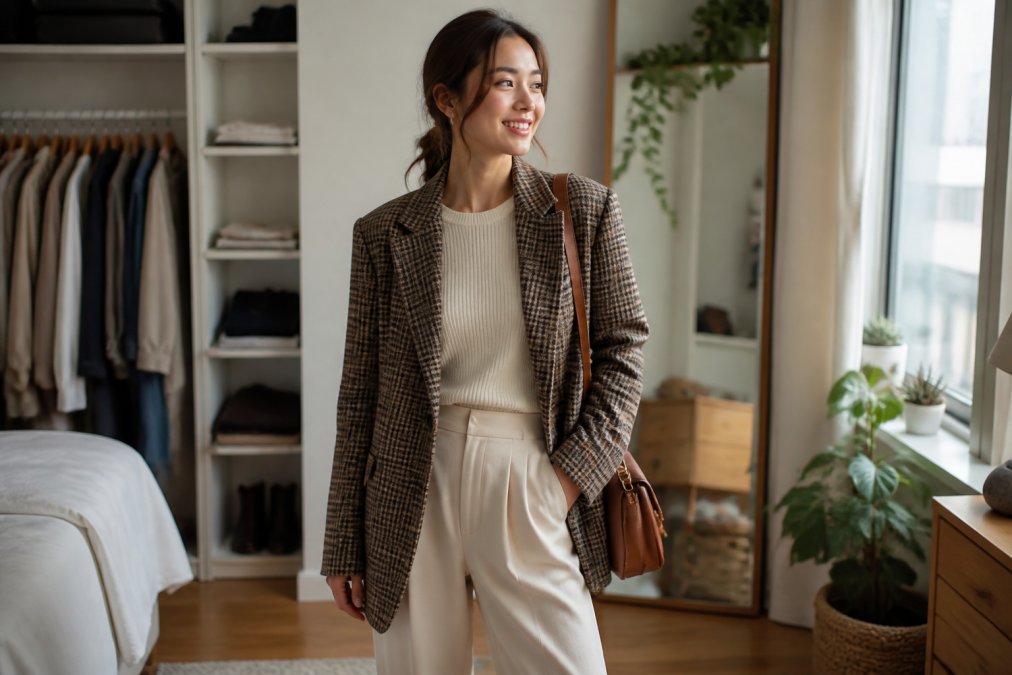
Here's how the 60/30/10 rule for outfits plays out in practice. Start with a neutral base layer, like a fitted black long-sleeve top. Add a textured 30 percent piece, such as the Men's Sage Green Plaid Full-Zip Hoodie at $36.99, which brings both color and pattern into the mix. Finish with a 10 percent accent, like chunky jewelry or a vintage belt.

The beauty of this rule is that it forces restraint. You can only have one loud element per outfit, which naturally prevents visual clutter.
Step 3: Find Bridge Elements Between Your Two Aesthetics
Bridge elements are pieces that belong to neither aesthetic but connect them. Think of them as visual translators. A leather jacket, for instance, bridges grunge and preppy because it adds edge to both. A plain white tee bridges almost everything. The key is to use these items as neutralizers, allowing two extreme styles to coexist without visual conflict.
The 'Bridge Item' Starter Pack
While any neutral piece can work, certain items have a proven track record for blending disparate styles. Here are a few high-impact, budget-friendly options you likely already own or can find at a thrift store:
- The Classic White Sneaker: This is the ultimate bridge. It tones down a formal or romantic aesthetic (like cottagecore) and adds a casual, modern energy. Pair a flowing floral dress with clean white sneakers, and you've instantly blended feminine softness with streetwear practicality.
- The Leather Jacket: As mentioned, this is a master bridger. It adds a layer of grit to preppy, polished, or even romantic styles. Throw one over a silk slip dress to blend edgy with elegant, or over a cable-knit sweater to mix rugged with preppy.
- The Denim Jacket: A more casual alternative to leather, denim works across almost every aesthetic. It can ground a futuristic or avant-garde piece, or add a relaxed feel to a tailored suit. Its ubiquity makes it a safe, low-risk starting point.
- The Plain White Tee: This is the blank canvas of fashion. It can be tucked into a high-waisted vintage skirt, layered under a structured blazer, or worn under a slip dress to make it more casual. It doesn't add a new style; it simply provides a neutral base that lets other pieces shine.
Color Palettes and Texture Are Your Shortcut to Cohesion
The fastest way to build a bridge is through color palettes and texture. If your two aesthetics share even one color, you can lean on that overlap to create cohesion. Pairing a sage green plaid dress with vintage combat boots works because the muted green tone speaks to both the softness of the dress and the grit of the boots. Texture does the same job. Mixing fabric weight creates contrast that feels deliberate. A chunky knit with a smooth satin skirt, or a structured blazer over a worn graphic tee, both create the visual interest that makes blended aesthetics look styled rather than accidental. Repetition of a single color or texture across both styles signals that the combination was curated.
How to Bridge Without Buying New Clothes
You don't need a shopping spree to start blending styles. The most budget-conscious approach is to audit what you already own and look for items that can serve as bridges. That old denim jacket in the back of your closet? It's a bridge. Those plain white sneakers you wear to the gym? They're a bridge. The goal is to repurpose existing pieces before buying anything new. A common pattern is to start with one bridge item you already own and pair it with a piece from a different aesthetic. For example, if you have a vintage floral skirt and a modern oversized hoodie, try them together. The hoodie's casual bulk neutralizes the skirt's delicate femininity, creating a look that's both comfortable and intentional. This method allows you to experiment with zero financial risk, which is the best way to build confidence in your blending skills.
:::warning Avoid the 'Matchy-Matchy' Trap
A bridge item should feel like a neutralizer, not a copycat. Don't try to find a piece that perfectly matches both aesthetics. Instead, find something that sits comfortably between them, creating a visual pause that lets the eye rest. :::
How to Style Streetwear with Vintage: A Real Example
Let's apply the framework to a specific pairing: streetwear and vintage. These two aesthetics seem opposed, but they share a foundation in self-expression and comfort.
Start with a vintage base, like high-waisted denim or a band tee. Layer a modern streetwear piece over it, such as an oversized plaid jacket. The Sage Green Plaid Square Neck Long Sleeve Bodysuit at $27.99 works as a sleek base layer under vintage overalls or a thrifted cardigan.

The key to styling streetwear with vintage is proportion. Vintage pieces often have a tailored or high-waisted fit, while streetwear leans oversized. Balance a baggy streetwear top with a fitted vintage bottom, or pair a structured vintage blazer with loose streetwear pants. This contrast in silhouette creates the visual tension that makes the outfit feel dynamic rather than sloppy.
Avoid These Common Mistakes When Blending Styles
Even with a framework, mistakes happen. Here are the most common pitfalls and how to sidestep them.
First, don't force a connection that isn't there. If two aesthetics share no common color, texture, or silhouette language, they will fight each other. Find one shared element before you commit to the blend.
Second, avoid pattern overload. Mixing prints is advanced styling. If you're new to blending aesthetics, limit yourself to one patterned piece per outfit and let everything else stay solid or neutral. Pattern mixing works, but it requires a confident eye for complementary colors.
Third, don't ignore fit. Silhouette is the backbone of any outfit. Baggy on baggy can read as sloppy, while tight on tight can feel costume-like. Varying your proportions creates the contrast that makes blended aesthetics look intentional. Curating your look with pieces that fit well, like the inclusive sizing from 2XS to 6XL offered across Hot Takes Designs pieces, ensures the foundation is solid before you add stylistic complexity.
Start Mixing Your Aesthetic Styles Today
The biggest barrier to style experimentation is usually psychological, not practical. You worry the outfit will look "wrong" or that you'll feel like you're wearing a costume. The truth is that blending aesthetics is a skill, and like any skill, it improves with practice. Start small: introduce one accent piece into your dominant style, then build from there.
Seasonal transitions are the easiest time to experiment. When the weather shifts, your wardrobe is already in flux, so adding a new aesthetic combination feels less risky. A plaid layering piece works across fall and winter, bridging the gap between your summer staples and your heavier cold-weather gear.
Your fashion identity should evolve. The goal isn't to lock yourself into one aesthetic forever. It's to build a wardrobe that reflects all the sides of who you are, without looking like you got dressed in the dark.
Blending two aesthetics takes more than throwing pieces together and hoping for the best. It requires a clear dominant style, a disciplined color ratio, and bridge elements that tie everything together. Hot Takes Designs builds pieces with this in mind: ultra-soft fabrics, vibrant long-lasting prints, and inclusive sizing from 2XS to 6XL, so your blended outfits feel as good as they look. Explore the collection and find the statement piece that makes your next style combination click. View all styles and start curating your main character look.
Frequently Asked Questions
What is the 60/30/10 rule in fashion?
The 60/30/10 rule is a styling formula that creates visual balance. Spend 60% of your outfit on a dominant aesthetic, usually through your base layer like pants or a main top. Use 30% for your secondary style via a jacket, skirt, or shoes. The final 10% is for accent pieces like a bag, hat, or jewelry. This split prevents a cluttered look and lets two different aesthetics coexist without competing.
How do you balance two conflicting aesthetic styles?
Start by picking one style to be dominant and the other to serve as an accent. Use the 60/30/10 rule to keep proportions clear. Then find bridge elements, which are items both aesthetics share. Neutral tones, similar fabric weights, or a common silhouette can tie opposing looks together. For example, a plaid piece can read as both grunge and preppy, making it a natural bridge.
Can you mix streetwear with formal aesthetics?
Yes, mixing streetwear with formal pieces is a common styling move. The trick is to keep the silhouette balanced. Pair an oversized, graphic streetwear hoodie with tailored trousers or a structured blazer. Choose formal pieces in neutral tones like black, sage, or beige to anchor the look. This prevents the outfit from reading as sloppy and creates a sharp contrast that feels intentional.
How do I find my personal aesthetic style?
Start by auditing your current wardrobe to see what you wear most. Look for repetition in color, fit, and fabric. Save outfits online that catch your eye and identify the common themes. Pick one aesthetic that feels like your default and one that excites you as an accent. You do not need to label yourself perfectly; a clear direction is enough to start building a cohesive look.
This article was written using GrandRanker