

How to Design Custom Fandom Apparel: A Step-by-Step Guide
Table of Contents
- What You'll Need Before You Start
- Choosing the Right Apparel Type and Fabric Selection
- Creating Your Design: Graphics, Typography, and Visual Aesthetic
- Copyright Laws for Fan-Made Merchandise: Legal Compliance Essentials
- Preparing Your Artwork: File Formats and Technical Specifications
- Embroidery vs. Screen Printing: Choosing Your Production Method
- Best Print-on-Demand Services for Creators and Custom K-Pop Merch for Fans
- Styling and Outfit Coordination: Turning Your Design Into a Complete Look
Last Updated: August 27, 2026
What You'll Need Before You Start
Designing custom fandom apparel requires design software, knowledge of file formats and technical specifications, access to a production method that matches your vision, and understanding of copyright law. Fan-made merchandise exists in a legal gray zone, and checking copyright requirements isn't just smart, it's essential to avoid costly mistakes.
At Hot Takes Designs, we help creators navigate this entire process. Whether you're designing custom K-Pop merch for fans or BookTok-inspired streetwear, the fundamentals remain the same: a plan, the right tools, and realistic expectations about what each production method can deliver.

Choosing the Right Apparel Type and Fabric Selection
The apparel type you choose determines design placement, production method, pricing, and customer satisfaction. T-shirts remain the most accessible entry point, affordable to produce and forgiving of design imperfections. Hoodies offer more fabric real estate and a premium feel but cost more to produce. Oversized streetwear pieces demand precision in pattern grading across extended sizes.
Consider your target audience's lifestyle. Concert apparel needs durability and comfort for standing room crowds. Casual streetwear prioritizes aesthetic and fit.
Understanding Fabric Quality and Comfort
Fabric quality separates custom fandom apparel that lasts from pieces that fade and shrink after a few washes. Cotton-poly blends (50/50 or 60/40) offer durability and vibrant color retention (peer-reviewed research). Heavier-weight fabrics (260 GSM or above) hold their shape better and feel more premium.
The best fabrics are pre-shrunk and treated to resist fading. When evaluating a production partner, ask about fabric sourcing and whether garments are pre-shrunk before printing or embroidery.
Extended sizing requires more than scaling patterns up. Reputable producers grade patterns differently for each size, adjusting sleeve length, torso proportions, and neckline depth to ensure intentional fit at every size. This is where many print-on-demand services fall short, which is why Hot Takes Designs offers inclusive-sized (2XS-6XL) apparel.
Creating Your Design: Graphics, Typography, and Visual Aesthetic
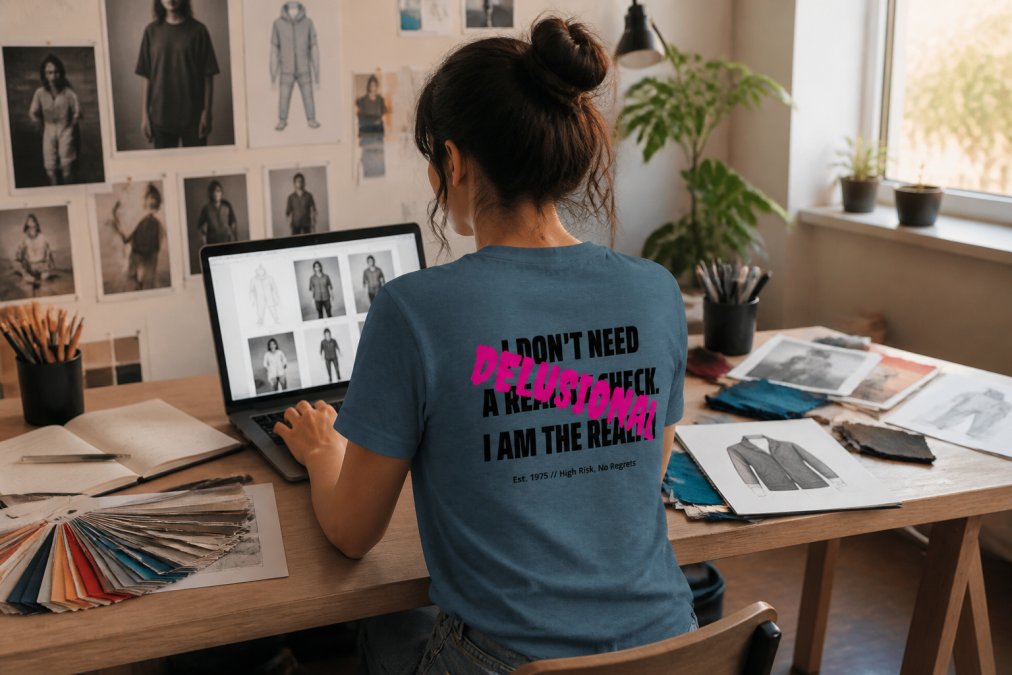
Your design needs to communicate instantly, whether it's a witty reference that only true fans recognize or a bold visual statement that stops people in the street. Start with a clear concept: a reference graphic, typography-heavy design, or combination. The best fandom designs balance specificity with visual impact.
Build your design with intention. Layer elements, consider negative space and balance, and visualize how the design will look at actual size on the garment. A design that looks great on screen at 3,000 pixels wide might become muddy when printed at 8 inches across.
Selecting Design Software and Tools
Your design software choice depends on skill level and design type. Adobe Creative Suite remains the industry standard but requires a subscription and learning curve. Procreate offers powerful tools for iPad users. Canva provides templates and drag-and-drop simplicity for beginners.
For fandom apparel, vector-based design (Illustrator, Affinity Designer, or free Inkscape) is preferable. Vector graphics scale infinitely without losing quality, essential for screen printing and embroidery. Raster designs (Photoshop, Procreate) work for print-on-demand but can appear pixelated at large sizes.
Many creators use design templates as starting points, then customize heavily. Free resources like Pixabay and Unsplash provide stock graphics, though always respect licensing restrictions.
Building Your Color Palette and Brand Identity
Color choice makes or breaks fandom apparel. K-Pop merch thrives on bold, saturated colors that photograph well. BookTok designs often use moody, literary palettes with deep jewel tones or high-contrast black-and-white.
Limit your palette to 3-5 colors maximum. More colors increase production complexity and cost, especially for screen printing. Each color requires a separate screen. Print-on-demand services handle unlimited colors, but too many dilute visual impact.
Your color palette becomes part of your brand identity. Consistency across designs builds recognition and strengthens community identity.
Copyright Laws for Fan-Made Merchandise: Legal Compliance Essentials
Fan-made merchandise operates in a legal gray zone. Technically, selling fan art of copyrighted characters violates intellectual property law (copyright.gov). The copyright holder owns exclusive rights to create and sell merchandise featuring that character.
However, enforcement depends on scale and visibility. A small creator selling 50 hoodies a month faces lower risk than someone marketing aggressively and generating thousands in revenue. Major studios like SM Entertainment actively protect their IP; others ignore small fan creators entirely.
Your options are limited but real. First, create original designs inspired by the fandom without using copyrighted characters or logos. A design capturing the aesthetic of a fandom without infringing specific IP is defensible. Second, seek explicit permission from the copyright holder, though most will decline. Third, operate with awareness of the risk and accept the possibility of a cease-and-desist letter.
The safest approach is original artwork that celebrates the fandom without directly copying protected intellectual property. This protects you legally and builds a sustainable business that doesn't depend on a corporation's tolerance.
Preparing Your Artwork: File Formats and Technical Specifications
Technical file preparation separates professional results from disasters. A design that looks perfect on screen can fail completely if submitted in the wrong format or with incorrect specifications.
For screen printing, you need vector files (AI, EPS, or PDF). Screen printers separate your design into individual color layers, one screen per color. For embroidery, vector files are essential so the machine can convert your design to stitch sequences. Complex raster images don't translate well to embroidery; vector designs with clear color separation work best.
For print-on-demand services, requirements are more flexible. Most accept high-resolution JPG or PNG files (300 DPI minimum). Print-on-demand uses direct-to-garment printing, which handles complex designs that screen printing cannot, though prints lack vibrant color saturation and may feel slightly stiffer.
Resolution matters: 300 DPI is the minimum for print quality (the FDA). Color mode should be CMYK for printing (not RGB). Always provide a mockup showing your design at actual placement and size on the garment to prevent surprises.
Embroidery vs. Screen Printing: Choosing Your Production Method
Screen printing uses ink pushed through mesh screens onto fabric. It's ideal for bold, graphic designs with limited colors, fast at scale, and produces vibrant, durable results. The downside: setup costs are high, making small runs expensive. Complex designs with many colors become prohibitively costly.
Embroidery uses thread stitched directly into fabric, creating a three-dimensional effect. It's premium and durable, working beautifully for logos and smaller designs. The downside: it's slower, more expensive per unit, and doesn't work well for photorealistic designs. Large embroidered areas can make garments stiff.
Print-on-demand offers flexibility with no setup costs, unlimited colors, and fast turnaround. The trade-off: prints lack vibrant saturation, feel slightly plasticky, and may crack with heavy washing. Print-on-demand works best for complex designs or small-run experiments.
For custom fandom apparel, screen printing dominates because it produces the bold, vibrant aesthetic that fans demand. However, if you're testing designs or offering highly customized options, print-on-demand removes financial risk.
Best Print-on-Demand Services for Creators and Custom K-Pop Merch for Fans
Print-on-demand services handle production, inventory, and shipping while you focus on design and marketing. They're ideal for creators testing designs without upfront inventory investment.
When evaluating print-on-demand services, ask about fabric quality, print durability, color accuracy, and turnaround time. Request samples before committing to production.
Hot Takes Designs takes a different approach. We specialize in custom-printed apparel, including K-Pop concert fits, BookTok-inspired styles, and snarky graphic tees. Every piece is made to order using ultra-soft fabrics and vibrant, long-lasting prints to ensure you look incredible and feel comfortable.
Styling and Outfit Coordination: Turning Your Design Into a Complete Look
A great custom fandom apparel design is only half the battle. How your design is styled determines whether it becomes a concert-ready fit or unworn in a closet.
Styling fandom apparel means building outfits that amplify the design's visual impact. A bold graphic tee needs complementary pieces that don't compete. Oversized streetwear pairs with fitted bottoms to balance proportions.
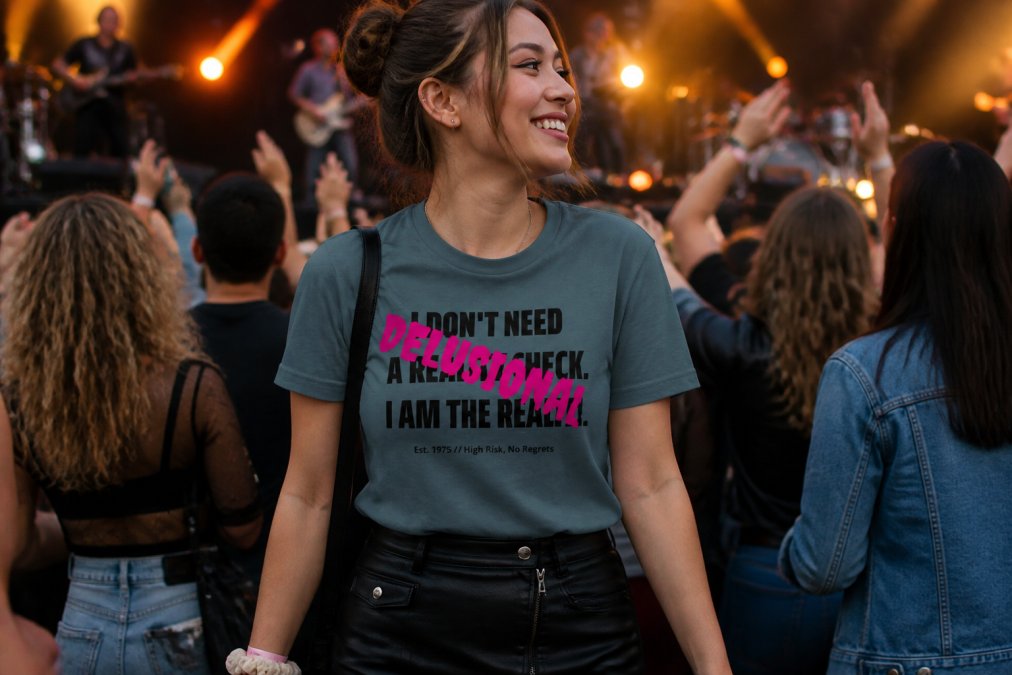
Consider the context where your design will be worn. Concert fits demand comfort and durability. Casual streetwear styling prioritizes aesthetic and visual cohesion.
Extended sizing changes how designs should be styled. What works for a size M may need different pairing recommendations for a 2XL or 2XS. When you design custom fandom apparel, think about how each size will look worn, not just laid flat.
Community engagement happens through styling. When customers post photos of your designs styled creatively, that becomes social proof and marketing. Encourage this by creating styling guides or featuring customer looks on your brand's channels.
Designing custom fandom apparel means balancing creativity, technical precision, legal awareness, and production quality. The process demands attention to detail at every stage, from copyright considerations to file specifications to fabric selection. Hot Takes Designs specializes in turning these designs into reality: ultra-soft, vibrant apparel that captures the bold, unapologetic energy of fandom culture. Whether you're designing K-Pop concert fits or BookTok-inspired streetwear, the foundation is the same: quality execution, respect for intellectual property, and designs that make fans feel seen. Ready to bring your vision to life? View all our custom apparel options and start designing.
Frequently Asked Questions
What's the best way to turn my fandom fan art into wearable designs?
Start by scanning or photographing your original artwork at high resolution (300 DPI minimum). If it's digital, export it as a vector file (AI or EPS format) or high-quality PNG. Use design software like Canva, Adobe Illustrator, or free alternatives like Inkscape to clean up the image, adjust colors, and resize it for your chosen apparel. Test the design on a mockup tool before uploading to confirm it looks right on fabric. Many print-on-demand services offer design templates that make this process simpler for creators.
Do I need to worry about copyright laws for fan-made merchandise?
Yes. Fan-made merchandise exists in a legal gray area. If you're using copyrighted characters, logos, or intellectual property (like K-Pop group names or BookTok book covers), you technically need permission from the copyright holder. Many fan creators operate under the assumption that small-scale, non-commercial designs for personal use fall under fair use, but this isn't guaranteed. To stay safe, create original designs inspired by fandoms rather than exact reproductions, avoid selling designs featuring official logos or character likenesses, and consider reaching out to copyright holders for licensing if you plan to scale your merch business.
What's the difference between screen printing and embroidery for custom apparel?
Screen printing uses ink applied through mesh screens, ideal for bold graphics, multiple colors, and large production runs. It's cost-effective at scale and produces vibrant, long-lasting prints on most fabrics. Embroidery stitches designs directly into fabric, creating a textured, premium look that's durable and professional. Embroidery works best for logos, smaller designs, and smaller quantities, but costs more per unit. For fandom apparel with detailed graphics, screen printing typically offers better color accuracy and durability. For minimalist logos or prestige designs, embroidery stands out.
How do I choose the right fabric for custom graphic tees?
Consider weight, comfort, and durability. Heavyweight cotton (260+ GSM) resists shrinking and fading, making it ideal for printed designs. Blends like cotton-polyester offer durability and easier care. For comfort, look for pre-shrunk, soft fabrics that feel good against skin. Check if the fabric is ring-spun cotton (softer, more durable) versus standard cotton. For extended sizes, ensure the fabric grade is consistent across all sizes, not just scaled up. Hot Takes Designs uses ultra-soft fabrics in extended sizing to ensure quality regardless of size.
This article was written using GrandRanker