

Winter K-Pop Concert Outfit Layering Tips for 2026
Table of Contents
- Winter K-Pop Concert Outfit Layering Tips That Actually Work
- Why Layering Beats One Heavy Coat
- What to Wear to a K-Pop Concert: The 3-Layer Formula
- Winter K-Pop Concert Outfit Ideas by Temperature
- How to Dress Cute in Cold Weather Without Sacrificing Warmth
- Winter Concert Outfit with Boots: What to Wear on Your Feet
- Venue Rules, Coat Check, and Queue Survival
- Common Layering Mistakes to Avoid
- Conclusion
- Frequently Asked Questions
Last Updated: October 12, 2026
Winter K-Pop Concert Outfit Layering Tips That Actually Work
Standing outside a venue in January for three hours before doors open is a different sport than walking from your car to a bar. Winter K-pop concert outfit layering tips exist because that queue will humble you.
At Hot Takes Designs, we build concert gear for fans who refuse to look basic. Layering keeps you warm in line, comfortable in your seat, and photo-ready when the lights go down.
Why Layering Beats One Heavy Coat
One heavy coat gives you two settings: freezing or sweating. Neither looks good in a fancam.
A layered outfit lets you add and remove pieces as your body temperature changes: keep everything on in line, then peel down to your graphic tee and tie the jacket around your waist once the crowd packs in.
Layering also protects your look: a bulky parka hides your outfit all night, while three thin layers show off your style the moment you unzip.
What to Wear to a K-Pop Concert: The 3-Layer Formula
The three-layer formula is a base layer for warmth, a mid layer for style, and a removable outer layer. It works at any temperature because you control how much stays on.
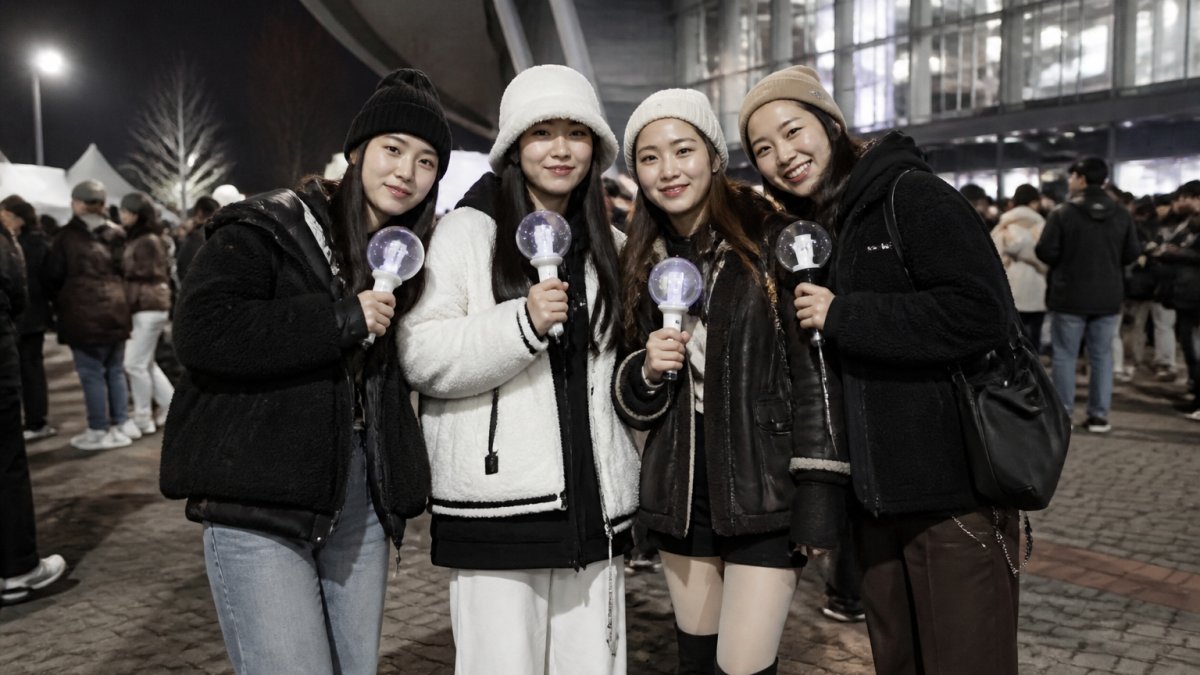
Base Layer: The Warmth Foundation
The base layer sits against your skin and does the actual heat retention. Pick a fitted long-sleeve tee or thermal top in a neutral color, a clean black or cream base works under everything. Skip cotton, which traps sweat and gets cold when it dries; a thin synthetic or wool blend keeps you drier.
Mid Layer: Style Meets Insulation
The mid layer is your statement piece, the hoodie, fleece, or sweater that carries your whole look, and where fandom identity lives. Our Moth To A Flame Stan To A Bias hoodie is built for this slot: midweight fleece blend, relaxed fit, and a design that reads as streetwear first and merch second.
Outer Layer: Your Removable Shield
The outer layer handles wind, rain, and the walk from the parking lot, and should be the easiest piece to take off and carry. A fleece jacket or lightweight zip-up beats a heavy parka. Our Oh No Lemonade Winku fleece jacket has a stand-up collar with a button placket plus zippered pockets for your phone and photocards.

Winter K-Pop Concert Outfit Ideas by Temperature
Temperature decides your layer count, not your aesthetic. Use these formulas as a starting point, then adjust for wind, precipitation, and arrival time. The goal is a build you can strip in stages: full kit for the queue, mid layer for the concourse, base layer for the pit.
| Temperature | Base Layer | Mid Layer | Outer Layer | Extras |
|---|---|---|---|---|
| 40s and above | Long-sleeve tee | Graphic hoodie (optional) | Lightweight zip-up | Beanie optional |
| 30s-40s | Long-sleeve tee | Graphic hoodie | Lightweight zip-up | Beanie, thin gloves |
| 20s | Thermal top | Fleece or hoodie | Fleece jacket | Beanie, warm socks |
| 10s | Thermal top + tee | Heavy hoodie | Fleece plus packable puffer | Beanie, gloves, lined boots |
| Below 10 | Thermal top + tee | Heavy hoodie + fleece | Packable puffer over fleece | Balaclava, mittens, insulated boots |
| Wet (any temp) | Synthetic or wool base | Fleece or hoodie | Water-resistant shell over fleece | Waterproof boots, compact umbrella |
40s and Above: Light Layers, Big Energy
This range is forgiving, two layers are fine standing still.
Go with a graphic tee or long-sleeve top plus a lightweight jacket, adding a hoodie only if you run cold or arrive hours early. Nothing gets hidden, so it's the best temperature for showing off your full outfit.
30s-40s: The Transition Range
Here the queue feels colder than the forecast: wind chill on an open sidewalk can drop the effective temperature 10-15 degrees below your weather app.
Build: fitted long-sleeve tee, graphic hoodie, lightweight zip-up, beanie, and thin touchscreen-friendly gloves. Arriving two or more hours early? Add a packable puffer you can stuff into a tote inside.
20s: The Sweet Spot for Statement Outerwear
In the 20s your outer layer becomes part of the look instead of a necessity, fleece jacket weather.
Pair a thermal base with a printed fleece or track jacket, plus a beanie for your ears. Our Stray Kids track jacket is built for this range: lightweight, breathable, and cut with an all-over graphic that shows even when zipped.

10s: Cold Enough That Accessories Matter
At this range, exposed skin becomes the weak point. Ears, fingers, and ankles lose heat fastest.
Build: thermal base plus a tee for a visible neckline, a heavy hoodie, and a packable puffer over the top. Add a beanie, easily removable gloves, and warm socks, packable down jackets compress small enough to fit in a tote inside.
Below 10: Full Winter Mode Without Looking Bulky
Cold like this needs three real layers plus accessories, each thin so the silhouette stays intact. Use a thermal base, a midweight hoodie, a fleece, and a packable puffer over the top. Our BTS Hooligan beanie is stretch polyester that fits snug without pinching, so it stays put through the whole show.

Wet Weather: The Formula Most Guides Skip
Rain changes the math. A wet fleece loses most of its insulating value, and wet denim or cotton takes hours to dry.
Build: synthetic or wool base, fleece or hoodie mid, water-resistant shell outer, waterproof boots with grip, and a compact umbrella you can check or stash.
The Transit-to-Pit Transition
The temperature swing between sidewalk and pit can be 40 degrees or more. Plan your strip order before you leave the house:
- Queue (cold): everything on, including outer layer and accessories.
- Security and concourse (mild): outer layer off, carried or checked.
- Seat or standing area before the show (warm): mid layer unzipped or tied at the waist.
- Show starts (hot): base layer only, mid layer tied or stowed.
A packable tote or zip-top crossbody handles steps 2-4 without juggling layers. In the pit, tie your mid layer around your waist before the first song, not during it.
How to Dress Cute in Cold Weather Without Sacrificing Warmth
Dressing cute in cold weather comes down to proportion. Thin layers close to your body plus one interesting outer piece beats a bulky coat every time.
"Oh No Lemonade Winku" Fleece Jacket | Stray Kids Lee Know Meme Streetwear →
A few rules that actually work:
- Keep your base layer fitted so it doesn't add bulk
- Choose one statement piece and let everything else stay neutral
- Tuck your mid layer into high-waisted bottoms to define your waist
Neutral palettes (black, cream, gray, camel) make layering look intentional. Add one statement color or texture, like a purple beanie or printed fleece, and you're done.
Winter Concert Outfit with Boots: What to Wear on Your Feet
A winter concert outfit with boots needs warmth, support, and a sole that survives a wet parking lot.
Skip anything you can't stand in for four hours. Heels are out. So are thin-soled fashion boots.
What works:
- Lined combat boots for grip and ankle support
- Chunky platform boots for height without pain
- Insulated Chelsea boots for easy on and off at security
Break your boots in before the show. New boots plus a three-hour queue equals blisters by the encore.
Venue Rules, Coat Check, and Queue Survival
Venue rules change what you can bring, so check the policy before planning your layers. Most arenas publish a bag size limit, clear-bag rule, and prohibited-items list, and K-pop tour stops are often stricter than the venue default due to artist and promoter requirements.
What to Check Before You Plan Your Layers
Pull up the specific event page, not the venue's general FAQ. Confirm:
- Bag size and type. Many venues cap bags at 12" x 6" x 12" or require clear plastic. A packable tote that folds flat may still be rejected if it exceeds the size limit when opened.
- Coat check availability and hours. Not every venue offers it, and some close coat check before the encore. Ask whether it opens when doors open or earlier for queuers.
- Prohibited accessories. Studded belts, chains, and some hats get flagged at security. Check the list before you build an outfit around them.
Coat Check: How to Use It Without Losing Your Spot
Coat check is your friend in cold weather, but it has trade-offs: most venues charge a small per-item fee, and lines run long right after doors open and again at the end of the night.
A few practical moves:
- Check your heaviest layer only. Keep your mid layer with you so you're not cold on the concourse.
- Get a ticket or tag and photograph it. Losing the tag means waiting in a second line at the end of the night.
- Check before the opener, not during the headliner's first song.
Queue Survival Is Its Own Skill
A three-hour queue at 25 degrees is a different problem than one at 45, the difference is how much heat you lose standing still.
What works:
- Hand warmers. Disposable or rechargeable, kept in a zippered pocket so they don't get confiscated as loose items.
- A thermos or insulated bottle. Many venues allow empty bottles; check the policy. Hot drinks in the queue, water inside.
- A folding mat or a thick scarf to sit on. Concrete pulls heat out of you fast.
Mobility and the Pit
In the pit or on the floor, bulky outer layers become a liability, you'll be packed in, and a heavy coat takes space you don't have. Check or stow your outer layer before the show and keep base and mid layers thin enough to move in.
Common Layering Mistakes to Avoid
The biggest layering mistake is wearing your warmest coat as your only layer. You'll overheat inside and freeze when you take it off.
Other mistakes we see constantly:
- Cotton base layers that trap sweat and get cold
- Too many thick layers instead of several thin ones
- Boots that aren't broken in
Fix these and your outfit works at every stage of the night.
Conclusion
Cold-weather concerts test your outfit in ways a normal night out never does.
That's what we build at Hot Takes Designs. Every piece is custom-printed, cut, and sewn to order on ultra-soft fabrics with vibrant prints that hold up wash after wash.
Get started with Hot Takes Designs and build a concert fit that keeps you warm and impossible to ignore.
Frequently Asked Questions
What should I wear to a K-pop concert in winter?
Start with a thermal base layer, add a graphic hoodie or fleece jacket as your mid layer, and finish with a removable outer layer like a parka or track jacket. This three-layer formula lets you shed warmth as the venue heats up. Choose a neutral palette or a statement piece like a Borahae purple beanie to tie the look together. Comfortable boots and zippered pockets for your phone and photocard binder complete the outfit.
How do you layer clothes for a winter concert without looking bulky?
Pick thin, insulating fabrics over thick, chunky ones. A lightweight thermal base layer plus a midweight fleece jacket plus a packable outer shell keeps you warm without adding visible bulk. Stick to one statement piece, like an all-over print track jacket, and keep the rest fitted. Tucking your base layer into high-waisted pants creates a clean silhouette that still works when you remove your outer layer inside.
What shoes are best for a winter K-pop concert?
Insulated boots with a thick sole and ankle support work best for standing, dancing, and cold weather. Look for waterproof or water-resistant materials if you will be queuing outside. Avoid thin-soled fashion boots or heels, since concrete floors and hours of standing will wreck your feet. Break in your boots before the show and pair them with warm socks. If you want a streetwear look, combat boots or platform boots with traction are solid choices.
How do I stay warm while waiting outside for a concert?
Bring a packable down jacket or parka you can remove once inside, plus a beanie, gloves, and a scarf. Hand warmers in your pockets make a big difference during long queues. Wear your warmest base layer and consider fleece-lined leggings under your pants. If the venue has a coat check, use it so you are not stuck holding your outer layer during the show. Arriving with removable layers means you can adjust as your body temperature changes.