

Wardrobe Transition Tips for Every Season
Table of Contents
- Assess Your Current Inventory Before Transitioning
- Declutter and Purge Off-Season Essentials
- Clean and Prepare Garments for Storage
- Build Capsule Wardrobe Essentials for Year-Round Wear
- How to Layer Clothes for Changing Weather
- Seasonal Closet Organization Tips and Storage Solutions
- Plan Your Wardrobe Transition Timeline
- Frequently Asked Questions
Last Updated: September 27, 2026
Assess Your Current Inventory Before Transitioning
Before you start swapping out clothes, take a hard look at what you actually own. You might be holding onto pieces that don't fit, don't work with your lifestyle, or no longer spark joy.
Set aside a few hours and pull everything out. Lay items on your bed or a clean floor so you can see the full picture. Check condition, fit, and whether each piece aligns with your style. This inventory assessment is the foundation for a successful wardrobe transition.
Ask yourself these questions about each item:
- Does it fit comfortably right now?
- Have I worn it in the last year?
- Does it match my current lifestyle and aesthetic?
- Is it in good condition, or does it need repairs?
- Does it work with other pieces I own?
Taking inventory prevents duplicate purchases and identifies gaps, for example, five similar sweaters but no lightweight layering pieces for spring.
Declutter and Purge Off-Season Essentials
Once you've assessed everything, it's time to purge. Be honest about what you'll actually wear. If you haven't touched something in two years, it's not coming back into rotation.

Create three piles:
- Keep and store: Pieces you love and will definitely wear next season
- Donate or sell: Items in good condition that don't fit your current style or lifestyle
- Discard: Damaged pieces beyond repair
Decluttering creates clarity and makes organizing what remains easier. Donating clothes extends their life and keeps them out of landfills.
Clean and Prepare Garments for Storage
Before packing away off-season items, clean them thoroughly. Storing dirty clothes invites moths, mildew, and odors. This step extends garment life and reduces the need for replacements.
Pre-Storage Cleaning Protocol
Start with a thorough cleaning tailored to fabric type:
Delicate fabrics (silk, cashmere, wool blends): Hand wash in cool water with gentle detergent for 5-10 minutes, gently agitate, and rinse thoroughly. Gently squeeze out water and lay flat to dry.
Cotton and linen: Machine wash on gentle cycle with cold water. Air dry or use low heat to prevent shrinkage.
Synthetics and blends: Check care labels carefully. Most can handle machine wash on a delicate cycle. Avoid high heat in the dryer, which weakens synthetic fibers over time.
Stain treatment before storage: Stains set over months and become nearly impossible to remove. Treat protein-based stains (blood, sweat) with enzymatic remover, oil-based stains (grease, makeup) with dry cleaning solvent or dish soap, and plant-based stains (wine, grass) with oxygen-based bleach. Let sit 15-30 minutes before washing and air dry to confirm removal before storing.
Let everything dry completely before storing. Let everything dry completely before storing.
Repair Before Storage
Small repairs now prevent garments from becoming unwearable by next season. Common repairs to address:
- Loose buttons: Sew back on or replace (under $1, 5 minutes).
- Small holes or snags: Hand-stitch closed or use needle and thread to secure before widening.
- Loose seams: Reinforce at stress points (underarms, crotch) to prevent major damage.
- Pilling on knits: Use fabric shaver or fine-tooth comb to remove pills.
- Zipper issues: Try graphite pencil or silicone lubricant for stuck zippers; replace broken sliders ($5-10).
- Fading: Consider overdyeing with fabric dye ($3-8) to refresh color.
Storage Environment Preparation
Before placing items in bins, prepare the storage space:
- Ensure the area is clean and dry
- Avoid basements or attics prone to humidity or temperature swings
- Use cedar blocks, lavender sachets, or mothballs to deter insects
- Keep storage areas away from direct sunlight
Build Capsule Wardrobe Essentials for Year-Round Wear
A capsule wardrobe enables smooth seasonal transitions. Build a small collection of versatile staples that mix and match easily instead of owning 100 disconnected pieces.
Start with neutral base layers:
- White and black t-shirts
- Well-fitting jeans (light and dark wash)
- Neutral sweaters (cream, gray, black)
- Basic long-sleeve shirts
- Neutral pants (khaki, black, navy)
Then add layering pieces that work across seasons:
- Lightweight cardigans
- Denim jackets
- Structured blazers
- Button-up shirts
- Shackets (shirt-jackets)
Quality matters more than quantity. One well-made sweater beats five cheap ones. Hot Takes Designs creates custom pieces like the Sage Green Tartan Short-Sleeve Button-Down Shacket that work as versatile layering pieces across multiple seasons.
Sage Green Plaid Square Neck Long →

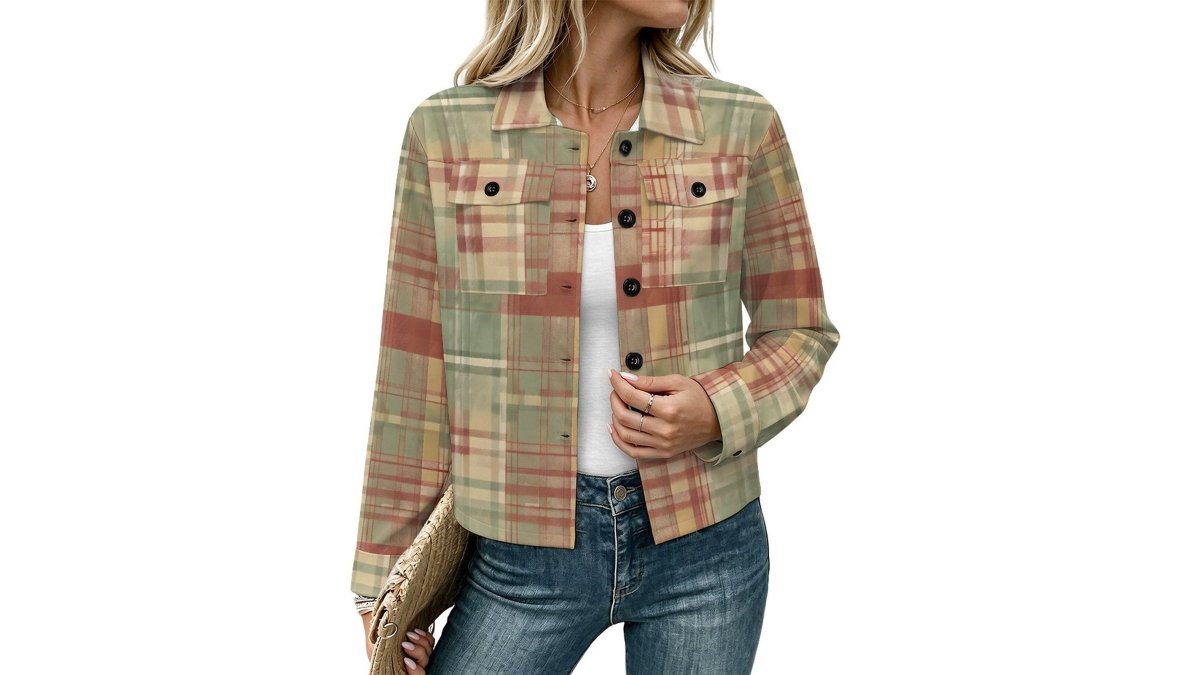
Add personality through accessories and statement pieces like scarves, belts, jewelry, and graphic tees. Every piece should earn its place by working with multiple other items.
How to Layer Clothes for Changing Weather
Layering is the skill that makes seasonal transitions seamless. Instead of switching between heavy winter coats and no jacket, you build flexible outfits that adapt to temperature changes.
The basic layering formula has three parts:
Base layer: A fitted shirt that wicks moisture and sits close to your skin. This could be a t-shirt, long-sleeve shirt, or lightweight thermal.
Middle layer: An insulating piece that traps warmth. Sweaters, cardigans, and fleece work well here. This is where you add bulk without adding weight.
Outer layer: A protective piece that shields from wind and weather. Jackets, blazers, and shackets serve this purpose.
The magic is that you can mix and match these layers based on temperature. A white tee plus cardigan plus denim jacket works for cool spring mornings. Remove the cardigan for afternoon warmth.
Key layering pieces to own:
- Lightweight sweaters that don't bulk up under jackets
- Fitted long-sleeve shirts that work under everything
- Shackets and overshirts for lightweight coverage
- Cardigans you can tie around your waist if you get warm
- Structured blazers for polished looks
Seasonal Closet Organization Tips and Storage Solutions
Physical Organization Fundamentals
Start with a logical organization system:
- Group by category (tops, bottoms, dresses, outerwear)
- Within each category, organize by color
- Keep frequently worn items at eye level
- Store off-season pieces higher or lower
Premium solutions: Clear plastic bins ($15-40 per bin) let you see contents without opening. Vacuum-sealed bags compress bulky items like winter coats by up to 80%, saving significant closet space. Under-bed storage containers ($20-50) maximize unused space. Shelf dividers ($10-25) prevent stacks from toppling.
Digital Inventory Tracking
Organization by Season
Organize your closet audit by asking:
- What did I actually wear last season?
- Which pieces got zero use?
- What gaps exist in my wardrobe?
- Which items need repair before storage?
Plan Your Wardrobe Transition Timeline
Timing matters when you're swapping out clothes. You don't want to put away your winter coat in March only to have a cold snap in April. A smart transition timeline gives you flexibility.
Spring transition (March-April):
- Keep lightweight jackets and sweaters accessible
- Pack away heavy winter coats by mid-April
- Start wearing short sleeves on warm days
- Keep layers handy for unpredictable spring weather
Summer transition (May-June):
- Store winter and spring layers completely
- Keep one lightweight cardigan for air conditioning
- Focus on breathable fabrics
- Organize sandals and lightweight shoes
Fall transition (August-September):
- Bring out sweaters and long sleeves early
- Keep some summer pieces for warm days
- Start layering as temperatures drop
- Get jackets and outerwear accessible
Winter transition (October-November):
- Store summer dresses and lightweight pieces
- Bring out heavy coats and winter accessories
- Layer strategically for cold weather
- Keep boots and winter shoes front and center
Frequently Asked Questions
What is the best method for wardrobe transition between seasons?
Start with a closet audit to assess what you own, then clean and properly store off-season items. Build a capsule wardrobe of versatile basics that work across seasons, and invest in layering pieces like cardigans and shackets. Set a specific timeline for the transition, typically 2-4 weeks before the season fully changes, and organize storage using bins, vacuum-sealed bags, or under-bed containers. This systematic approach prevents overwhelm and ensures you're ready when the weather shifts.
How do you store clothes when transitioning between seasons?
Clean all garments thoroughly before storage and ensure they're completely dry. Opt for breathable storage bins labeled by season and clothing type. Store items in cool, dry places like closets or under-bed containers, away from direct sunlight. For delicate pieces or items prone to creasing, hang them on padded hangers. Proper storage prevents mold, odors, and damage to fabrics.
What should a capsule wardrobe include for seasonal transitions?
A capsule wardrobe foundation includes neutral basics: white and black tees, well-fitting jeans, neutral trousers, and simple sweaters. Add layering pieces like cardigans, shackets, and button-down shirts that work across seasons. Include versatile outerwear such as a lightweight jacket and a structured blazer. Incorporate pieces like the Sage Green Plaid Short-Sleeve Button-Down Shacket ($31.73) for transitional weather layering. Choose neutral colors as your base, then add 2-3 accent colors that reflect your personal style for easy mixing and matching.
How long does seasonal wardrobe transition typically take?
Most wardrobe transitions take 2-4 weeks, depending on closet size and organization level. Start the process 3-4 weeks before the season fully changes to avoid last-minute stress. Dedicate 1-2 hours per week to decluttering, cleaning, and organizing rather than trying to do everything at once. If you're also purchasing new pieces for the season, add extra time for shopping and trying on items. For made-to-order custom pieces like those from Hot Takes Designs, factor in production time when planning your timeline.
Wardrobe transitions don't have to be stressful. Start with a clear inventory, declutter ruthlessly, and invest in versatile pieces that work across seasons. When you build a capsule wardrobe and master layering, you'll find that seasonal transitions become smooth and natural. Hot Takes Designs helps you create a wardrobe that reflects your bold, unapologetic style year-round. View all custom pieces designed for those who refuse to be basic.