

7 High-Waisted Trouser Styling Rules for Plus-Size Figures
Last Updated: October 25, 2026
Quick Summary
Styling high-waisted trousers for plus-size figures starts with fit: choose a rise that lands at your natural waist and a wide, contoured waistband that curves up in the back. Then let the waistband show with a tucked, cropped, or fitted top, and match the cut to your proportion.
- Measure the rise on a pair you already love and compare it to every size chart before buying.
- Short torsos usually need a 10 to 11 inch rise; long torsos may need 12 inches or more.
- Wide-leg trousers in fluid mid-weight fabric skim hips and thighs instead of gripping them.
- Size for your hips and have the waist taken in at the center back seam.
- Hem trousers to hit just above the shoe; wide-leg hems should skim without dragging.
Table of Contents
- Start With Fit: Rise, Waistband, and Fabric Checks
- The Best Trousers for Curvy Figures by Cut
- Tops to Wear With High-Waisted Pants
- Plus-Size High-Waisted Pants Outfit Ideas by Occasion
- Should You Tuck In a Shirt With High-Waisted Trousers?
- Troubleshooting Common Fit Problems
- Shoes, Length, and Balancing Your Proportions
- Build Your Next High-Waisted Look With Hot Takes Designs
- Frequently Asked Questions
Start With Fit: Rise, Waistband, and Fabric Checks
Styling high-waisted trousers for plus-size figures only works if the pants fit right. No belt, tuck, or layering can save a pair that digs, gapes, or slides.
High-waisted trousers sit at or above your natural waist, the narrowest part of your torso.
But the label means nothing without numbers: two pairs can claim the same rise and fit completely differently.
Measure Your Rise Before You Buy
Rise is the distance from the crotch seam to the top of the waistband. Most brands list it, and many plus-size shoppers ignore it. Grab a pair you already love, lay them flat, and measure from the crotch seam straight up to the waistband edge. That number is your target rise.
- Short torso: a 10 to 11 inch rise usually lands at the natural waist
- Long torso: you may need 12 inches or more for a true high-rise
- Tall frames: check the inseam too, or the hem will hit your ankle
Compare that number to every size chart before you buy.
Waistband Construction That Stays Put
The waistband is where most plus-size trousers fail: thin elastic rolls down when you sit, and a stiff band cuts in and leaves marks. Look for a wide, contoured waistband that curves up in the back, that shape follows the body instead of fighting it. A little stretch helps, but the band should hold its shape on its own.
The Best Trousers for Curvy Figures by Cut
Cut matters more than any styling trick, but cut alone is not enough, two wide-leg trousers can behave completely differently depending on rise, fabric weight, and waistband construction. Match the cut to the proportion you want to balance, then check construction before you commit.
| Cut | Best For | Rise to Look For | Fabric Cue | Watch Out For |
|---|---|---|---|---|
| Wide-leg | Balancing hips and thighs, hiding leg shape | 11 to 12 inches for a true high rise | Mid-weight drape (viscose blends, tropical wool) | Stiff fabric that stands away from the body |
| Straight-leg | Clean vertical line, everyday wear | 10.5 to 12 inches | Structured cotton twill or ponte | Tight thigh measurement that pulls across the front |
| Tailored / dress pants | Work, events, polish | 11 to 12 inches with a contoured band | Wool blend with 2 to 4 percent elastane | A flat front band that digs when you sit |
| Linen | Warm weather, relaxed looks | 10.5 to 11.5 inches | Medium-weight linen or linen-viscose | Wrinkling and near-zero stretch |
| Jogger | Comfort, casual days | 10 to 11 inches | Soft ponte or French terry | Tapered calf that clings |
Wide-leg trousers are the most forgiving option because the drape skims the hips and thighs instead of gripping them.
Straight-leg pants give a sharper silhouette and read as more intentional than wide-legs in casual settings.
Tailored trousers bring instant polish and are the cut most likely worn to work five days a week. Look for 2 to 4 percent elastane in a wool blend so you can sit, drive, and climb stairs without strain. A contoured waistband that curves up in the back is the biggest comfort upgrade.
Linen trousers suit warm weather but have almost no stretch, so the rise and hip measurement must be right on the first try.
Joggers are the comfort pick, but a tapered leg can cling to the calf and break the vertical line.
Match the Cut to Your Proportion
Match cut choices to the proportion you want to balance. These are starting points, not rules.
- If you carry more weight in the belly: a wide-leg or straight-leg with a contoured or crossover waistband sits smoothly over the stomach instead of cutting across it. Avoid a stiff flat front band that rolls when you sit.
- If you carry more weight in the hips and thighs: a wide-leg that falls from the widest part of the hip creates a straight column. A straight-leg works too, provided the thigh measurement clears your thigh without pulling.
- If your waist is defined but your hips are narrow: a tailored straight-leg with a belt highlights the waist without adding volume below.
Once you find a rise and waistband that work, buying that cut in every color is reasonable: fit is harder to solve than color.
Tops to Wear With High-Waisted Pants
The right top makes or breaks the look. The goal is simple: let the waistband show, and stop your top from fighting it. A tucked-in shirt, cropped tee, or fitted layer all end at or near the waistband, so the high rise stays visible and creates a defined waist and longer leg line.
Cropped, Short, and Layered Tops
Cropped tops are the easiest pairing. A cropped graphic tee hits right at the waistband and needs zero adjusting.
For a shoppable example, we love a cropped bookish graphic tee that hits right at the waistband, or this sassy cropped graphic tee for something with more attitude.
Here's the formula that works for almost every body:
- Pick a top that ends at or just above the waistband
- Add a belt if the waistband needs definition
- Keep the top fitted through the chest and loose below, or the reverse
- Layer a jacket that stops at the hip bone
A wrap top is another strong pick, it nips in at the waist on its own.
Plus-Size High-Waisted Pants Outfit Ideas by Occasion
Outfit formulas beat outfit rules.
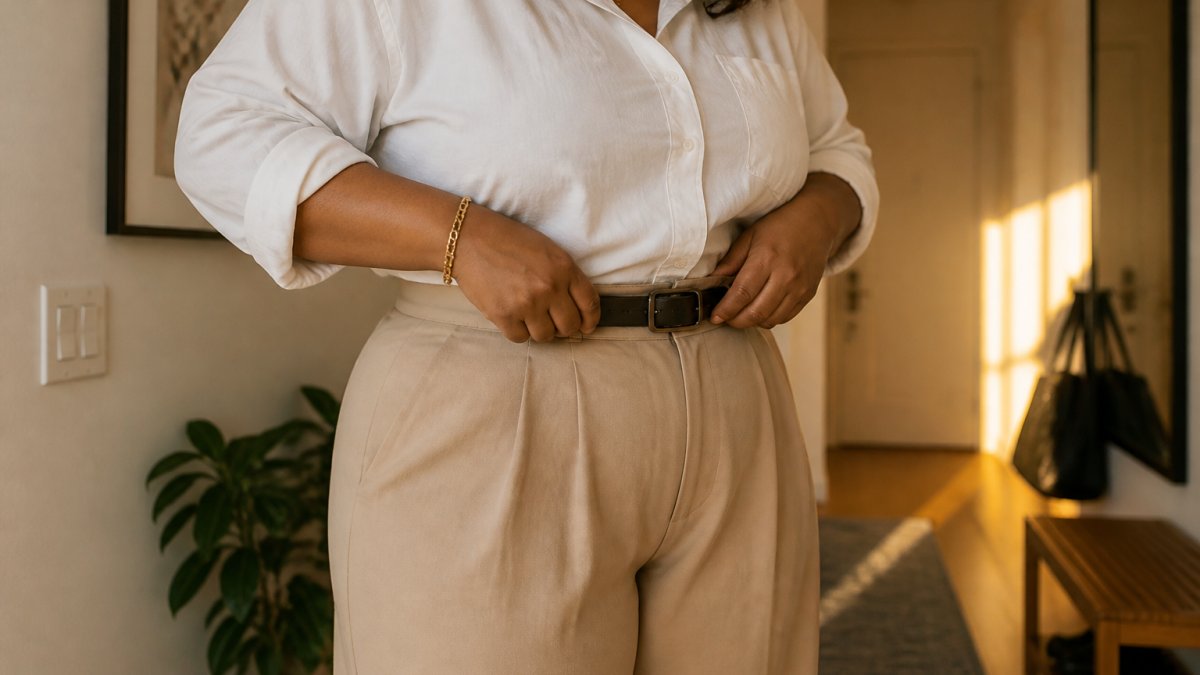
Work: tailored trousers, a tucked button-down shirt, a belt, and loafers.
Casual day: wide-leg trousers, a cropped tee, and sneakers.
Concert or night out: straight-leg trousers, a fitted top, and heels or wedges.
Women's Fall Tie Dye Crossover Yoga Pants | UPF 50+ Tummy Control Joggers →
Warm weather: linen pants, a short top, and sandals.
Layered season: trousers, a fitted base layer, and an open button-down worn loose.
Planning a bigger occasion look? Our guide to custom plus-size streetwear options covers how to build a full outfit around one statement piece.
Should You Tuck In a Shirt With High-Waisted Trousers?
Yes, tucking works, and it's the fastest way to define your waist. A full tuck with a belt gives the cleanest line: it shows the waistband, holds the shirt in place, and makes your legs look longer.
Skip the tuck entirely if the shirt is long and boxy. Instead, knot it at the waist or choose a shorter cut. A long top over high-waisted pants hides the one feature that makes the pants work.
Troubleshooting Common Fit Problems
Most fit complaints have a fix, and it is usually construction, not your body. Here are the problems plus-size shoppers report most often, why they happen, and what to do.
Back-Waist Gaping
The waistband stands away from your lower back when you sit or bend because your waist-to-hip ratio is larger than the pattern was graded for. A contoured waistband that curves up in the back follows the body better than a straight band. If a pair already gapes, a tailor can take in the center back seam, usually same-day, without changing the hip fit.
Waistband Rolling Down
The elastic is too thin, the band too narrow, or it only stretches at the back panel. A wide, structured waistband (roughly 2 inches or more) holds its shape better than a thin strip. Check that the whole band has structure, not just the back.
Belly Fit and Crossover Waistbands
A flat front band cuts straight across the stomach and can dig when you sit. A crossover or V-front waistband sits smoothly because the seam follows the body's curve instead of crossing it. Our tummy-control joggers use that shape, with a crossover front that stays put. If you prefer a flat front, look for stretch and a higher back rise.

Hip and Thigh Pulling
If the pants pull tight across the hips but fit the waist, the pattern was graded for a smaller hip-to-waist ratio. Size for your hips and have the waist taken in. Never buy for the waist and hope the hips stretch, the fabric will strain at the pocket and fly.
Leg Shape and Calf Cling
Tapered legs cling to the calf, breaking the vertical line and feeling restrictive when you sit. Go straight-leg or wide-leg instead; a straight-leg with a 1-inch hem opening clears the calf without adding volume.
Length and Hem
Hem your trousers to hit just above the shoe, a tailor can do it in a day, and it changes the whole silhouette. Wide-leg hems should skim the top of the shoe without dragging; straight-legs want a slight break at the instep.
Rise and Torso Length
A rise that is too short lands at the hip, shortening the leg line and making tucking awkward. A rise that is too long pushes the waistband toward the ribs and can bunch when you sit. Measure the rise on a pair you already love and compare it to the size chart.
Shoes, Length, and Balancing Your Proportions
Shoes and hem length control how your proportions read.
Sneakers keep wide-leg trousers casual. Make sure the hem skims the shoe without dragging.
Wedges and heels add length to the leg line. They work best with straight-leg and tailored cuts.
Boots pair well with cropped or tapered trousers. Tuck the hem in or let it fall over the boot.
For balance, match volume with volume. Wide-leg trousers want a fitted or cropped top.
Build Your Next High-Waisted Look With Hot Takes Designs
Fit gets you halfway; the rest is finding pieces that feel like you. At Hot Takes Designs, every piece is custom-printed, cut, and sewn to order in sizes 2XS through 6XL, real pattern grading for bigger sizes, not a scaled-up small.
Want more outfit inspiration first? Our plus-size streetwear guide breaks down how to build full looks around one bold piece.
Frequently Asked Questions
How should plus-size figures style high-waisted trousers?
Start with the rise and waistband, then build the outfit around them. A rise that sits at or just above your natural waist keeps the trouser from sliding down, and a wide, structured waistband holds its shape through the day. From there, tuck a fitted top or a half-tucked button-down to define the waist, and finish with a belt if the loops allow. The goal is a silhouette where the trouser and the top meet cleanly instead of fighting each other.
What tops look best with high-waisted trousers?
Fitted and semi-fitted tops work best because they sit close to the body and let the trouser's waistband do its job. Bodysuits, wrap tops, cropped tees that hit at the waistband, and tucked button-downs are reliable choices. If you prefer looser tops, look for ones that stop at or just below the waistband, or do a front tuck so the waist stays visible. Oversized tops worn fully untucked over wide-leg trousers tend to hide the waist entirely and can make the outfit look bottom-heavy.
How do you find high-waisted trousers that fit comfortably?
Measure your rise (from your crotch seam to your natural waist) and compare it to the trouser's listed rise, not just the size label. Check the waist and hip measurements separately, because a pair that fits your hips may gap at the back waist. Look for stretch fabric blends with a bit of spandex, an elastic or partially elastic waistband if you want give, and a wide waistband that will not roll. Try sitting, squatting, and walking before you commit, since comfort shows up in movement, not in the mirror.
Which trouser cuts work well for curvy figures?
Straight-leg and wide-leg trousers are the most forgiving because they skim the hip and thigh instead of gripping them. A straight leg creates a clean vertical line, while a wide leg balances a fuller hip and pairs well with fitted tops. Tailored dress pants with a defined crease work for formal settings, and a tapered jogger works for casual days when you want a closer fit through the leg. Avoid cuts that pull tight across the front of the thigh, since that usually means the hip measurement is too small.
The hardest part of styling high-waisted trousers for plus-size figures isn't the styling at all. It's finding pants and tops that fit your body and your personality. That's the gap we built Hot Takes Designs to fill, with made-to-order graphic apparel in inclusive sizes and prints that last. Browse the full collection and build an outfit that feels like your main character moment.
