

Identify Your Personal Style Archetype
Table of Contents
- What Is a Personal Style Archetype?
- The Core Archetypes and Their Visual Language
- Understanding Archetype Blends and Your Shadow Side
- Take a Style Archetype Quiz to Pinpoint Your Type
- Fashion Aesthetic Examples and How They Connect to Archetypes
- How to Build a Capsule Wardrobe Around Your Archetype
- From Archetype to Authentic Expression
- Frequently Asked Questions
Last Updated: September 26, 2026
What Is a Personal Style Archetype?
A personal style archetype is a foundational pattern of aesthetic preferences, values, and visual expression that defines how you naturally dress and present yourself. Think of it as your fashion fingerprint, the core style identity that remains consistent even as trends change. Understanding your personal style archetype gives you permission to build a wardrobe that feels authentically you.
It's about recognizing the visual language you're already drawn to and leaning into it intentionally. When you identify your archetype, you stop second-guessing yourself and start making purchases that actually work together.
The psychology behind archetypes runs deep. According to research on fashion psychology and self-expression, the clothes we choose communicate something about our identity and values, both to others and to ourselves. Your personal style archetype captures that communication at its core. It's the difference between owning 50 pieces that don't coordinate and owning 25 pieces that work as a unified wardrobe system.
The Core Archetypes and Their Visual Language
Most personal style frameworks recognize six to seven core archetypes, each with distinct visual language, color preferences, and silhouettes. Understanding these helps you recognize which elements resonate with your own style identity.
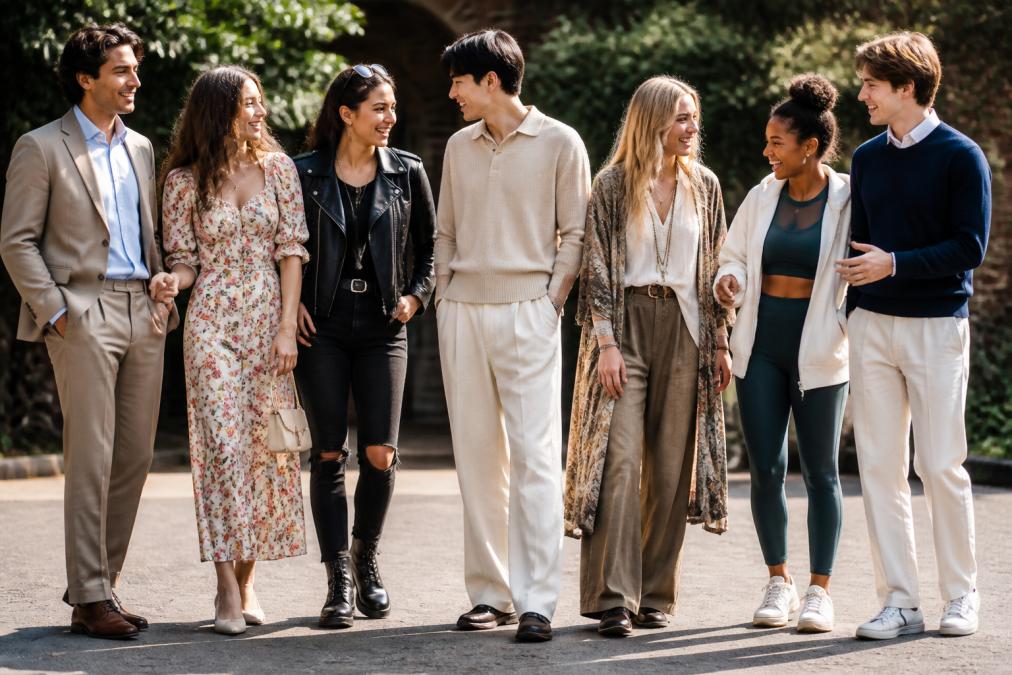
The Classic
The Classic archetype gravitates toward timeless, well-tailored pieces that prioritize quality over novelty: structured blazers, crisp white button-ups, and investment leather accessories in neutral palettes (navy, black, white, camel, grey). Every piece serves a purpose with minimal pattern mixing. The philosophy is that well-made neutral items outlast trends and work with everything else you own.
The Romantic
The Romantic archetype embraces softness, femininity, and delicate details: florals, ruffles, lace, and flowing fabrics in soft palettes (blush, lavender, rose, cream). Layering, pattern mixing, and vintage inspiration are core to this aesthetic, which celebrates ornamentation and often incorporates sentimental pieces.
The Edgy
The Edgy archetype rejects softness in favor of bold contrast, sharp lines, and attitude. Black dominates, paired with jewel tones, metallics, or high-contrast brights. Leather, hardware, asymmetrical cuts, and graphic prints are core. This archetype gravitates toward statement pieces and clothing that makes people look twice, often incorporating counterculture references and band merch.
The Minimalist
The Minimalist archetype strips everything down to essentials: clean lines, neutral colors, and functional silhouettes. Every item earns its place through versatility and quality. Color palettes are typically black, white, grey, and one or two accent colors. The philosophy is that limitation creates freedom, fewer choices, but every choice is deliberate.
The Bohemian
The Bohemian archetype celebrates artistic expression, cultural inspiration, and unconventional beauty through flowing silhouettes, natural fabrics, earthy palettes, and eclectic pattern mixing. This style incorporates vintage finds, handmade elements, and pieces from different cultures. Layering and mixing unexpected elements reflect a philosophy of authenticity and rejecting mainstream fashion rules.
The Sporty
The Sporty archetype prioritizes comfort, functionality, and athletic-inspired pieces: performance fabrics, sneakers, hoodies, and activewear in brights and high-contrast colors. This archetype values pieces that work for real life, the gym, casual outings, or concerts. The Sporty aesthetic has evolved to blend athleisure with streetwear as a legitimate fashion category.
The Preppy
The Preppy archetype draws from collegiate and country-club aesthetics: structured pieces, traditional patterns (stripes, plaids, argyle), and navy, white, pastels, and jewel tones. It balances polish with accessibility, incorporating heritage brands and timeless pieces, though modern prep includes more playful, ironic interpretations.
Understanding Archetype Blends and Your Shadow Side
Most people aren't pure archetypes. You might be primarily Edgy with Minimalist tendencies, or Romantic with a Bohemian edge. These blends are normal and often create the most interesting personal style. Your archetype blend tells you how you actually want to present yourself, for example, edgy graphic tees paired with clean-lined black trousers and minimal accessories.

Every style has pitfalls when taken to extremes: Classic becomes boring, Romantic becomes costume-like, Edgy becomes try-hard, Minimalist becomes cold, Bohemian becomes chaotic, Sporty becomes shapeless, Preppy becomes pretentious. Recognizing your shadow side helps you course-correct. If your Edgy wardrobe feels like a costume, rebalance by adding softer textures or color variety. The shadow side is a warning sign you've leaned too hard in one direction.
Take a Style Archetype Quiz to Pinpoint Your Type
To identify your personal style archetype, answer questions that reveal your actual preferences rather than aspirational ones. Focus on three core areas: color instinct, silhouette preference, and aesthetic values.
Quick Self-Assessment Questions:
My Villain Arc Has A Skincare Routine" →
- When you see an outfit that stops you, what draws you first: the cut and structure, the colors and textures, the attitude and edge, or the overall harmony?
- If you could only wear one color family for a month, would it be neutrals, pastels, jewel tones, earth tones, or brights?
- Do you prefer fitted silhouettes, flowing silhouettes, or structured silhouettes?
- When you shop, do you gravitate toward timeless pieces, statement pieces, versatile basics, or unique finds?
- What feeling do you want your clothes to communicate: confidence, softness, rebellion, simplicity, creativity, athleticism, or polish?
Your answers reveal patterns: structure, neutrals, and timelessness suggest Classic or Minimalist; softness, pastels, and delicate details suggest Romantic; bold colors, attitude, and edge suggest Edgy. The key is honesty, recognize who you actually are aesthetically, not who you think you should be.
Fashion Aesthetic Examples and How They Connect to Archetypes
Real-world fashion aesthetics anchor abstract archetype concepts in visual reality. Each major archetype has recognizable expressions across social media, street style, and cultural moments.
Classic: Quiet luxury, structured blazers, neutral palettes, investment pieces. Values heritage and quality.
Romantic: Cottagecore, florals, lace, soft colors, layered textures.
How to Build a Capsule Wardrobe Around Your Archetype
Once you've identified your personal style archetype, build a capsule wardrobe, a curated collection of versatile pieces that work together, eliminating decision fatigue and ensuring everything gets worn.
Step 1: Define Your Color Palette
Step 2: Choose Foundational Pieces
Step 3: Add Archetype-Specific Statement Pieces
Step 4: Build in Versatility
Step 5: Embrace Quality Over Quantity
| Archetype | Core Colors | Foundational Pieces | Statement Elements |
|---|---|---|---|
| Classic | Navy, white, camel | Blazer, trousers, white tee | Structured handbag, loafers |
| Romantic | Blush, lavender, cream | Floral top, soft skirt, cardigan | Lace details, vintage accessories |
| Edgy | Black, burgundy, charcoal | Black tee, leather jacket, dark jeans | Graphic prints, bold accessories |
| Minimalist | Black, white, grey | Neutral tee, simple pants, blazer | Minimal jewelry, quality basics |
| Bohemian | Earth tones, terracotta, sage | Flowing top, vintage bottom, layered pieces | Handmade jewelry, eclectic accessories |
| Sporty | Brights, neons, neutrals | Hoodie, track pants, sneakers | Performance layers, athletic accessories |
| Preppy | Navy, white, pastels | Polo, structured skirt, blazer | Stripes, argyle, heritage accessories |
From Archetype to Authentic Expression
Understanding your personal style archetype is the foundation, but authentic expression is the destination. Your archetype gives you permission to stop apologizing for your aesthetic preferences and start building intentionally toward them.
Frequently Asked Questions
How do I figure out what my personal style archetype is?
Start by examining the clothes you actually wear and feel confident in, not what you think you should wear. Notice patterns in color, silhouette, and vibe. Do you gravitate toward structured pieces or flowing fabrics? Neutral tones or bold colors? Then compare your patterns to the seven core archetypes. You can also take a style archetype quiz to identify which type resonates most. Most people discover they're a blend of two or three archetypes rather than fitting one perfectly. Your authentic style emerges when you stop chasing trends and honor what actually makes you feel like yourself.
Can you have more than one style archetype?
Absolutely. Most people are a blend of two or three archetypes, and that's where personal style becomes interesting. You might be 60% Edgy and 40% Minimalist, or equally split between Romantic and Bohemian. Understanding your archetype blend helps you curate pieces that work together instead of fighting each other in your closet. Your shadow side, the archetype traits you suppress, also influences your style. Recognizing these blends creates more intentional, cohesive outfits that feel authentically yours.
What's the difference between a style archetype and a fashion aesthetic?
A style archetype is your underlying personal style identity, the consistent patterns in how you approach clothing based on your personality and values. A fashion aesthetic is a visual trend or curated look, like cottagecore, dark academia, or Y2K. You can express your archetype through different aesthetics. An Edgy archetype might channel dark academia or grunge, while a Romantic archetype might express herself through cottagecore or soft girl aesthetics. Archetypes are stable; aesthetics shift with trends. Knowing your archetype helps you adopt aesthetics that actually feel true to you instead of forcing yourself into trends that don't fit.
How do style archetypes influence my daily outfit choices?
Once you identify your personal style archetype, you stop second-guessing yourself. You know which silhouettes, colors, and fabrics align with your identity, so getting dressed becomes faster and more confident. Your archetype acts as a filter, you're drawn to pieces that reinforce your style essence and skip things that feel off. This creates visual consistency across your wardrobe, making it easier to mix and match. You also make smarter purchases because you're buying pieces that support your archetype rather than impulsive trends. The result: a closet where everything works together and you actually wear what you own.