

How Do You Keep Printed T-Shirts From Fading in Storage?
Last Updated: October 27, 2026
Quick Summary
To keep printed t-shirts from fading in storage, wash them in cold water inside out, let them dry fully, and fold them inside out with the print facing inward. Store them in a cool, dry, dark spot, away from direct sunlight, heat and humidity.
- Wash shirts inside out in cold water on a gentle cycle, using mild detergent.
- Avoid high-heat tumble drying, which is the most common way a good print gets ruined.
- Let shirts dry completely and cool before folding, since moisture causes mildew and heat sets creases.
- Keep stored shirts with prints facing inward, and vary fold lines to prevent cracking.
- Check stored shirts every three months and recharge silica gel for humidity control.
Table of Contents
- Why Printed T-Shirts Fade When Stored
- How to Wash Printed T-Shirts Before Storing Them
- Preparing Printed Shirts for Storage: Drying, Inside Out and Cooling Down
- How to Store Graphic Tees So Prints Stay Intact
- Choosing Storage Containers and Materials That Won't Damage Prints
- How to Prevent Graphic Tees From Cracking During Storage
- Long-Term Clothing Storage Tips and Periodic Checks
- Setting Up Your Shirt Storage Routine This Week
- Frequently Asked Questions
Why Printed T-Shirts Fade When Stored
Printed t-shirts fade in storage for a simple reason: the ink is sitting on the fabric, and anything that touches it over time can wear it down.
Here's the thing: storage damage doesn't happen all at once. It builds slowly.
The main culprits are:
- Direct sunlight: UV rays break down dye molecules and cause color to fade.
- Heat: Hot attics and garages speed up ink breakdown.
- Moisture: Humidity can cause prints to stick, discolor, or develop mildew.
Knowing these threats makes the fix easier. Each step below is designed to block one or more of them. UV exposure and textile dye fading guidance
How to Wash Printed T-Shirts Before Storing Them
Wash shirts before storage, not after. Dirt, sweat, and body oils can set into fabric over time and can even change how colors look. A clean shirt also stores better because it has no residue that attracts moisture or pests.
Use these steps every time:
- Turn the shirt inside out. This shields the print from rubbing against the washer drum.
- Use cold water. Hot water is the fastest way to fade ink.
- Pick a gentle cycle. Less agitation means less wear on the design.
- Use a mild detergent. Skip harsh detergents and bleach, which break down dye.
- Air-dry when you can. If you use a dryer, choose low heat.
Watch out: Tumble drying on high heat is the most common way a good print gets ruined. Even one cycle can cause cracking on thick designs.
Preparing Printed Shirts for Storage: Drying, Inside Out and Cooling Down
Once the shirt is clean, let it dry all the way before you put it away. Stored shirts that still hold moisture can grow mildew or leave water stains on the print.
Don't iron the printed side. The heat can melt the ink or leave a shiny patch.
Store shirts inside out when you can. This keeps the design protected from dust, light, and contact with other fabrics.
Before storing, a few simple habits protect the print, as the article explains:
| Step | What to do | Why it matters |
|---|---|---|
| Dry fully | Lay flat or hang in shade with airflow | Moisture causes mildew and water stains |
| Iron | Iron the inside only, low setting, with a cloth | Heat can melt ink or leave shiny patches |
| Cool down | Let the shirt cool fully before folding | Folding a warm shirt sets creases into the print |
| Turn inside out | Store inside out when possible | Shields the design from dust, light and fabric contact |
How to Store Graphic Tees So Prints Stay Intact
Folding is where most print damage starts. Fold shirts neatly with the printed side facing inward, so the design isn't pressed against other fabric or the shelf. Keep folds loose, not tight, and avoid stacking too many shirts in one pile.
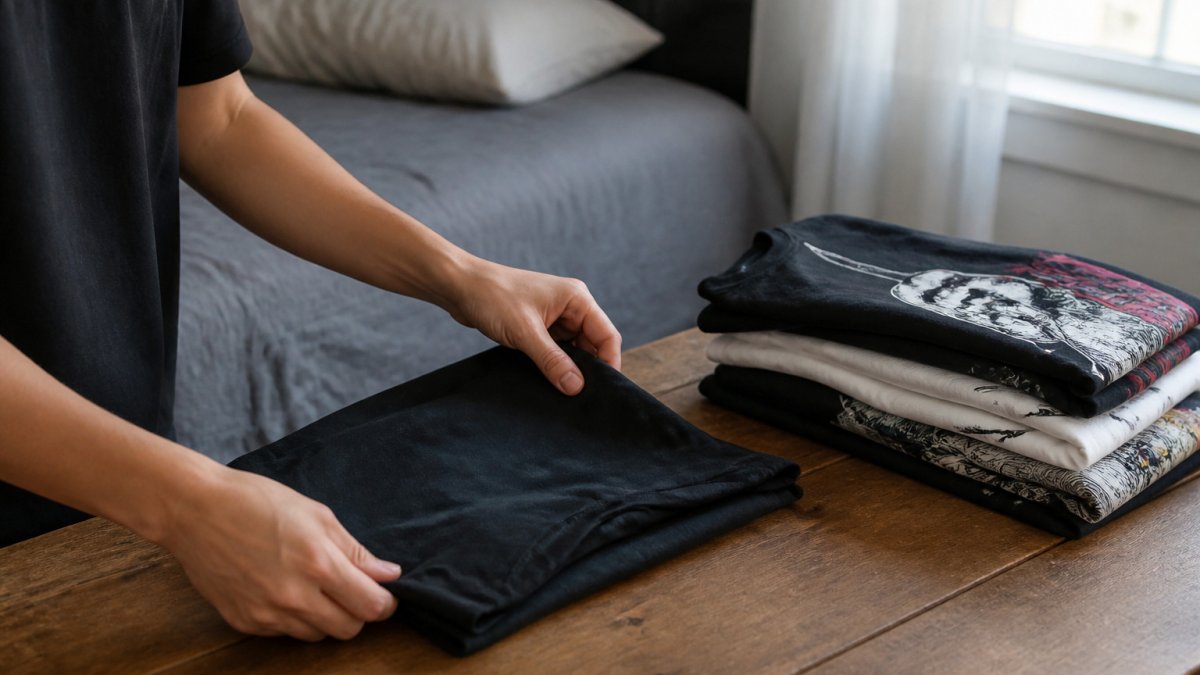
Here's a simple method:
- Lay the shirt flat, inside out, on a clean surface.
- Fold the sleeves inward.
- Fold the shirt in half, then in thirds.
Rolling works well for some people, especially for lightweight tees. It takes up less space and puts less pressure on any one spot.
Choosing Storage Containers and Materials That Won't Damage Prints
The container is a micro-environment. Whatever you put a shirt in controls how much moisture, heat, and chemical vapor reaches the print for months at a time. Most fading and print damage in storage happens because the container holds something the shirt shouldn't be exposed to, usually humidity or solvent vapor, rather than because the shirt was folded wrong.
Here is how the common options actually behave:
- Cardboard boxes: Cheap and breathable, but standard corrugated board is acidic and can off-gas over time. For long-term storage, line the box with acid-free tissue or use archival-grade boxes. Never store shirts in a box that previously held food, cleaning products, or anything with a lingering odor, the paper absorbs and re-releases those vapors.
- Clear plastic bins: Convenient and pest-resistant, but most are not airtight and still trap ambient humidity. If you use them, choose bins with gasket seals only when the shirts are bone-dry, and add a rechargeable silica gel canister. Avoid bins made from recycled or low-grade plastic with a strong plastic smell; that odor is a sign of volatiles that can migrate into fabric and ink.
- Vacuum-seal bags: Tempting for space, but compression forces print surfaces into hard creases and can cause heat-transfer vinyl to lift or crack. Skip them for anything with a raised or thick print.
A few material rules apply no matter which container you pick:
- Never store shirts in direct contact with bare wood shelves. Wood can leach acids and oils; line shelves with acid-free paper or washed cotton.
- Keep silica gel rechargeable, not disposable. Recharge according to the packet instructions, typically by drying it in a low oven, and swap it every few months. A saturated packet stops absorbing and can become a moisture source.
- Do not mix cedar blocks or mothballs directly with shirts. Cedar oil and paradichlorobenzene vapors can affect dyes and leave odor that is hard to remove. If you use pest deterrents, keep them in a separate porous pouch at the corner of the container, not touching fabric.
- Avoid printed or inked storage materials. Newspaper, magazine pages, and printed cardboard can transfer ink onto light-colored shirts under pressure.
Guidance on storing textiles to limit humidity damage
How to Prevent Graphic Tees From Cracking During Storage
Cracking happens when a print is folded or pressed in the same spot again and again. The ink loses flexibility over time and splits along the fold lines. The fix is to change how the shirt rests.
Try these habits:
- Vary your folds. Don't fold every shirt in exactly the same place.
- Limit stack height. Keep piles to a reasonable size so the bottom shirts aren't squeezed.
- Store shirts on shelves, not packed in drawers. Light pressure is much easier on prints.
- Use tissue between shirts. It cuts down on friction and keeps designs from sticking.
If a print already shows fine cracks, don't wash it harder to fix it. Handle it gently and store it flat.
Long-Term Clothing Storage Tips and Periodic Checks
Long-term storage is where small environmental problems compound. A shirt that would be fine for a season in a closet can develop mildew, yellowing, or print sticking after a year in an attic or basement. The goal is to keep the storage environment stable and to catch problems before they become permanent.
Target conditions
Aim for a storage spot that stays roughly between 60°F and 70°F with relative humidity around 45% to 55%. Those ranges are the common recommendation for textile storage because they limit mold growth without drying fabric to the point of brittleness.
A simple hygrometer, widely sold for home use, is worth the small cost if you are storing a collection. Check it monthly and adjust with a dehumidifier or a rechargeable silica canister rather than guessing.
Print-method differences
Not every print ages the same way, and storage advice should account for that:
- Screen prints: Thick plastisol ink sits on top of the fabric and is prone to cracking along fold lines. Store with the print facing inward, use tissue at folds, and avoid stacking heavy piles.
- Heat-transfer vinyl: The vinyl layer can lift at edges or stick to adjacent fabric under heat and pressure. Keep these shirts cool, do not stack more than a few high, and never store them in a warm car or attic.
- Direct-to-garment (DTG): The ink bonds into the fibers and tends to be softer, but it can fade with UV exposure and can be sensitive to moisture. Light-blocking storage and stable humidity matter more than fold position.
- Sublimation: The dye is part of the fiber, so it is less prone to cracking, but it can still fade under UV and can transfer onto light fabrics if stored damp and pressed together. Keep sublimated shirts dry and separated from whites.
Inspection schedule
Check stored shirts on a predictable cadence rather than waiting for a problem:
- Every 3 months: Open containers, look for musty odor, condensation, or print sticking, and confirm silica canisters are still active.
- Every 6 months: Refold shirts along different lines, rotate stacks so the bottom shirts move to the top, and inspect prints at folds and edges for early cracking or fading.
- Annually: Air shirts in a shaded, well-ventilated room for a few hours, then repack with fresh tissue and recharged silica.
What to do if you find a problem
- Musty smell or mildew: Move the shirt to a dry, ventilated area, air it in shade, and do not put it back until it is fully dry. Wash according to the care label before returning it to storage.
- Print sticking: Separate the shirts, place acid-free tissue between them, and reduce stack height. Sticking usually means moisture or pressure, so fix both.
- Early fading: Move the container out of light and check that the storage spot is not near a window, heater, or exterior wall. Fading cannot be reversed, but you can stop it from progressing.
- Pest signs: Small holes or droppings mean the container is not sealed well enough. Clean the area, replace damaged tissue, and use a separate pest deterrent pouch rather than placing deterrents against fabric.
UV exposure and textile dye fading guidance
Setting Up Your Shirt Storage Routine This Week
You don't need a big overhaul to protect your collection. Start with one small change this week and build from there.
- Sort your shirts by color and print size.
- Wash any shirts that have been sitting unwashed.
- Buy a few breathable bags or tissue sheets.
- Pick a cool, dark closet or shelf for storage.
Frequently Asked Questions
How should you store printed T-shirts to prevent fading?
Store printed T-shirts in a cool, dry, dark place such as a closet shelf or drawer away from windows. Wash and dry them inside out first, make sure they are fully dry, and fold them rather than hanging them so the weight of the fabric does not stretch the shoulders. Keep them out of direct sunlight, which breaks down ink pigments over time, and avoid humidity, which can encourage mildew and discoloration. Breathable cotton storage bins work better than sealed plastic.
Can plastic bags damage printed T-shirts in storage?
Sealed plastic bags can trap moisture and heat, which may cause print cracking, color transfer and yellowing over time. If you use plastic, make sure the shirt is completely dry and use a loosely closed bag or a bag with ventilation. Breathable cotton or canvas storage bags are a safer choice for long-term storage of graphic tees because they let air circulate while still keeping dust out.
Is it better to fold or hang printed T-shirts?
Folding is generally better for printed T-shirts. Hanging a knit shirt by the shoulders can stretch the neckline and create hanger bumps, and the print can be pressed against neighboring garments. Fold shirts with the printed side facing inward or place a sheet of acid-free tissue over the print to reduce friction and transfer. Stack folded shirts loosely so the prints are not pressed hard against each other.
Should printed T-shirts be washed before long-term storage?
Yes. Oils, sweat and detergent residue left on a shirt can yellow fabric and weaken print adhesion during months in storage. Wash the shirt inside out in cold water on a gentle cycle with a mild detergent, avoid bleach, and air-dry or tumble on low heat. Make sure it is fully dry before folding it away, since trapped moisture is one of the main causes of fading and mildew.
