

Declutter Your Closet to Match Your Aesthetic
Table of Contents
- Step 1: Assess Your Current Wardrobe and Lifestyle
- Step 2: How to Find Your Personal Style Aesthetic
- Step 3: Sort Your Clothes Into Decluttering Piles
- Step 4: Capsule Wardrobe Essentials for Aesthetic Cohesion
- Step 5: Wardrobe Editing Tips for Long-Term Maintenance
- Step 6: Sustainable Disposal and Digital Wardrobe Management
- Common Mistakes to Avoid When Decluttering
- Frequently Asked Questions
Last Updated: October 1, 2026
Step 1: Assess Your Current Wardrobe and Lifestyle
Before you start to declutter closet aesthetic choices, you need to understand what you actually own and how you actually live. This is the foundation of creating a wardrobe that matches your aesthetic. Too many people jump straight to purging without this crucial first step, then wonder why their closet still doesn't feel cohesive three months later.
Conduct a Wardrobe Audit
Pull everything out. Yes, everything. Hang it all where you can see it at once, your bed, a clothing rack, or spread across your floor. This visual inventory is the only way to spot patterns you can't see when things are crammed in a closet.
As you look at each piece, ask yourself:
- Do I actually wear this?
- Does it fit my body right now?
- Is it in good condition?
- Does it align with how I want to look?
Document what you find. Take photos or write down categories: tops, bottoms, dresses, outerwear, and accessories. Count how many similar items you own. Most people discover they have five white t-shirts when they really only need two.
Analyze Your Wear Frequency
Track which pieces you actually reach for. The items you wear repeatedly are your wardrobe winners. The pieces sitting untouched for months? Those are candidates for decluttering.
Look at your lifestyle honestly:
- Do you work in an office, remote, or in a creative field?
- How much time do you spend at social events or concerts?
- Do you need professional clothing, casual wear, or both?
- What's your climate like throughout the year?
Your wardrobe should reflect how you actually spend your time, not how you wish you spent it. If you work from home most days, you don't need a closet full of blazers. If you're a K-Pop fan hitting concerts regularly, you need pieces that work for those moments.
Step 2: How to Find Your Personal Style Aesthetic
This is where declutter closet aesthetic choices become intentional. You're not just removing things, you're defining what stays based on a clear vision of your personal style. Without this clarity, you'll end up with a random collection of pieces that don't work together.
Define Your Fashion Identity
Your fashion identity is the visual expression of who you are. For Hot Takes Designs customers, this often means bold, unapologetic streetwear that reflects fandom identity and individuality. But your aesthetic might be minimalist, cottagecore, edgy, romantic, or something entirely unique to you.
Create a mood board. Use Pinterest, Instagram, or a physical collage. Save images of outfits that make you feel excited. Look for patterns:
- What colors appear most?
- What silhouettes do you gravitate toward?
- What's the overall vibe, casual, polished, artistic, rebellious?
- Are pieces graphic-heavy or minimal?
The patterns you spot reveal your true aesthetic. This becomes your filter for every decluttering decision. If your mood board is full of bold graphic tees and statement pieces, keep those. If it's minimalist neutrals, let go of the loud prints.
Create Your Color Palette
Colors are the fastest way to create visual cohesion in your closet. A strong color palette means most pieces work together, which multiplies outfit combinations from the same number of items.
Choose 3-5 core colors that make you feel confident:
- Neutrals (black, white, gray, beige, navy)
- One or two accent colors (emerald, burgundy, mustard)
- Optional: one bold pop color for statement pieces
When you declutter, ask: Does this color fit my palette? A beautiful piece in a color that doesn't match your palette will sit unworn. If your palette is soft pastels, those bold pieces go.
Step 3: Sort Your Clothes Into Decluttering Piles
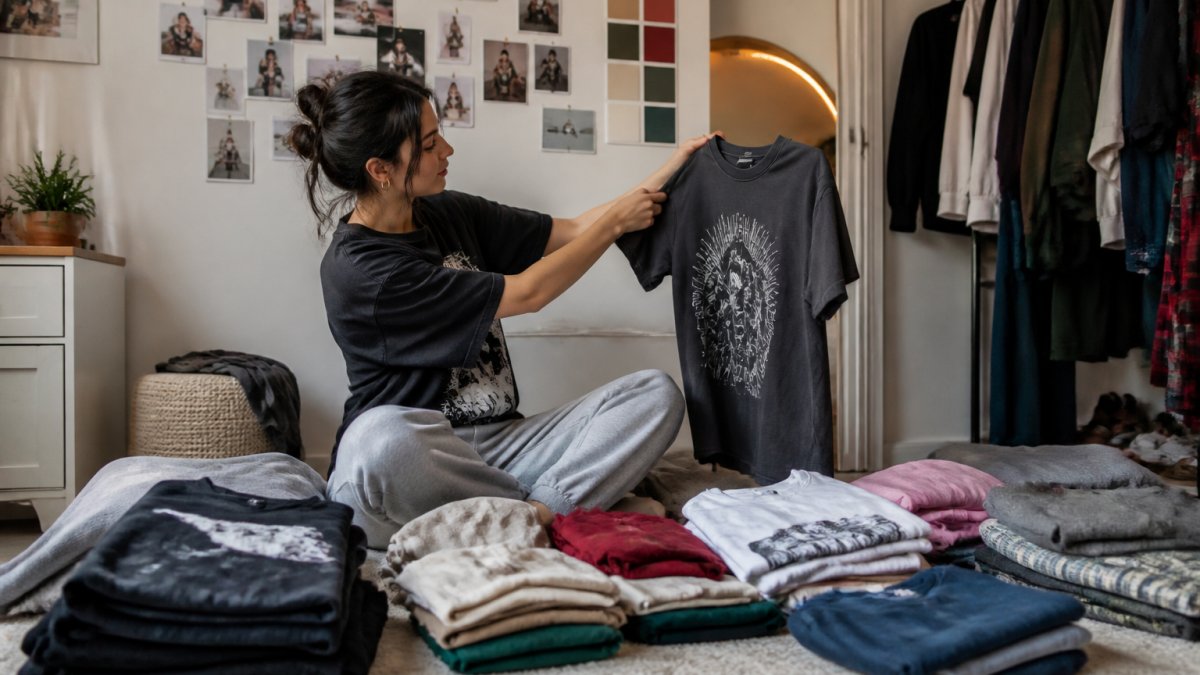
Now you're ready to sort. Use a structured system to make decisions faster and more confidently. This prevents decision fatigue and keeps you from second-guessing yourself halfway through.
The Four-Pile Method
Create four distinct piles:
Keep, Pieces you wear regularly, love, and that fit your aesthetic and body. These are non-negotiable closet staples.
Donate, Items in good condition that don't fit your aesthetic or lifestyle. These go to charity or thrift stores where someone else might love them.
Sell, Higher-value pieces (designer items, barely worn, good condition) worth listing on Depop, Poshmark, or Vinted. You recover some money and reduce waste.
Toss, Damaged, stained, or unwearable pieces. These go to the trash or textile recycling programs.
Sage Green Ombre Plaid V-Neck Pajama Set | Soft Milk Fiber Loungewear →
Work through each piece one at a time. Don't overthink. If you haven't worn it in a year and it doesn't fit your aesthetic, it goes. If you love it but it doesn't fit your body right now, be honest, will you realistically alter it or get back to that size? If not, let it go.
Handling Emotional Attachments
The hardest pieces to declutter are the ones with emotional weight. The concert tee from five years ago. The gift from someone you care about. The piece you bought for the person you wanted to be.
Here's the truth: keeping something you don't wear out of guilt doesn't honor the memory or the gift. It just takes up space in your closet and your head.
Try this reframe: Take a photo of the piece before you let it go. If it's truly meaningful, that photo preserves the memory without the physical clutter. For gifts, remember that the giver wanted you to feel good, not obligated. You can appreciate a gift and still recognize it's not for you.
For pieces representing your aspirational self, ask: Is this realistic? If you genuinely want to wear it, keep it and commit to styling it differently. If you're keeping it "just in case," it's taking up real estate that could go to pieces you actually wear.
Step 4: Capsule Wardrobe Essentials for Aesthetic Cohesion
A capsule wardrobe is a curated collection of pieces that work together. You're not aiming for a tiny closet, you're aiming for intentional pieces that create multiple outfits without redundancy.
Build Your Foundation Pieces
Start with basics that anchor your outfits:
- Two or three neutral tops (white, black, gray)
- One or two neutral bottoms (jeans, black pants, neutral skirt)
- One layering piece (cardigan, jacket, hoodie)
- Undergarments and basics
These foundation pieces should fit perfectly and feel comfortable. They're the canvas for everything else.
Add Statement Items That Reflect Your Brand
This is where your personal style shines. Statement pieces are the ones that make you feel like yourself. For fandom enthusiasts, this might be bold graphic tees from Hot Takes Designs that showcase your K-Pop bias or favorite BookTok reads. For others, it's vintage band tees, artistic prints, or pieces in your signature color.
Step 5: Wardrobe Editing Tips for Long-Term Maintenance
Decluttering isn't a one-time event. It's a practice. Once you've created your curated collection, you need systems to keep it that way.

Organize for Visual Consistency
How you organize your closet affects what you actually wear. If everything's crammed together, you forget what you have.
Seasonal Transitions and Rotation
Every season, do a mini wardrobe audit. Pull out seasonal pieces and assess them with fresh eyes. Did you wear that heavy sweater? Keep it. Did that linen dress never get worn? Consider letting it go.
Step 6: Sustainable Disposal and Digital Wardrobe Management
What you do with decluttered items matters. Responsible disposal keeps things out of landfills and aligns with values many of your peers care about.
Responsible Ways to Dispose of Clothing
Donate to thrift stores, Goodwill, Salvation Army, and local nonprofits take gently used clothing. Many offer tax deductions.
Document Your Curated Collection
You remember what you own and can plan outfits more easily. When you're tempted to buy something new, you can check your inventory first. You have a visual reference for your aesthetic when shopping.
Common Mistakes to Avoid When Decluttering
Keeping pieces "just in case", If you haven't worn it in a year, you probably won't. Trust your current style, not hypothetical future scenarios.
Frequently Asked Questions
How do I declutter my closet to match my aesthetic without throwing away everything?
Start by identifying your personal style aesthetic first, then sort your existing wardrobe against that vision. Use the four-pile method: keep (aligns with your aesthetic), donate, sell, and toss. You don't need to discard everything; focus on removing pieces that clash with your visual identity. Keep items that genuinely fit your lifestyle and color palette. This way, you're building on what works rather than starting from scratch.
What are capsule wardrobe essentials I should keep when decluttering?
Capsule wardrobe essentials are versatile, neutral pieces that form the foundation of outfit combinations. Keep well-fitting basics like plain tees, neutral sweaters, tailored pants, and classic button-downs in your color palette. Add layering pieces like cardigans and jackets that work across seasons. Include one or two statement pieces that reflect your personal brand. These essentials should be high-quality, comfortable, and capable of mixing with other items to create multiple outfits.
How often should I re-evaluate and edit my wardrobe after decluttering?
Re-evaluate your wardrobe every 3 to 6 months or during seasonal transitions. After decluttering, do a quick check quarterly to spot items that no longer fit your aesthetic or lifestyle. This prevents your carefully curated collection from becoming cluttered again. During seasonal changes, assess what you actually wore and what sat untouched. Regular editing maintains visual consistency and ensures your closet stays aligned with your evolving personal style.
What should I do with clothes that don't fit my aesthetic but are still in good condition?
Clothes in good condition have value and deserve a second life. Donate them to local thrift stores, shelters, or community organizations. Sell gently used pieces on resale platforms or host a clothing swap with friends. Consider consignment shops if items are designer or high-end. These sustainable disposal methods keep textiles out of landfills while helping others find pieces they love. Knowing your clothes will be worn again makes letting go easier.