

BookTok Main Character Outfit Ideas for Everyday Wear
Table of Contents
- What Makes an Outfit Give Main Character Energy?
- 5 BookTok Main Character Outfit Ideas for Everyday Wear
- Aesthetic Outfit Formulas: The Recipe for Recreating the Look
- Book Character Inspired Outfits Without Looking Like a Costume
- Capsule Wardrobe for Book Lovers: 10 Versatile Pieces That Do the Work
- Common Mistakes to Avoid When Styling Bookish Looks
- Conclusion
- Frequently Asked Questions
Last Updated: September 9, 2026
BookTok main character outfit ideas for everyday wear are the antidote to the "I have nothing to wear" crisis that hits every reader who just finished a 500-page romantasy. This style movement is about translating the aesthetic of your favorite fictional worlds into outfits you can actually run errands in, not Halloween costumes. At Hot Takes Designs, we live in this space, creating apparel for readers who want their fandom written into their wardrobe. The core insight is simple: main character energy is less about the specific book and more about the confidence and visual storytelling of your look. Below, we break down five distinct formulas, the versatile capsule pieces that make them work, and the mistakes that turn a chic bookish outfit into a costume.
What Makes an Outfit Give Main Character Energy?
Main character energy in fashion is the deliberate use of clothing to signal a narrative about yourself before you say a word. It is not about wearing a costume or a cosplay piece; it is about curating a signature look that feels intentional, cohesive, and slightly dramatic. The style draws from the visual storytelling rules of BookTok, where creators build outfits that hint at a character's personality, world, and conflicts without needing a caption.
The Visual Storytelling Rules of BookTok Style
The first rule is that your outfit should tell a story through a clear color palette and textural elements. A shadow-dwelling villain vibe leans on blacks, deep burgundies, and rich jewel tones, while a fae princess aesthetic might use ivories, dusty pinks, and gold accents. The second rule is layering: a simple camisole under a structured blazer or an oversized cardigan adds depth and a sense of a "costume" that is actually just smart styling. Finally, the accessories matter more than the main garment; a chunky boot, a leather tote that looks like it holds spell books, or a delicate necklace can anchor the whole look.
5 BookTok Main Character Outfit Ideas for Everyday Wear
These five archetypes dominate the platform's fashion side, and each can be built around a single statement piece you likely already own or can thrift for under $20. The styling principles below work with the Hot Takes Designs pieces shown, but the formulas are designed to translate to similar items in your closet, no costume purchases required.
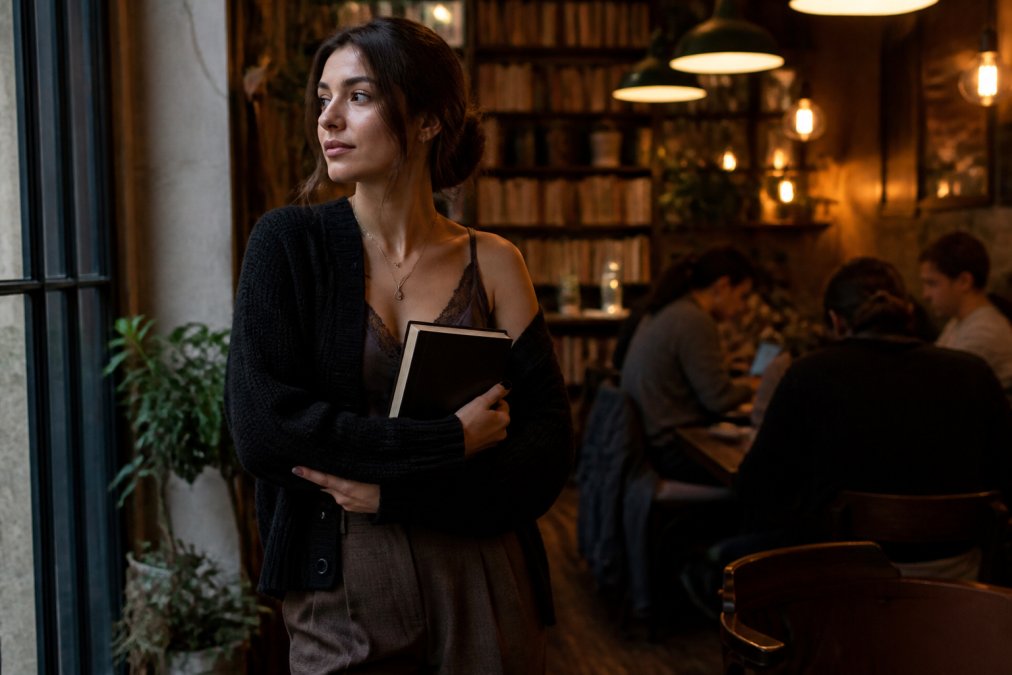
1. The Morally Grey Layering Formula
The morally grey aesthetic is about controlled chaos, sharp outer lines with soft, vulnerable undertones that hint at hidden depth. The mechanism that makes this work is contrast in both texture and structure.
The base layer: Start with a sleek, high-stretch base like the Morally Grey Era Bodysuit ($34.99), or any ribbed knit tank or fitted long-sleeve in black, charcoal, or deep burgundy. The key is that the base must hug the body, this creates the visual tension when you layer something oversized on top.

The structured layer: Add an unbuttoned oversized blazer in a houndstooth or plaid pattern, or a worn leather jacket with visible distressing. The blazer should sit at least two sizes larger than your normal fit, with the sleeves pushed up to the forearm (extension.umn.edu). This is the non-negotiable element, without an oversized structured layer, the look reads as basic, not morally grey.
The bottom half: Straight-leg or slightly wide-leg black jeans ground the look. Avoid skinny jeans here; the wider leg balances the volume on top and keeps the silhouette modern. If you're between seasons, swap the jeans for black tailored trousers with a crease down the front.
The finishing details: Combat boots with a lug sole (Dr. Martens 1460s or any similar silhouette) are the default. For a softer take, wear black leather loafers with a chunky heel. Add one silver ring on each hand and a crossbody bag in black leather, nothing polished, nothing new-looking. The overall effect should look like you grabbed pieces with intention but didn't overthink it.
Proportions for different heights: If you're 5'4" or under, keep the blazer cropped at the hip rather than mid-thigh, and pair it with high-waisted jeans to avoid being swallowed by fabric. If you're 5'8" or taller, you can wear a longer duster-style blazer and still maintain the proportion.
2. The Romantasy Reader's Smart Casual Uniform
For the reader who loves a fae war lord but has a 9-to-5, this is the bridge between fantasy escapism and professional reality. The formula pairs a feminine, delicate top with tailored, masculine-leaning bottoms, the tension between those two energies is what creates the "main character" effect.
The romantic element: The In Her Morally Grey Era Lace Trim Bookish Camisole ($32.00) provides the gothic lace detail, but any silk or satin camisole with lace or scalloped edging works. The camisole should have a slight sheen to catch light, this is what separates it from a basic undershirt.

The tailored bottom: Tuck the camisole into high-waisted, pleated trousers in a neutral like taupe, charcoal, or olive. The pleats add structure and movement. Alternatively, a flowing midi skirt in a heavier fabric (not chiffon, too costume-like) achieves the same effect. The skirt should hit mid-calf at the longest.
The professional layer: A structured blazer in black or navy, worn with the sleeves rolled once, keeps the look office-appropriate. When you clock out, swap the blazer for an oversized chunky knit cardigan in cream or oatmeal, this instantly shifts the energy from corporate to cozy without changing anything else.
Footwear logic: Loafers with a low block heel (1-2 inches) work for the office. For after-hours, switch to knee-high boots with a slight heel, this adds the fantasy-adjacent drama without going full costume. The boot should be fitted through the calf, not slouchy.
The layering trick for colder months: Add a thin turtleneck in a contrasting color under the camisole. The lace trim peeks out at the neckline, creating a layered look that reads as intentional and keeps you warm without adding bulk.
3. The Dark Academia Bookish Look
Dark academia is the most established of these aesthetics, and it has the most defined rules. The core is scholarly, vintage-inspired layering with a muted, earthy palette. The difference between a successful dark academia look and a failed one comes down to fabric weight and fit precision.
The foundation shirt: A crisp button-down in white or cream, like the You Had Me at Trigger Warning Button Down Shirt ($32.98), is the base. The all-over print adds a fandom-specific twist that prevents the look from reading as a school uniform. If you're using a plain shirt, the print element needs to come from elsewhere, a printed scarf, a brooch, or a bag.
The layering order: The shirt goes under a knit vest (argyle or solid, in wool or a wool blend) or a tweed blazer. The vest should be fitted, not baggy, it should follow your torso's line. The blazer should have structured shoulders and hit at the hip bone. If you're layering both, the vest goes directly over the shirt, and the blazer goes on top, unbuttoned.
The bottom half: Corduroy pants in brown, rust, or forest green are the most authentic choice. Wool trousers in a wide-leg cut also work. Avoid denim, it breaks the vintage illusion. For skirts, choose a wool mini or midi skirt with tights in opaque black or a dark neutral.
Accessories that make or break the look: A leather satchel or structured tote in brown or tan. Silver rings, at least three, worn on different fingers. A vintage-style watch with a leather strap. Thin-framed glasses, even if they're non-prescription. The accessories should look collected over time, not purchased as a set.
The palette constraint: Browns, greens, creams, and muted rusts only. If you add black, keep it to shoes or a bag, never as a main garment color, which shifts the look toward the morally grey aesthetic.
4. The Cozy Fantasy Cottagecore Ensemble
If your favorite characters live in treehouses and bake bread, this is your uniform. Cottagecore is about softness, texture, and comfort, but it requires more structure than it appears to. Without deliberate styling, this aesthetic slides into "frumpy" rather than "romantic."
The top layer logic: The It's Always Baggacotd Cold Shoulder Top ($27.95) with its ruffled sleeves works for warmer days. For cooler weather, the layering rule is: a fitted base (thin knit or long-sleeve tee) under a pinafore dress or a flowy, tiered skirt. The pinafore should be in a heavier fabric like corduroy or denim, it provides the structure that the soft blouse lacks.
The silhouette rule: Cottagecore requires a defined waist. If you're wearing a flowy dress or a tiered skirt, add a belt or a fitted cardigan that cinches at the waist. Without this, the look loses its shape and reads as shapeless rather than romantic.
Texture mixing: The aesthetic thrives on texture contrast, pair a smooth cotton blouse with a chunky cable-knit cardigan, or a linen skirt with a velvet vest. Floral prints work, but limit them to one piece per outfit. The rest should be solids in cream, sage, rust, or buttery yellow.
Footwear and accessories: Leather lace-up boots (ankle height for most outfits, knee-high for colder days) are the default. Add a woven or leather crossbody bag, and finish with delicate gold jewelry, thin chains, small hoop earrings. The jewelry should be understated, never chunky.
The practical test: This aesthetic prioritizes comfort for long reading sessions, but it should still look intentional. If you'd wear the outfit to a farmer's market or a casual brunch, it works. If it looks like pajamas with extra steps, add structure, a belt, a fitted layer, or a more tailored bottom.
5. The Unhinged Reader Streetwear Vibe
This is the aesthetic for the reader who annotates books aggressively and has strong opinions about cliffhangers. It's casual, bold, and centered on graphic apparel that makes a statement. The challenge is keeping it fashion-forward rather than looking like you rolled out of bed.
The anchor piece: The "Just Can't" Oversized Tie Dye Hoodie Dress ($39.98) provides the slouchy fit and the mood-matching graphic. If you're using a similar hoodie from your closet, the rule is: it must be oversized (at least two sizes up) and the graphic must be bold enough to read from across a room.
The proportion game: The key to streetwear is balancing volume. If the hoodie is oversized and hits mid-thigh, pair it with fitted bottoms, bike shorts, leggings, or thigh-high socks. If you're wearing it as a dress, add thigh-high socks and chunky sneakers (platforms or dad sneakers work best). The contrast between the slouchy top and the fitted bottom is what makes the look intentional.
The layering option: For transitional weather, layer a long-sleeve tee in a contrasting color under the hoodie, letting the sleeves and hem peek out. Or wear a denim jacket or overshirt over the hoodie, unzipped, this adds structure and prevents the look from being one-dimensional.
Accessories that elevate: A baseball cap worn backward or forward, depending on your mood. A crossbody bag in a bright color or a metallic finish. Chunky sneakers with visible sole tread. Layered necklaces over the hoodie, yes, this works, and it adds a deliberate styling choice that separates you from someone who just grabbed a hoodie.
The hair and makeup component: This aesthetic benefits from intentional hair, a slicked-back bun, space buns, or a claw clip with face-framing pieces. The makeup should be minimal but deliberate: a bold lip or a graphic liner, not both. The overall effect is "I look effortless because I put effort into looking effortless."
The comfort-to-style ratio: Maximum comfort is the goal, but the styling details, the socks, the accessories, the layering, are what prevent this from being loungewear. If you can run errands, meet friends for coffee, and sit through a long reading session without adjusting anything, the outfit is working.
Aesthetic Outfit Formulas: The Recipe for Recreating the Look
If you want to recreate a character's look without buying a specific costume, use this outfit formula: one statement piece, one grounding neutral, and one textural contrast. The statement piece is usually a graphic tee, a distinctive jacket, or a dress. The grounding neutral is your basic denim, black trousers, or a simple skirt. The textural contrast is what stops the outfit from looking flat, like a chunky knit, leather, or velvet.
| Aesthetic | Statement Piece | Grounding Neutral | Textural Contrast |
|---|---|---|---|
| Morally Grey | Printed Bodysuit | Black Straight Jeans | Worn Leather Jacket |
| Romantasy | Lace Camisole | Pleated Trousers | Structured Blazer |
| Dark Academia | Graphic Button-Down | Wool Trousers | Knit Vest |
| Cottagecore | Ruffled Blouse | Flowy Midi Skirt | Chunky Cardigan |
| Streetwear | Hoodie Dress | Bike Shorts | Oversized Denim Jacket |
Book Character Inspired Outfits Without Looking Like a Costume
The line between a character inspired outfit and a costume comes down to subtlety and wearability. A costume is literal, often involving props and specific, non-versatile pieces. A character inspired outfit uses the character's color palette, silhouette, and key motifs as a starting point for a modern interpretation. For example, instead of wearing a flowing white gown to emulate a fae queen, you might wear a white silk camisole with tailored black pants and delicate silver jewelry.
The practical test is whether the outfit works if you remove the context. If you would feel comfortable wearing it to a casual dinner or a movie, it is a successful everyday look. Styling tips for this include swapping obvious costume pieces for minimalist accessories, choosing one signature element to focus on, and ensuring all your pieces are versatile enough to mix with non-fandom items in your closet. This is where sustainable fashion comes into play, as you are building a lasting wardrobe rather than a one-use purchase.
Capsule Wardrobe for Book Lovers: 10 Versatile Pieces That Do the Work
A capsule wardrobe for book lovers is a collection of versatile pieces that can be mixed and matched to create multiple character-inspired looks. This approach is a cost-effective alternative to buying a new outfit for every book you love. It focuses on high-quality, neutral staples that can be transformed with different accessories and layering pieces.
- A classic white or black button-down shirt
- A well-fitted blazer (black or tweed)
- High-waisted straight-leg jeans
- A pleated midi skirt
- A chunky knit cardigan
- A simple slip dress (for layering)
- A graphic or printed top (your fandom piece)
- Leather or suede ankle boots
- A structured tote bag
- A long, tailored wool coat
How to Source Your Bookish Capsule on a Budget
Building this capsule doesn't require a huge budget if you are strategic. Thrifting is the single best way to find unique, high-quality staples like blazers, leather bags, and knitwear without the retail markup. Many BookTok creators share their thrift hauls specifically for this purpose, proving you can achieve the aesthetic for the cost of a few lattes. For your statement pieces, like the printed apparel, investing in a custom-printed, made-to-order item ensures you get a unique design that won't fall apart after a few washes, a common issue with cheaper alternatives.
Common Mistakes to Avoid When Styling Bookish Looks
The gap between a successful BookTok-inspired outfit and a failed one rarely comes down to the pieces themselves, it comes down to execution. Here are the five most common failure patterns we see in styling communities, with the specific mechanisms that fix them.
Mistake 1: Treating the Aesthetic as a Full Costume
The most frequent error is incorporating every visual trope of an aesthetic into one outfit. A dark academia look does not require a tweed blazer, a vest, a pocket watch, round glasses, a satchel, and brogues simultaneously. When every element screams the same theme, the outfit reads as costume, not style.
The fix: Choose one signature element per outfit. If the blazer is the statement, keep the rest simple, a plain white shirt, straight-leg trousers, minimal accessories. If the graphic tee is the statement, build the rest of the outfit around neutral basics. The rule of thumb: one themed piece, two to three supporting basics, one textural contrast. This is the same formula professional stylists use for editorial shoots, and it translates directly to everyday wear.
Mistake 2: Ignoring Seasonal Fabric Logic
A heavy velvet blazer or a chunky cable-knit cardigan is impractical for a humid summer day, and wearing it anyway will make you miserable and the outfit look forced. Conversely, a linen camisole alone won't cut it in a January freeze. The aesthetics themselves are often tied to specific climates, dark academia evokes Oxford winters, cottagecore suggests temperate springs, but you live in your actual climate, not the fictional one.
The seasonal adaptation framework:
- Summer (75°F+): Swap wool and velvet for linen, cotton poplin, and lightweight rayon. A morally grey look becomes a black linen button-down with the sleeves rolled, worn untucked over straight-leg jeans. Dark academia becomes a white cotton shirt with the sleeves rolled, paired with lightweight corduroy or chino shorts in a muted tone. Cottagecore works in a cotton sundress with a fitted waist and leather sandals.
- Spring/Fall (50-75°F): This is the layering sweet spot. Use a light cardigan or an unlined blazer over a camisole or tee. The key is that the outer layer should be removable, if you're indoors and warm, you should be able to take it off without the outfit falling apart.
- Winter (below 50°F): The layering order matters more than the individual pieces. Start with a thin base layer (silk or merino wool), add your aesthetic piece (the printed shirt, the lace camisole), then add insulation (a chunky knit or a sweater vest), and finish with an outer layer (a wool coat or a puffer). The mistake most people make is wearing one heavy piece instead of three thin ones, thin layers trap air and keep you warmer while allowing you to adjust indoors.
Mistake 3: Assuming One Silhouette Works for Every Body
The aesthetics as presented on BookTok often default to a straight-size, conventionally proportioned model. The styling principles, color palettes, layering logic, textural contrast, translate across body types, but the specific cuts and proportions need adjustment. A cropped blazer that hits at the hip on a size 4 will hit differently on a size 16, and that's not a failure of the aesthetic, it's a failure of the styling advice to account for variation.
The body-inclusive adjustments:
- For curvier or fuller busts: Avoid boxy, shapeless layers that add volume without structure. Choose blazers with a defined waist or add a belt to cinch oversized pieces. V-necklines and wrap-style tops elongate the torso. For the morally grey look, a fitted bodysuit under an open blazer works better than a boxy tee.
- For petite frames (under 5'4"): Oversized pieces can overwhelm. Choose cropped versions of blazers and cardigans, or have the sleeves tailored. Monochromatic outfits (all black, all cream) create a continuous vertical line that lengthens the silhouette. Avoid midi skirts that hit at the widest part of the calf, opt for above-the-knee or ankle-length instead.
- For taller frames (5'8"+): You can carry longer, more voluminous layers. A duster-length cardigan or a maxi skirt works well. The risk is looking swallowed by fabric if the pieces are too unstructured, look for pieces with visible seams or structure to maintain definition.
- For straight or athletic builds: The romantic elements (ruffles, lace, volume) add the softness that may be missing. Don't avoid them, lean into textural contrast. A lace camisole under a structured blazer creates the visual interest that a simple tee wouldn't.
Mistake 4: Buying Costume-Quality Pieces That Fall Apart
A frequent pattern is purchasing a heavily themed item from a fast-fashion or costume site, wearing it once, and watching it pill, fade, or lose its shape after the first wash. This is not a styling failure, it's a purchasing failure. The item was never designed to function as a real garment.
The quality test: Before buying any statement piece, check three things. First, the fabric composition, natural fibers (cotton, wool, linen) or high-quality synthetics (viscose, modal) hold up better than pure polyester. Second, the print method, sublimation printing embeds the ink into the fabric fibers, preventing the cracking and peeling you see on cheaper heat-transfer prints. Third, the construction, check the seams, the hem, and the button quality. If the item is made-to-order rather than mass-produced, it's more likely to be constructed with care.
The cost-per-wear calculation: A $35 piece you wear 30 times costs about $1.17 per wear (extension.iastate.edu). A $15 piece you wear twice costs $7.50 per wear. The cheaper item is actually six times more expensive in real terms. This is the argument for investing in quality statement pieces and sourcing the supporting basics from thrift stores.
Mistake 5: Ignoring the Transition From Outfit to Environment
A BookTok-inspired outfit that looks incredible in a mirror selfie can fall apart in a real-world context. The coffee shop with harsh fluorescent lighting, the office with a casual dress code, the outdoor market with wind, each environment tests the outfit differently.
The context check: Before leaving the house, ask three questions. Can I sit, bend, and walk comfortably for extended periods? Will this outfit survive a temperature change (moving from outdoors to indoors, or vice versa)? Does it look intentional without the BookTok camera angle and lighting? If the answer to any is no, adjust. A main character outfit should make you feel confident in your actual life, not just in a carefully staged photo.
Conclusion
BookTok main character outfit ideas for everyday wear are about finding the confidence to dress for the story you want to live. By building a versatile capsule wardrobe and focusing on aesthetic outfit formulas rather than literal costumes, you can channel your favorite characters every day of the week. The goal is to feel like the protagonist of your own life, comfortable and authentic in your own skin.
Hot Takes Designs creates the statement pieces that anchor these looks, from the Morally Grey Era Bodysuit to the Trigger Warning Pajama Set. Each garment is custom-printed and sewn to order with inclusive sizing from 2XS to 6XL, using ultra-soft fabrics and vibrant, long-lasting prints. Get started with Hot Takes Designs and build a wardrobe that refuses to be basic.

Frequently Asked Questions
What is the 3-3-3 rule for clothes?
The 3-3-3 rule is a styling method where you pick one top, one bottom, and one pair of shoes, then build three different outfits from that single combination. For BookTok main character outfits, this means choosing versatile pieces like a lace-trim camisole that works under a cardigan for a dark academia look or paired with a skirt for a night out. It forces creativity and cuts down decision fatigue.
How do I build a main character aesthetic wardrobe?
Start with a capsule wardrobe for book lovers: focus on wardrobe staples like a black bodysuit, a structured blazer, a flowing midi skirt, and one statement graphic piece like a BookTok tee. Pick a color palette that matches your favorite genre, such as jewel tones for romantasy or earth tones for dark academia. Add minimalist accessories and textural elements like lace or chunky knit to finish the look.
What are some subtle ways to dress like a fictional character?
Skip the full costume and focus on outfit coordination that hints at the character's aesthetic. For a morally grey love interest vibe, wear a dark palette with a signature layering piece like a long coat. For a romantasy heroine, add a piece of jewelry with a gemstone that matches the book's cover. The goal is a modern interpretation that works for everyday wear, not a costume-to-street replica.
How can I incorporate fantasy elements into everyday wear?
Incorporate textural elements and accessories rather than full fantasy-inspired clothing. Try a velvet blazer, a top with billowy sleeves, or a statement ring with a celestial or dragon motif. Pair these with your usual jeans or trousers for a smart casual look. The key is balancing one fantasy piece with several everyday basics so the outfit remains practical.